HARARE — Simbisa Brands is increasingly turning customer traffic, value pricing and digital delivery into growth drivers in Kenya, with the quick-service restaurant group reporting an 11% increase in Kenyan revenue and a 16% rise in operating profit for FY2026 despite pressure on household incomes.
Kenyan customer volumes increased 14%, more than offsetting a 3% decline in average US-dollar spend per customer as Simbisa prioritised affordability and traffic in a highly competitive market.
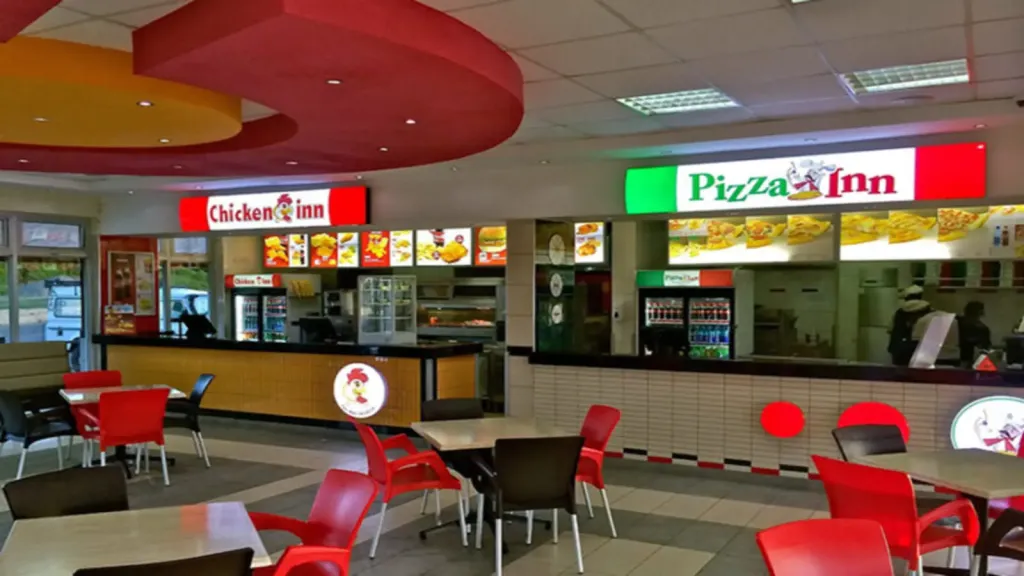
The stronger operating performance came as the group expanded its Kenyan footprint to 257 stores, added five net outlets and refurbished 19 existing restaurants.
Delivery has emerged as another important growth engine, with Kenyan delivery orders surging 59% year on year, allowing Simbisa to extract more transactions from its existing physical network.
The performance highlights a broader shift in the economics of the group’s regional business: rather than depending primarily on price increases or rapid store expansion, Simbisa is seeking to generate growth by increasing the frequency and number of customer transactions.
Traffic growth outweighs lower customer spend
The Kenyan results demonstrate the arithmetic behind Simbisa’s strategy.
A 3% decline in average US-dollar customer spend would ordinarily put pressure on revenue. But the 14% increase in customer volumes more than compensated, resulting in an 11% increase in revenue.
More importantly, operating profit increased by 16%, five percentage points faster than revenue.
An analyst who spoke to The Zimbabwe Financial Mail said the result suggested Simbisa was beginning to extract greater operating leverage from its Kenyan network.
“The important number is not simply the 11% revenue growth. It is the 16% increase in operating profit. Simbisa has demonstrated that higher transaction volumes can produce stronger earnings when the additional revenue is accompanied by disciplined cost management.”
The result is particularly notable given the pressure on Kenyan consumers.
Simbisa deliberately reduced the average US-dollar transaction value to maintain affordability, effectively choosing volume over price in an environment where consumers were becoming increasingly value conscious.
Kenya becomes a scale market for Simbisa
Kenya is now a strategically important component of Simbisa’s regional portfolio.
The group operates across Zimbabwe, Kenya and Eswatini, while also having 130 franchised stores across six other African markets.
Zimbabwe remained the group’s dominant market, accounting for 72% of total revenue in FY2026, but regional operations increased revenue by 13%, reinforcing the importance of geographic diversification.
Kenya’s 257-store network gives the company sufficient scale for relatively small changes in customer behaviour to have a significant impact on earnings.
A second analyst told The Zimbabwe Financial Mail: “Once a restaurant network reaches this scale, productivity becomes as important as expansion. The question is no longer simply how many stores Simbisa can open, but how much revenue and profit it can generate from every existing location.”
That makes the 59% increase in delivery orders particularly significant.
Delivery changes the economics of the store network
Simbisa’s delivery growth allows the company to generate additional transactions without necessarily adding a new physical restaurant for every incremental customer.
The 59% increase in Kenyan delivery orders therefore provides a potentially attractive route to growth because the company can use its existing network of restaurants as fulfilment points.
That is increasingly important as physical expansion becomes more capital intensive.
Opening a new restaurant requires property investment, equipment, staffing, inventory and working capital before the outlet reaches mature trading levels.
By contrast, increasing delivery and digital orders can potentially improve the utilisation of an existing restaurant’s kitchen and infrastructure.
“Delivery gives Simbisa another way of monetising its existing capital base,” an analyst said. “The company can increase transactions through stores that have already been built, rather than relying entirely on new-store openings.”
Refurbishment becomes as important as expansion
Simbisa added only five net stores in Kenya during FY2026 but refurbished 19 existing outlets.
That distinction provides an important indication of where management sees future returns.
The strategy suggests that the company is balancing network expansion with investment in established restaurants, seeking to improve customer experience and productivity from outlets that already have an operating history and customer base.
For investors, the return on that capital will depend on whether refurbished restaurants generate sufficient additional traffic and cash flow to justify the expenditure.
The same principle applies to new stores.
A rapidly expanding network can increase revenue but also create higher fixed costs and capital requirements if new outlets take too long to reach mature trading levels.
Value pricing reflects a tougher consumer environment
The Kenyan performance also provides insight into the wider consumer environment facing African retailers and food-service businesses.
Households facing constrained disposable incomes tend to become more sensitive to price, promotions and perceived value.
Simbisa responded by accepting lower average customer spend in exchange for higher traffic.
That strategy carries a risk.
Lower prices mean the business needs more transactions to cover largely fixed costs such as rent, wages, utilities and equipment.
The fact that operating profit nevertheless grew 16% indicates that Simbisa was able to offset some of that pressure through cost discipline and operating efficiencies.
A Zimbabwean business analyst told The Zimbabwe Financial Mail: “The strategy works if the incremental customer contributes enough gross margin and the stores have sufficient capacity to absorb the additional traffic. It becomes much less attractive if customer acquisition requires permanent discounting.”
That will be an important metric for Simbisa as competition intensifies.
Regional diversification reduces dependence on Zimbabwe
Simbisa’s Kenyan performance also fits into the group’s broader strategy of reducing its reliance on a single market.
Zimbabwe continues to generate the majority of group revenue, but operating across several African economies gives the company exposure to different consumer cycles, currencies and growth opportunities.
The group ended FY2026 with 759 stores, including its franchised African network.
Kenya’s 257 directly operated outlets consequently represent a substantial regional asset and provide Simbisa with a platform from which to develop digital ordering, delivery and other convenience-led formats.
For a Zimbabwean company, regional expansion also provides an opportunity to deploy management expertise and brand recognition beyond the domestic market.
Zimbabwe’s business environment makes regional earnings important
The significance of Simbisa’s regional performance extends beyond the restaurant sector.
Zimbabwean companies continue to operate in an environment where exchange-rate stability, consumer purchasing power, access to capital and domestic demand remain important considerations when allocating investment.
Companies with meaningful regional earnings can diversify some of those risks by generating revenue outside Zimbabwe.
An analyst told The Zimbabwe Financial Mail: “For Zimbabwean businesses, regional diversification is increasingly about balance-sheet resilience. A company that can generate strong cash flows across multiple markets is less dependent on the economic cycle of one country.”
That does not eliminate currency or operating risks, but it can broaden the group’s earnings base.
Store productivity will determine the next phase
Simbisa’s FY2026 performance suggests that the Kenyan strategy is moving beyond a simple “more stores equals more revenue” model.
The company increased customer traffic, expanded delivery, refurbished existing restaurants and improved operating profitability faster than revenue.
The next test will be whether those gains can be sustained without increasingly expensive promotions.
Management’s FY2027 strategy includes continued investment in delivery, digital ordering, drive-through formats, selective network expansion and store refurbishments.
The emphasis on digital and delivery reflects changing consumer behaviour, particularly among younger and urban customers seeking convenience.
For Simbisa, the opportunity is to use technology to increase transaction frequency while using its existing physical footprint more efficiently.
The investment equation becomes more important
The Kenyan business now has enough scale for capital allocation decisions to materially influence group returns.
Opening stores increases the addressable customer base but requires additional capital. Refurbishing existing stores requires less geographic expansion but seeks to increase productivity from established assets. Delivery and digital ordering potentially provide another route to higher sales without proportional investment in physical locations.
That creates three potential growth levers: footprint, customer frequency and network productivity.
Simbisa’s FY2026 results suggest the company is increasingly using the latter two.
The 14% rise in customer volumes, 59% increase in delivery orders and 16% increase in operating profit point to a business generating more value from its network rather than relying exclusively on physical expansion.
Kenya provides a model for traffic-led growth
The central question for Simbisa is whether it can continue growing customer numbers while protecting margins.
The Kenyan market demonstrates that the company can produce double-digit revenue growth even while reducing average US-dollar spend.
But maintaining the 16% operating-profit growth rate will require continued productivity improvements if consumers remain price sensitive.
For investors, therefore, the most important indicators going forward may not simply be the number of restaurants opened.
They will include customer traffic, average transaction value, delivery growth, same-store performance, operating margins and returns on invested capital.
As one analyst told The Zimbabwe Financial Mail: “Kenya is showing that Simbisa can grow through transactions rather than simply through prices. The real achievement will be maintaining that traffic growth while ensuring every additional dollar of revenue continues to translate into stronger operating cash generation.”
For now, the numbers are favourable: 14% customer growth, 11% revenue growth, 59% delivery growth and 16% operating-profit growth.
That combination is turning Kenya into one of Simbisa’s most important regional growth markets — and demonstrating how an African consumer business can use value pricing, digital delivery and store productivity to convert traffic growth into earnings growth.