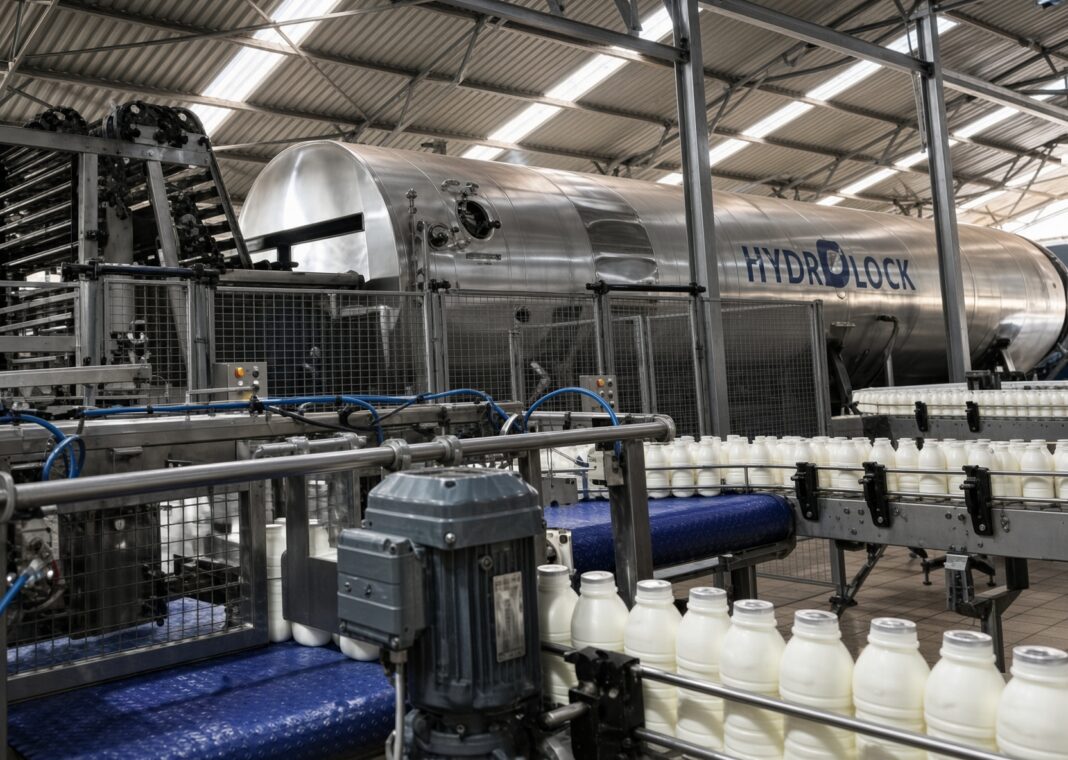
HARARE — Dairibord Holdings’ investment in a new Steri Milk processing and filling facility at Chipinge is beginning to translate Zimbabwe’s recovering milk supply into greater domestic processing capacity, strengthening the link between commercial dairy farming, manufacturing and consumer markets.
The investment formed part of US$11.82 million in capital expenditure deployed by Dairibord in 2025, alongside the refurbishment of its Maheu production line and a new Cascade processing line at the Simon Mazorodze plant. The company said the investments were designed to remove production constraints and support sustained volume growth.
The Chipinge facility has already demonstrated its importance. In the first half of 2026, Steri Milk volumes increased 72% year-on-year, benefiting from the additional capacity commissioned at the plant in December 2025. Dairibord’s total liquid-milk volumes rose 8% to 18.2 million litres, although the company said further growth remained constrained by the availability of raw milk rather than consumer demand.
Dairy recovery creates industrial opportunity
Zimbabwe produced 121.8 million litres of raw milk in 2025, a 6.2% increase from the previous year, according to Dairibord’s annual report. The company processed 42.5 million litres, giving it an estimated 35% share of the formal milk-processing market.
An industry analyst who spoke to The Zimbabwe Financial Mail said the significance of the investment extends beyond Dairibord.
“The important development is that rising agricultural output is beginning to create a stronger industrial demand for local raw materials. That is precisely the connection Zimbabwe needs between agriculture and manufacturing.”
The dairy value chain provides a relatively clear example of how agricultural recovery can feed into industrial activity. Farmers supply raw milk; processors provide collection, chilling, processing and packaging; distributors move finished products to retailers; while banks, insurers, transport companies, equipment suppliers and cold-chain operators provide supporting services.
Capacity investment meets stronger consumer demand
Dairibord’s broader performance illustrates the strength of this relationship. Group sales volumes increased 26% in the six months to June 2026, while revenue rose 28% to US$82.56 million. The company said improved macroeconomic stability, stronger consumer demand and recent capacity investments supported the recovery.
The company’s beverages business was particularly strong, with volumes increasing 33% to 52.8 million litres. Foods volumes rose 30%, while liquid milk increased more modestly because of raw-milk supply constraints.
A second analyst told The Zimbabwe Financial Mail that the investment demonstrates why manufacturing capacity matters even in an increasingly services-oriented economy.
“Services grow around productive industries. Banking, insurance, logistics, retail and technology all become deeper when there is a larger domestic production base generating transactions and investment demand.”
Local milk, local processing
The strategic importance of the Chipinge plant is therefore not simply the additional litres of milk that Dairibord can process. It is the ability to convert more locally produced agricultural output into branded, higher-value consumer products.
That reduces the distance between the farm and the consumer and creates opportunities for domestic suppliers of packaging materials, machinery maintenance, transport, refrigeration and other industrial inputs.
Dairibord has also been working to strengthen its relationships with milk producers, identifying reliable and competitively priced raw-milk supply as important to maintaining its manufacturing advantage.
Zimbabwe’s manufacturing recovery
The investment comes as Zimbabwe’s formal manufacturing sector continues to operate against a complicated business environment characterised by changing consumer behaviour, competition from imports and persistent cost pressures.
Dairibord said conditions improved during 2025, with better agricultural output, stronger mining activity and greater stability in inflation and the exchange rate. However, the formal manufacturing and retail sectors continued to face pressure from regulatory costs, grey imports and changes in consumer demand.
For policymakers, the dairy sector offers an example of the type of productive economy Zimbabwe needs to deepen: agriculture supplying industry, industry creating formal employment, and distribution and financial services expanding around that productive activity.
The bigger economic multiplier
The long-term economic value of investments such as the Chipinge Steri Milk plant will ultimately depend on whether capacity expansion is accompanied by continued growth in domestic milk production.
Dairibord’s experience already shows the constraint. Despite stronger demand for liquid milk, the company said the category’s expansion was limited by raw-milk availability.
That creates an opportunity for farmers and investors to expand the upstream side of the industry, particularly through herd development, dairy genetics, feed production, irrigation, animal health and commercial out-grower arrangements.
In this sense, Dairibord’s investment is more than a factory expansion. It is part of a wider rebuilding of Zimbabwe’s agricultural-industrial value chain — one in which greater farm production can support manufacturing, manufacturing can support formal employment, and both can generate demand for a broader ecosystem of financial and business services.
“Zimbabwe needs more investments that connect primary production to industrial processing,” the first analyst said. “The strongest economic recovery is not simply about producing more milk; it is about creating more value from every litre produced.”