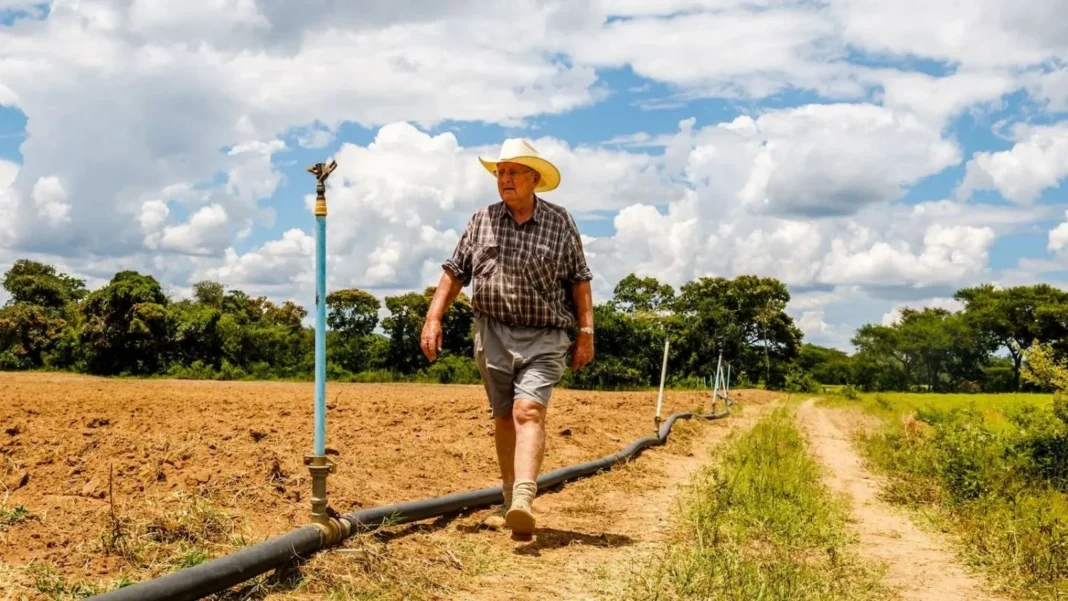
HARARE — A generation after Zimbabwe’s controversial fast-track land reform programme displaced thousands of white commercial farmers, a growing number are returning to commercial agriculture — not simply by reclaiming their former properties, but through joint ventures, leases and partnerships with black land beneficiaries.
The development, according to a report by The Economist, marks a significant change in Zimbabwe’s agricultural economy. What was once one of the country’s most politically divisive questions — who should farm the land — is increasingly becoming a question of who can mobilise capital, technology, skills and markets to make agricultural land productive.
The return is particularly visible in farming districts such as Mvurwi, about 100 kilometres north of Harare, where tobacco production has become a major source of income for both established and new commercial farmers.
Zimbabwe has also recorded a historic tobacco harvest, reinforcing agriculture’s continuing importance as a source of foreign-currency earnings, employment and industrial demand.
The emerging model is different from the pre-2000 structure of large-scale white commercial ownership. Former white farmers are increasingly operating alongside black land beneficiaries, providing management expertise, equipment, irrigation investment, agronomic knowledge and access to commercial markets.
Research on Mvurwi shows that such arrangements have become increasingly established, with former white farmers operating joint ventures with multiple A2 land beneficiaries. In one documented case, a white farmer was operating through joint ventures with seven A2 farmers, cultivating tobacco across several properties.
The model is economically significant because it allows two assets that were separated by the land reform process — land and productive capital — to be recombined.
Many land-reform beneficiaries acquired access to agricultural land but lacked the capital, machinery, irrigation infrastructure, working capital and commercial management systems required to operate at scale. Former commercial farmers, meanwhile, retained farming expertise but lost access to much of the land on which they had previously operated.
Joint ventures effectively bridge that gap.
From land redistribution to agricultural productivity
The shift does not amount to a wholesale reversal of Zimbabwe’s land reform programme.
Agricultural land remains subject to the country’s post-land-reform tenure framework, while the Government has increasingly encouraged commercial partnerships between land beneficiaries and investors.
In May, Agriculture Minister Anxious Masuka said the Government was proceeding with the return of 67 farms covered by bilateral investment protection agreements, while more than 400 former white commercial farmers would be allowed to buy back all or part of their farms.
The Government has simultaneously been pursuing compensation for former commercial farmers for improvements made to land acquired during the reform programme. The Zimbabwe Financial Mail reported in August that additional funding had been allocated to the compensation programme, with payments covering infrastructure such as buildings and irrigation rather than the underlying agricultural land.
The distinction matters.
Zimbabwe is not simply returning to the agricultural ownership structure that existed before 2000. Instead, it is gradually moving towards a more commercially integrated agricultural system in which land beneficiaries, former farmers, domestic investors and foreign capital can participate in production.
That transition could prove more important economically than the racial composition of the farming sector.
An agricultural economy ultimately depends on productivity, capital formation, access to finance, technology, reliable water and power, logistics and access to markets. Land ownership alone does not produce crops.
A test of Zimbabwe’s agricultural capital market
Analysts who spoke to The Zimbabwe Financial Mail on Zimbabwe’s agricultural investment environment have repeatedly highlighted the importance of capital availability, productive investment and value addition to the sector’s recovery.
That challenge remains substantial.
Agriculture requires large amounts of seasonal working capital, while irrigation, farm machinery, storage facilities, curing barns, roads and processing equipment require longer-term investment.
The problem is therefore not merely whether Zimbabwe has enough agricultural land. It is whether farmers can convert that land into bankable productive assets.
This is why the Government’s wider land-tenure reforms are economically important. The Zimbabwe Financial Mail has reported on efforts to make agricultural land more bankable and capable of supporting investment and agricultural finance.
For commercial banks, secure and enforceable land-use rights can potentially improve the quality of agricultural lending. For investors, clearer tenure arrangements can reduce the risk associated with committing capital to irrigation, orchards, machinery and other long-lived assets.
The economic objective should therefore be to move agriculture from a predominantly land-allocation model towards a land-plus-capital model.
The tobacco lesson
Mvurwi offers a useful illustration of what can happen when land, expertise and capital begin to converge.
The district has become a major tobacco-producing area, supported by inherited irrigation infrastructure, favourable soils, established commercial networks and a growing ecosystem of farmers and investors.
Research on the district has documented substantial investment in irrigation, tobacco curing facilities and other farm infrastructure, while joint ventures involving former white farmers and black land beneficiaries have become increasingly visible.
The model is not without problems. Farmers continue to face shortages of affordable finance, labour constraints, infrastructure weaknesses and uncertainty over land administration.
But the emergence of these partnerships demonstrates that Zimbabwe’s agricultural potential did not disappear with land reform. Rather, productive capacity became fragmented.
The challenge now is to reconnect the fragmented pieces.
Zimbabwe needs land beneficiaries who can access capital, commercial farmers who can bring technical expertise, banks willing to finance productive agriculture, insurers capable of underwriting agricultural risks and markets that reward production.
It also needs processors capable of turning agricultural commodities into higher-value products.
That is particularly important for tobacco. Zimbabwe has demonstrated its ability to produce large volumes of leaf, but the greater economic prize lies in capturing more value from the crop through processing, manufacturing, logistics and associated services.
The same principle applies to horticulture, wheat, maize, oilseeds, livestock and dairy.
Beyond the politics of race
The return of white farmers is inevitably politically sensitive because of the history surrounding Zimbabwe’s land reform programme.
Thousands of white farmers were displaced after the fast-track programme began in 2000, while land was redistributed primarily to black Zimbabweans as part of an effort to address the country’s deeply unequal colonial landholding structure.
The subsequent collapse in agricultural production and the wider economic crisis left a complicated legacy.
Zimbabwe is now attempting to resolve some of those consequences without simply recreating the pre-2000 agricultural system.
The more productive approach is to focus less on the racial identity of the farmer and more on the economic function being performed.
A white farmer bringing capital, machinery and agronomic expertise into a joint venture with a black land beneficiary is not necessarily restoring the old landholding system. Equally, a black entrepreneur investing in commercial agriculture is not merely a beneficiary of land redistribution.
Both are participants in a modern agricultural economy.
The emerging partnerships therefore point towards a potentially more pragmatic phase of Zimbabwe’s land reform — one in which productive capacity matters alongside historical ownership.
The ultimate measure should be whether land produces food, exports, jobs, taxable income and industrial raw materials.
Zimbabwe’s agricultural recovery will not be secured by nostalgia for either the pre-2000 commercial farming system or the post-2000 redistribution model.
It will depend on whether the country can combine land, capital, skills, technology and secure tenure into commercially viable enterprises.
The return of former white farmers is therefore less a story about reversing history than about Zimbabwe rediscovering an economic principle that agriculture cannot thrive on land alone.
It needs capital — and capital needs confidence.