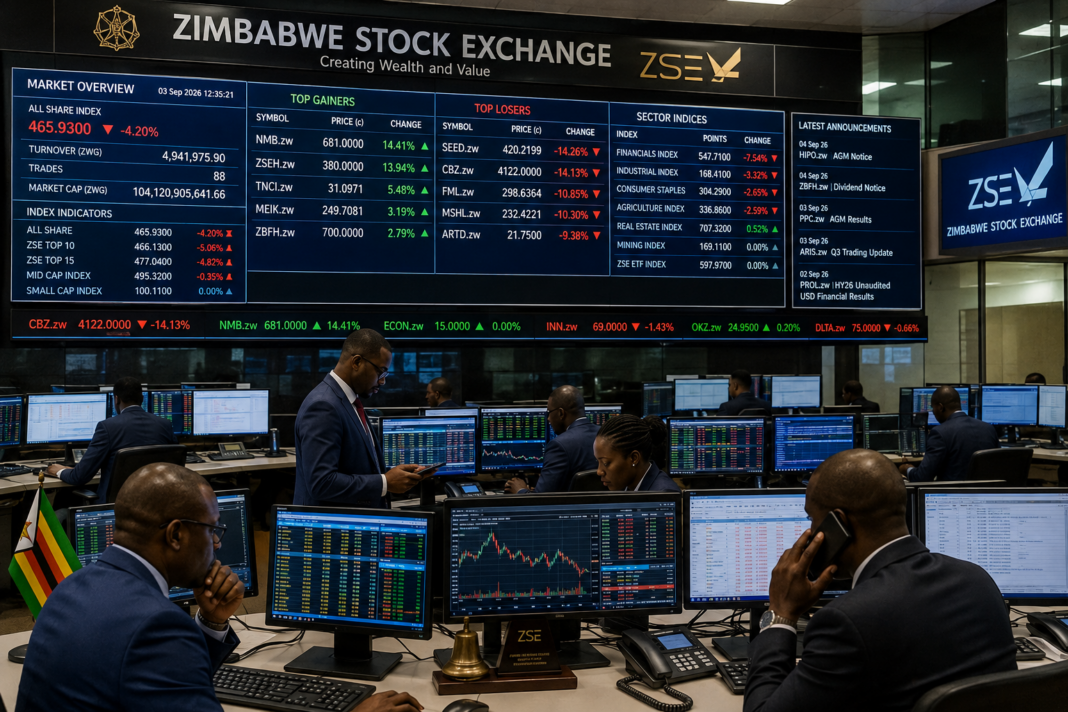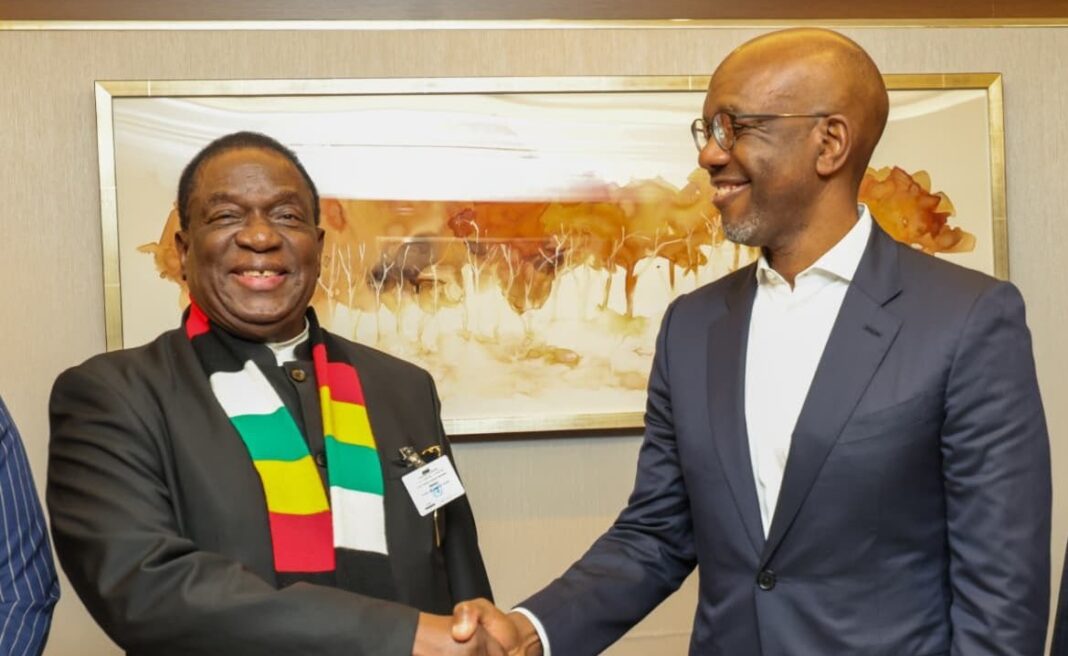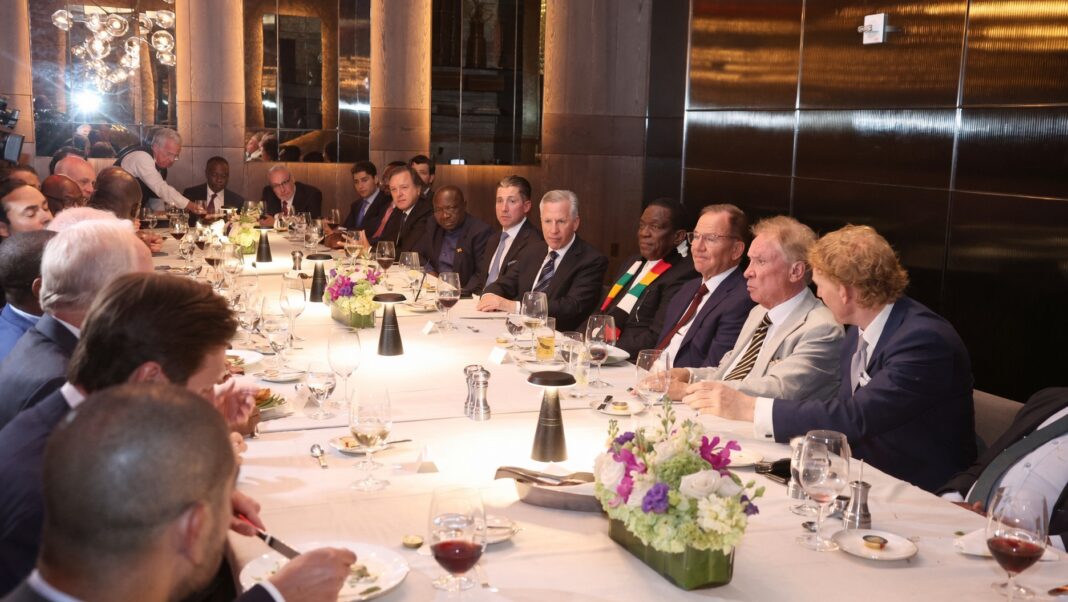
If Zimbabwe plays its cards properly, the country could be approaching one of the more consequential economic opportunities since the beginning of the post-2000 crisis. The opportunity is not guaranteed, and it will not be created by political rhetoric. It will depend on whether Harare can convert recent macroeconomic stabilisation into something much more valuable: lower sovereign risk, cheaper capital, productive investment and a financial system capable of supporting reconstruction.
By Brighton Musonza
President Emmerson Mnangagwa’s government has had its ugly, controversial and, at times, indefensible episodes. That should neither be ignored nor romanticised. But economic analysis is ultimately about distinguishing political judgement from the structural direction of an economy. Viewed through the longer lens of reconstruction, Zimbabwe has an opportunity to move from crisis management towards economic statecraft.
The central question is whether the country can now build the institutions required to turn its considerable physical assets — land, minerals, agriculture, energy potential, human capital and geographic position — into investible economic assets.
The politics of yesterday cannot finance the economy of tomorrow
Zimbabwe no longer needs the anti-Western megaphone diplomacy that characterised much of the earlier period of confrontation with Europe and the United States. Whatever strategic purpose that rhetoric may have served at the time, the economic circumstances have changed.
The land question is, in practical terms, settled. The more consequential question now is what Zimbabwe does with the productive asset base created by land reform and how effectively it connects agriculture to manufacturing, finance, logistics and export markets.
This requires a foreign policy built around commercial interests rather than ideological theatre. Zimbabwe needs American capital, European technology, Chinese industrial investment, British financial expertise, South African banking connectivity, Gulf capital and Asian markets. There is no contradiction in pursuing all of these simultaneously.
The modern global economy is transactional. Countries compete for capital, technology, markets, skills and strategic partnerships. Zimbabwe should therefore become exceptionally good at economic diplomacy.
Currency reform is the foundation of the reconstruction
The most important domestic reform is monetary.
Zimbabwe cannot permanently build a sophisticated domestic economy around a monetary structure in which the principal transaction currency is externally issued and the domestic financial system operates partly outside the control of its own monetary authorities.
The case for restoring a credible domestic currency is not an argument for printing money. It is almost the opposite. A national currency is useful only when fiscal discipline, monetary credibility, adequate reserves, functioning financial markets and institutional restraint make it credible.
There are encouraging signs. The Reserve Bank of Zimbabwe has reported sustained single-digit inflation in 2026, while its monetary-policy framework is explicitly designed to deepen domestic-currency usage as part of the transition towards a mono-currency system.
The IMF’s current programme also recognises that Zimbabwe’s reform architecture includes strengthening monetary policy operations, improving foreign-exchange market functioning and developing a pathway towards a mono-currency system.
That is significant because monetary reform should not be understood merely as replacing dollars with ZiG notes. It is the reconstruction of the domestic monetary system itself: money markets, government securities, bank deposits, payment systems, foreign-exchange markets, pension assets, insurance assets and eventually a functioning domestic yield curve.
A currency becomes economically useful when it allows the economy to price, save, borrow, invest and settle obligations within its own institutional framework.
The real prize is the reconstruction of financial intermediation
Zimbabwe once possessed a financial system with considerable regional importance. The objective should be to rebuild that capacity rather than permanently outsource financial intermediation to Johannesburg, London, Dubai or other centres.
This means developing a credible domestic banking system alongside a deeper capital market.
Commercial banks should intermediate working capital and investment credit. Pension funds should become long-term investors rather than passive holders of financial assets. Insurance companies should provide risk capital. Asset managers should allocate savings towards productive enterprises. Investment banks should structure project finance, mergers, acquisitions, bond issues and equity transactions.
The distinction between commercial and investment banking is particularly important.
Commercial banking keeps the economy moving from one day to the next. Investment banking helps determine what the economy can become over the next decade.
A properly functioning investment-banking industry could package Zimbabwean infrastructure and industrial projects into investible securities, arrange syndicated loans, structure public-private partnerships, raise project equity, refinance viable enterprises and connect domestic savings with long-duration assets.
That is how capital formation begins.
Sovereign risk is the price Zimbabwe pays for its history
The greatest invisible tax on Zimbabwe is sovereign risk.
When a country has a history of debt arrears, monetary instability, policy reversals and restrictions on capital flows, investors do not simply look at the profitability of an individual project. They price the possibility that something outside the project will go wrong.
That premium can make a perfectly viable power station, mine, industrial plant or housing project uneconomic.
Zimbabwe’s debt problem is therefore not merely a Treasury problem. It is a private-sector investment problem.
The IMF’s latest programme review explicitly links Zimbabwe’s reform track record to arrears clearance, debt restructuring and eventual re-engagement with international financing. Zimbabwe’s external arrears remain substantial, including large obligations to the World Bank, African Development Bank, European Investment Bank and bilateral creditors.
This is why the debt dialogue must produce a breakthrough.
Debt talks must move from process to resolution
Zimbabwe does not need another decade of meetings about debt. It needs a credible settlement architecture.
The country needs its creditors to see a government capable of maintaining fiscal discipline, preventing new arrears, reporting liabilities transparently and servicing restructured obligations.
The objective should be a negotiated reduction in the country’s effective sovereign-risk premium.
Once that happens, the consequences extend far beyond government borrowing. Banks become more credible counterparties. Companies obtain better financing terms. Infrastructure projects become easier to structure. Foreign investors demand smaller risk premiums. Pension funds can invest with greater confidence. Zimbabwean companies can potentially access international capital at rates that begin to resemble those available elsewhere in the region.
The IMF’s September 2026 staff-level agreement is therefore important not because it provides financing — the programme is non-financing — but because it strengthens the policy track record necessary for arrears clearance, debt restructuring and re-engagement.
The next step must be political and financial rather than merely technical.
Zimbabwe should auction its critical minerals, not simply allocate them
The country’s mineral wealth creates another opportunity to reduce sovereign risk and finance reconstruction, but only if the state becomes much more sophisticated about how mineral rights are allocated.
Zimbabwe possesses a remarkable mineral endowment, including platinum-group metals, lithium, chrome, gold, diamonds and other strategic minerals. Mining accounted for roughly 15% of real GDP in 2024 and around three-quarters of national exports, according to the US government.
That gives the country bargaining power.
The state should increasingly use transparent competitive bidding for major mineral concessions, particularly strategic deposits. The principle is straightforward: if several international companies want access to a world-class deposit, Zimbabwe should not negotiate privately with one prospective investor and hope that the resulting terms are good. It should create a transparent competition in which investors bid against one another on capital expenditure, production commitments, local processing, infrastructure, employment, taxes, royalties, environmental rehabilitation and community benefits.
The winning proposal should be the one that generates the greatest long-term economic value, not simply the largest signing payment.
This is especially important as global competition for critical minerals intensifies. Lithium, nickel, copper, graphite, rare earths and platinum-group metals are increasingly strategic inputs into batteries, electricity networks, defence technologies and the energy transition.
Zimbabwe should therefore stop thinking of itself merely as a mineral exporter. It should think like an owner of strategic geological infrastructure.
Beneficiation must become an industrial strategy
The debate around lithium illustrates the point.
Zimbabwe has moved towards restricting exports of unbeneficiated lithium in an effort to force greater domestic value addition. The policy direction is economically defensible, although the infrastructure required to implement it must be credible. Reuters reported in July that the country’s only operating lithium sulphate plant could not yet process material from third-party producers, illustrating the gap between regulatory ambition and industrial capacity.
The answer is not simply to prohibit exports.
Zimbabwe needs processing plants, electricity, railways, engineering companies, chemical industries, laboratories, industrial parks and technical skills.
That is where mining can become manufacturing.
A platinum mine should generate demand for engineering services. A lithium industry should create chemical-processing capacity. Chrome should feed ferrochrome and stainless-steel value chains. Gold should support refining, financial services and jewellery manufacturing. Coal and minerals should support energy and industrial infrastructure.
The mine should become the beginning of an industrial ecosystem rather than the end of the value chain.
Batoka Gorge should be treated as financial infrastructure
The same logic applies to energy.
Zimbabwe cannot industrialise with an unreliable electricity system. Power is not merely another infrastructure sector; it is an input into virtually every other sector of the economy.
Batoka Gorge therefore deserves to be viewed as a strategic economic project rather than simply a dam.
The proposed Batoka Gorge Hydroelectric Scheme has a planned combined capacity of approximately 2,400MW, with 1,200MW on each side of the Zambezi and six 200MW turbines per power station. Its transmission architecture is designed to connect both Zambia and Zimbabwe.
The project has previously involved General Electric alongside Power Construction Corporation of China in the development consortium, demonstrating the kind of international engineering and project-finance capability that large African infrastructure projects require.
The strategic opportunity is much larger than generating electricity.
Reliable baseload power lowers the cost of mining, manufacturing, data centres, irrigation, railways, commercial property and financial services. It improves the economics of industrial investment and makes the entire economy more competitive.
A major power project can therefore become an anchor asset around which an industrial economy is reconstructed.
Infrastructure needs a financial market, not just a Treasury allocation
Zimbabwe should also revive the concept of municipal and infrastructure finance.
Urban infrastructure cannot permanently depend on annual central-government allocations. Harare, Bulawayo, Mutare and other municipalities require professionally managed balance sheets, reliable property registers, credible revenue systems and the capacity to issue properly structured municipal or infrastructure bonds.
Imagine a Harare municipal infrastructure bond backed by predictable property rates, parking revenues, service charges and other ring-fenced municipal cash flows.
Such an instrument could finance water infrastructure, roads, drainage, street lighting, waste management and commercial-area regeneration without waiting for the national budget to provide every dollar.
But this only works when investors trust the issuer.
That brings us back to monetary credibility, governance, audited accounts, property registers and professional treasury management.
The financial system and the municipal system are therefore not separate reform agendas. They are parts of the same reconstruction programme.
Zimbabwe can become a regional financial intermediary
South Africa remains the region’s dominant financial centre, and Zimbabwe should not pretend otherwise.
But there is no economic law saying that Johannesburg must permanently intermediate every major transaction involving Zimbabwe.
European, Asian and Middle Eastern capital already enters southern Africa through sophisticated financial institutions, investment banks, insurers and project-finance structures.
Zimbabwe should aspire to build enough institutional depth to capture part of that value.
The objective is not to replace Johannesburg. It is to create a complementary financial centre in Harare capable of structuring Zimbabwean and eventually regional transactions.
A credible domestic currency, functioning money market, stronger banks, investment banks, pension funds, insurance companies, REITs, capital markets and reliable legal institutions would provide the foundations.
The global geopolitical window is changing
The geopolitical environment makes this particularly interesting.
The United States is reassessing elements of its economic engagement with Africa, China remains deeply embedded in African infrastructure and mineral supply chains, Gulf capital is expanding globally, India is becoming increasingly important in critical minerals and manufacturing, while European investors continue to seek opportunities in African energy and infrastructure.
Zimbabwe should not choose one geopolitical camp.
It should compete for capital from all of them.
The country has something increasingly valuable to offer: minerals, agricultural potential, a strategic position between southern and central Africa, an educated population, existing infrastructure and a relatively sophisticated legal and financial heritage.
But none of these assets automatically produces investment.
They must be packaged into credible transactions.
The ultimate objective is to lower the cost of capital
This is the thread connecting currency reform, debt restructuring, mining policy, Batoka Gorge, banking reform and infrastructure finance.
Zimbabwe’s economic problem is not simply a shortage of resources.
It is the extraordinarily high cost of converting those resources into productive capital.
A mine can exist without becoming an industrial ecosystem. A river can produce electricity without producing industrialisation. A pension fund can hold financial assets without financing factories. A bank can accept deposits without financing long-term investment. A municipality can own valuable land without being able to finance infrastructure.
Economic statecraft is the process of connecting those pieces.
The objective should be to lower the risk premium attached to Zimbabwean capital until productive investment becomes commercially attractive.
From stabilisation to reconstruction
Zimbabwe has spent too long treating economic stability as the destination.
It is not.
Stability is the platform from which reconstruction begins.
The current evidence provides some reason for cautious optimism. Inflation has remained subdued, the exchange rate has been broadly stable, and the authorities have made progress under the IMF Staff-Monitored Programme. The IMF has also noted stronger growth momentum supported by mining and agriculture.
But stabilisation without capital formation produces a low-growth equilibrium.
The next stage must therefore be deliberately different: restore monetary credibility, resolve the debt overhang, deepen banking and capital markets, create competitive mineral-rights allocation, build reliable electricity, rehabilitate infrastructure and make Zimbabwe a jurisdiction in which international capital can earn a return without having to price an excessive political and monetary risk premium.
That is the real opportunity.
Zimbabwe does not need another ideological economic project. It needs a functioning financial architecture capable of turning its physical assets into productive capital.
The country has spent decades exporting minerals, importing capital and allowing much of the region’s financial intermediation to occur elsewhere.
The next chapter should be about doing more of that work at home.
That requires less political theatre, more institutional discipline and a much more sophisticated form of economic statecraft.
The writer: Brighton Musonza (MBA), BSC Business Management, is an economic, business and political commentator based in the United Kingdom. He can be contacted at mmusonza@gmail.com.