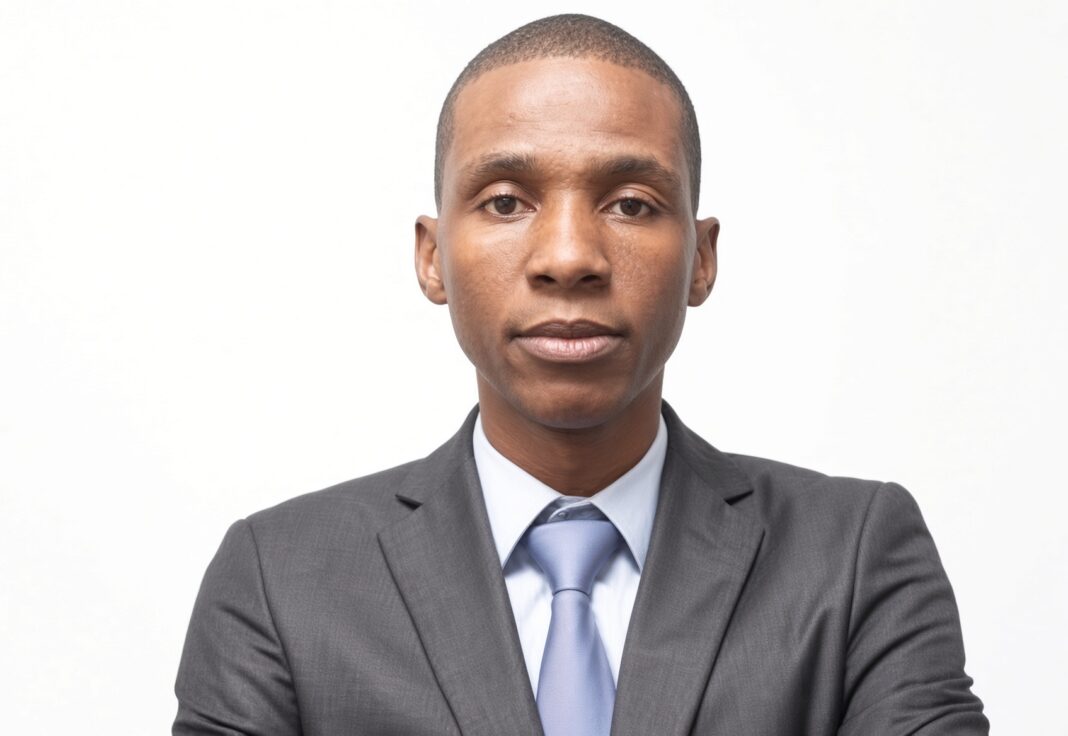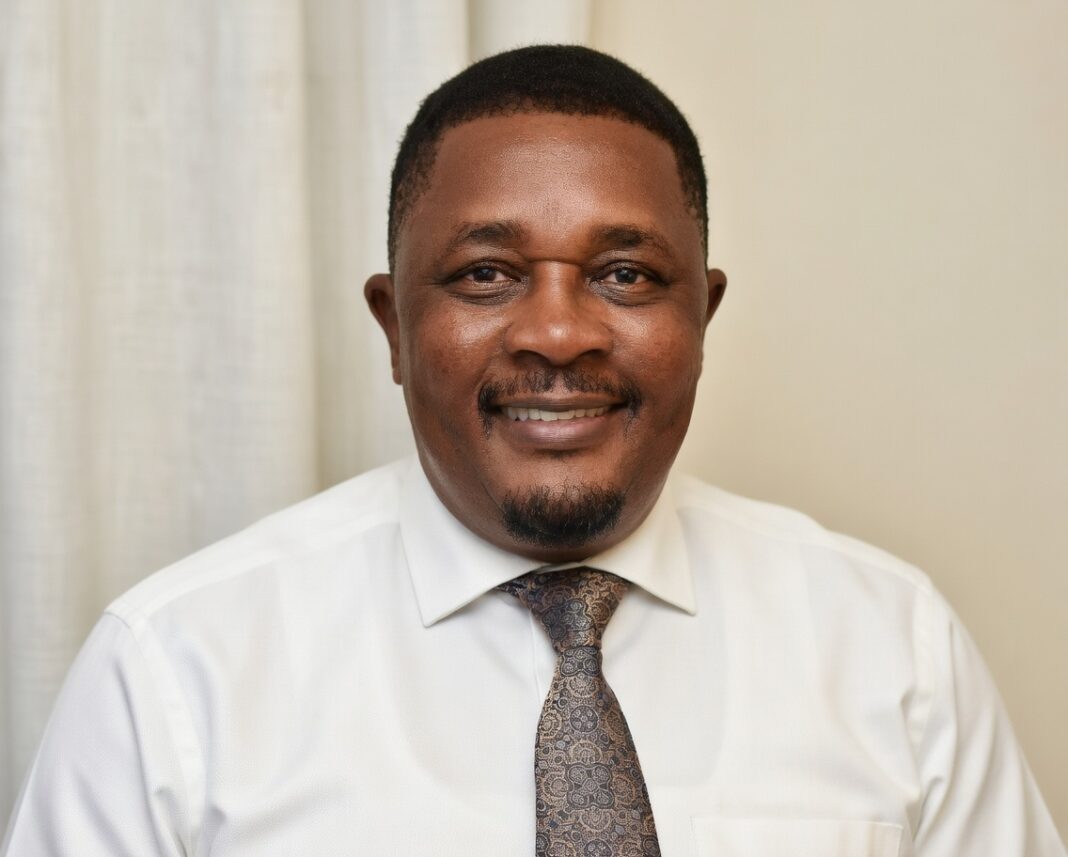
HARARE — Former Foreign Affairs Minister Walter Mzembi’s bid to return to ZANU PF has exposed an increasingly uncomfortable question for the ruling party: whether its post-2017 politics of reconciliation is being applied consistently across its structures.
Mzembi, once one of ZANU PF’s most prominent politicians and a senior figure in Masvingo, has remained largely silent as his application has become the subject of an increasingly public political dispute.
The former Masvingo South legislator was expelled from ZANU PF in November 2017 amid the factional struggle between the G40 and Lacoste formations. He formally applied for readmission this year, saying he wanted to renew his membership and contribute to the party’s programmes and activities.
His application, however, has stalled at provincial level.
ZANU PF Masvingo provincial chairman Robson Mavhenyengwa confirmed that the provincial executive wants Mzembi to explain social-media posts attributed to him that were critical of the party.
“We had summoned him to appear before the party provincial executive council meeting where we wanted him to explain himself over some social media posts attributed to him that were critical of the party,” Mavhenyengwa said.
He added that Mzembi did not attend the meeting because, according to the provincial leadership, the party secretariat had failed to reach him.
Mavhenyengwa said the province had not yet made a decision on the application.
“He applied to rejoin the party and during deliberations to determine his application it emerged that he was posting some undesirable social media messages so we resolved to have him come and explain himself and we will wait for him.”
The provincial chairman also rejected claims circulating on social media that Mzembi had already been cleared.
“We only resolved to recommend the readmission of Cde Kudakwashe Gopo of Bikita, but with Mzembi we are not done yet.”
If Masvingo eventually recommends his return, the decision would still require consideration by the national party leadership.
Why is Mzembi different?
The political significance of the dispute goes beyond the technical question of whether Mzembi should regain his party card.
His supporters argue that ZANU PF has, since 2017, demonstrated a willingness to rehabilitate politicians who previously occupied positions outside the ruling party or who had been associated with political formations opposed to it.
That history makes the intensity of the debate around Mzembi noteworthy.
A political analyst who spoke to The Zimbabwe Financial Mail on condition of anonymity said the controversy appeared to be less about the mechanics of readmission and more about the political weight Mzembi could potentially regain.
“Mzembi is not an ordinary returnee. He was a senior minister, a Central Committee member and one of the most internationally visible politicians produced by Masvingo. His return inevitably has political consequences, particularly at provincial level.”
The analyst said this could explain why his application had generated greater sensitivity than that of less prominent returnees.
“The question is not simply whether Walter Mzembi is allowed to rejoin ZANU PF. The deeper question is what happens politically after he rejoins. That is why the process is attracting so much attention.”
Another political analyst said the party would risk creating an impression of selective reconciliation if different standards were applied to different returnees.
“A political party can impose conditions on rehabilitation, but those conditions must be intelligible and consistently applied. Otherwise reconciliation becomes discretionary rather than institutional.”
The Masvingo factor
Mzembi’s case is particularly sensitive because he is a former heavyweight of Masvingo politics.
The province has historically produced some of ZANU PF’s most influential politicians, and the prospect of a former senior figure returning to its structures inevitably raises questions about the internal balance of political influence.
The Zimbabwe Financial Mail understands that there are competing views within provincial structures over whether Mzembi should be readmitted and, if so, what role he should subsequently occupy.
That distinction is important.
There is a substantial difference between restoring an individual’s party membership and restoring him to political office or leadership.
Indeed, reports surrounding the provincial deliberations indicate that some members have favoured a return at ordinary cell level without an immediate leadership position, while others have expressed opposition because of Mzembi’s alleged criticism of the party on social media.
One ZANU PF source familiar with the internal debate said the party needed to avoid allowing historical factional battles to determine contemporary membership decisions.
“The party must distinguish between readmission and appointment. Someone can be readmitted because reconciliation is necessary without automatically being given a leadership position. That is a much more reasonable approach than permanently excluding someone because of their political history.”
The irony of social media
There is also an irony at the centre of the controversy.
Mzembi is being asked to account for social-media material at a time when the debate over his readmission is itself being conducted extensively through social media.
That raises a wider institutional question about how political parties should treat digital political expression.
Criticism on social media can undoubtedly damage a political organisation, but so can the perception that disciplinary standards are selectively applied.
For ZANU PF, the issue therefore extends beyond Mzembi’s individual posts.
It is about whether the party’s internal mechanisms are sufficiently predictable to withstand factional competition.
A second analyst told The Zimbabwe Financial Mail that the party would be better served by a formal and transparent rehabilitation framework.
“If ZANU PF genuinely wants to consolidate reconciliation, it needs rules that are bigger than individuals. The principle should be: what constitutes disqualification, what constitutes rehabilitation and who has the authority to decide?”
Mzembi’s silence
Perhaps the most striking aspect of the episode is Mzembi’s own silence.
Unlike the increasingly vocal debate surrounding his application, he has not publicly launched a campaign demanding his readmission.
That has left the political argument largely to provincial officials, party activists and commentators.
His silence may ultimately work in his favour.
Rather than appearing to bargain publicly for political office, Mzembi has allowed the party to determine his application through its own structures.
That is significant because the central question confronting ZANU PF is now one of institutional consistency.
If the party believes Mzembi breached its rules, it has the right to demand an explanation. But if reconciliation is genuinely part of its political strategy, his past affiliation with G40 cannot indefinitely remain the sole basis for exclusion.
A test for the ruling party
The Mzembi application is therefore becoming a test of how ZANU PF understands political reconciliation almost nine years after the 2017 transition.
The party can reject the application, approve it with conditions or eventually restore Mzembi’s membership without returning him to a leadership position.
What will matter politically is whether the decision is seen as the product of an established institutional process or as the outcome of internal provincial competition.
For Mzembi, the irony is considerable.
The man himself has said little.
Yet his application has generated a debate about factionalism, rehabilitation, political succession, provincial power and the meaning of reconciliation inside one of Zimbabwe’s most powerful political organisations.
And that is perhaps why his return has become considerably more consequential than a simple party-membership application.