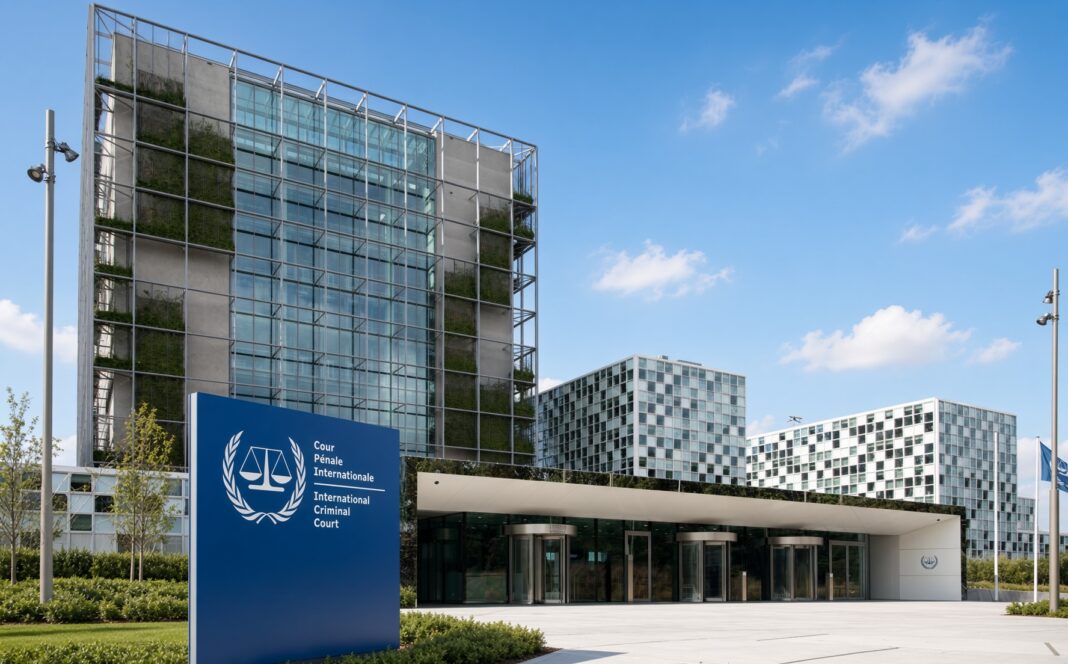
The United States has imposed fresh sanctions on the International Criminal Court (ICC), escalating its confrontation with the international tribunal just hours after South African jurist Navi Pillay won the Nobel Peace Prize, in a development likely to intensify tensions between Washington and its European allies.
The sanctions, announced by the administration of President Donald Trump on Friday, target the court itself and could expose companies providing services to the institution to restrictions on transactions with US entities. The move represents a significant escalation in Washington’s long-running opposition to the ICC’s exercise of jurisdiction over American personnel and Israeli officials.
US Secretary of State Marco Rubio said the measures were intended to restrict the court’s resources and prevent it from pursuing cases against Americans.
“President Trump will never allow the International Criminal Court to prosecute Americans,” Rubio said in a statement reported by Reuters.
“That is why, today, the United States is sanctioning the International Criminal Court. We will ban transactions with this rogue court, cutting off their resources and crippling its ability to operate.”
ICC Deputy Prosecutor Nazhat Shameem Khan condemned the decision, arguing that the measures threatened the independence of international judicial institutions.
“The sanctions are intended to undermine the rule of law internationally and the work that an independent judicial institution is doing,” Khan told Reuters.
“Our work will continue across all our situations, our investigations and our prosecutions.”
Sources who spoke to The Zimbabwe Financial Mail said the confrontation highlights the growing tension between national sovereignty and the enforcement of international criminal law, particularly when investigations involve powerful states and their strategic allies. The economic implications could extend beyond the court itself if financial institutions, technology providers and other service companies reassess their exposure to US sanctions.
The full commercial impact will depend on the scope of the restrictions, the applicable exemptions and how companies interpret their legal obligations.
Sanctions raise operational risks for international justice
Founded in 2002 under the Rome Statute, the ICC prosecutes individuals accused of genocide, war crimes, crimes against humanity and, under specified conditions, the crime of aggression.
The court has 125 member states, including all European Union countries. The United States is not a party to the Rome Statute, while Turkey is also outside the court’s membership.
Washington has long objected to the ICC’s potential jurisdiction over US personnel and its investigations involving American military conduct in Afghanistan. The administration has also strongly criticised the court over arrest warrants issued for Israeli officials, including Prime Minister Benjamin Netanyahu.
The latest sanctions go beyond measures previously imposed on individual court officials by targeting the institution itself. During Trump’s first administration, Washington imposed sanctions on ICC personnel, which were subsequently rescinded under President Joe Biden.
The new measures could create operational difficulties for organisations that depend on US-linked banking, software, insurance and other commercial services. American companies generally face restrictions on dealings with sanctioned entities, subject to applicable authorisations and exemptions.
The ICC has reportedly been preparing for the possibility of broader restrictions by shifting some computer systems away from Microsoft products towards open-source alternatives and making contingency arrangements for banking and health insurance.
The US Treasury issued four general licences shortly after the announcement, according to the supplied report. These authorisations permit specified transactions relating to telecommunications, software, pension payments and certain matters involving ICC detainees.
The exemptions indicate that the sanctions framework includes provisions for selected activities, although their precise scope will determine which transactions remain permissible.
European allies face a difficult balancing act
The decision places additional pressure on European governments, many of which are both ICC members and close security partners of the United States.
The court is based in the Netherlands, a member of both the European Union and NATO. European institutions could therefore face pressure to protect the ICC’s operations while maintaining established financial and security relationships with Washington.
ICC Registrar Osvaldo Zavala Giler called earlier in the week for the European Union to prepare a so-called blocking mechanism designed to shield European countries from the extraterritorial effects of certain foreign sanctions.
Such measures could become relevant if European companies face conflicting obligations under US sanctions and European law. Their effectiveness would depend on the legal instruments adopted and the willingness of businesses and financial institutions to continue providing services to the court.
Rubio said Washington had delayed the sanctions in the hope that the ICC and its member states would address American concerns, but argued that those efforts had failed.
“Either the ICC will end its threats, or we will end the ICC,” Rubio said.
He also urged US allies that belong to the court to rein in its activities, arguing that they rely on American military personnel for their defence.
The statement signals that Washington expects diplomatic pressure from allied governments to form part of the effort to constrain the tribunal. However, European governments face their own legal obligations and political considerations, making a unified response uncertain.
Navi Pillay’s Nobel Prize puts international justice in focus
The sanctions were announced hours after South African jurist Navi Pillay received the Nobel Peace Prize, bringing additional attention to the role of international law in conflict resolution and accountability.
Pillay previously served as a judge on the ICC’s Appeals Chamber from 2003 to 2008. The Nobel committee said its decision was intended to issue a reminder at a time when judges and international legal institutions were facing political pressure.
“An international legal system in which war criminals are held to account, and the victims of abuse see justice served, is a precondition for a peaceful world,” the committee said.
The timing places two sharply contrasting positions on international justice in the same news cycle: Washington’s argument that the ICC must not exercise authority over Americans without US consent, and the Nobel committee’s emphasis on accountability as a foundation for peace.
The dispute also reflects a wider question confronting international institutions: how effectively can courts enforce legal accountability when major powers reject their authority or use economic leverage to challenge their operations?
For businesses, the immediate concern is more practical. Sanctions can influence decisions about banking relationships, technology contracts, insurance coverage and cross-border payments, even where companies are not directly involved in the underlying political dispute.
For governments, the challenge is to balance diplomatic relations, legal commitments and national security interests without undermining the institutions they have agreed to support.
The sanctions’ long-term consequences will depend on their implementation, the response from ICC member states and whether diplomatic negotiations produce a settlement. For now, the confrontation marks a significant test of the relationship between US economic power and the independence of international justice institutions.