WASHINGTON, Nov 25, 2026 (The Zimbabwe Mail) – The Trump administration unveiled plans on Wednesday to impose fresh import duties on 14 major trading partners—including China, the European Union, India, and Japan—accusing them of relying on state subsidies and non-market policies to flood global markets with cheap manufactured goods, according to Reuters.
Announced by the Office of the U.S. Trade Representative (USTR) following an eight-month investigation into what Washington terms “structural excess capacity,” the proposed levies mark the White House’s latest effort to reconstruct its broad tariff regime after the U.S. Supreme Court invalidated its earlier emergency-powers import taxes in February 2026.
A senior U.S. official told Reuters that USTR defines structural excess capacity as foreign governments “promoting production and capacity divorced from the realities of demand and market principles” through state subsidies, suppressed wages, and state-owned enterprises across sectors ranging from steel and automobiles to semiconductors and solar panels.
Section 301 Authority and Targeted Economies
The duties are being rolled out under Section 301 of the Trade Act of 1974, a statute that empowers the executive branch to penalise unfair foreign trade practices—and one that previously withstood judicial challenges during President Donald Trump’s first term.
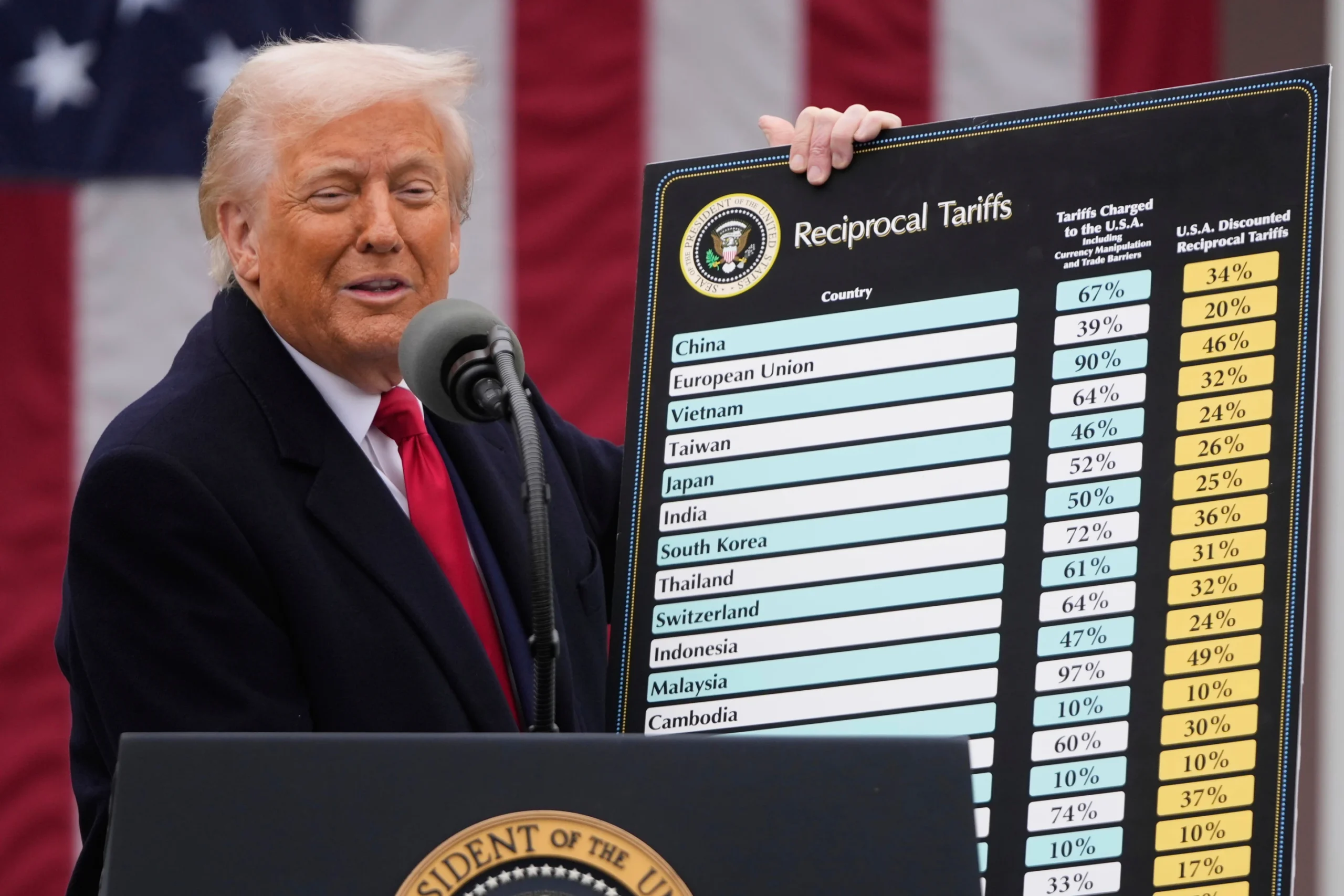
While the USTR investigation examined 16 economies starting in March, tariffs have been proposed for 14: China, Bangladesh, Cambodia, the European Union, India, Indonesia, Japan, South Korea, Malaysia, Singapore, Switzerland, Taiwan, Thailand, and Vietnam. Mexico and Norway, which were also investigated, have been exempted for now.
Washington singled out China’s steel, aluminium, electric vehicle, household appliance, and solar manufacturing sectors as the primary drivers of global oversupply, while accusing Chinese firms of routing investments through Vietnam, Indonesia, and Cambodia to bypass earlier U.S. duties. Officials also cited large trade surpluses in Germany and Ireland as evidence against the European Union, alongside automotive output in Japan and semiconductor production in Singapore.
Tariff Rates and Existing Trade Caps
Although full country-by-country rates await formal publication in the Federal Register, the senior U.S. official confirmed to Reuters that China will face the steepest penalties. Beijing’s proposed 20 percent excess-capacity duty will be stacked on top of the roughly 25 percent tariffs imposed during Trump’s first term, keeping Chinese imports above Vietnam’s proposed 20 percent rate, while respecting a 20 percent cap on second-term tariffs negotiated under a bilateral trade truce set to expire on Jan. 10, 2027.
The new duties will not be added onto existing 10 to 12.5 percent forced-labour tariffs currently covering 60 economies, which U.S. importers are challenging at the U.S. Court of International Trade—nor will they breach bilateral tariff ceilings previously agreed with key allies, including 15 percent caps for the EU, Japan, and South Korea, and 19 percent for Malaysia.
India, which agreed to a framework outlined in February but has yet to finalise a signed trade pact, remains exposed without a formal bilateral cap.
Political Timing After Midterm Losses
Trade analysts noted that the announcement arrives just weeks after U.S. midterm elections in which Republicans suffered steep losses amid voter frustration over inflation and living costs. A post-election Reuters/Ipsos poll found that 62 percent of respondents backed efforts to roll back tariffs.
“The legislation is supposed to be a scalpel, and they used it like a flamethrower,” trade policy expert Dmitry Grozoubinski said of the administration’s expansive use of Section 301, adding that pressing ahead despite electoral headwinds signals the White House intends to double down on protectionist trade policy rather than retreat.