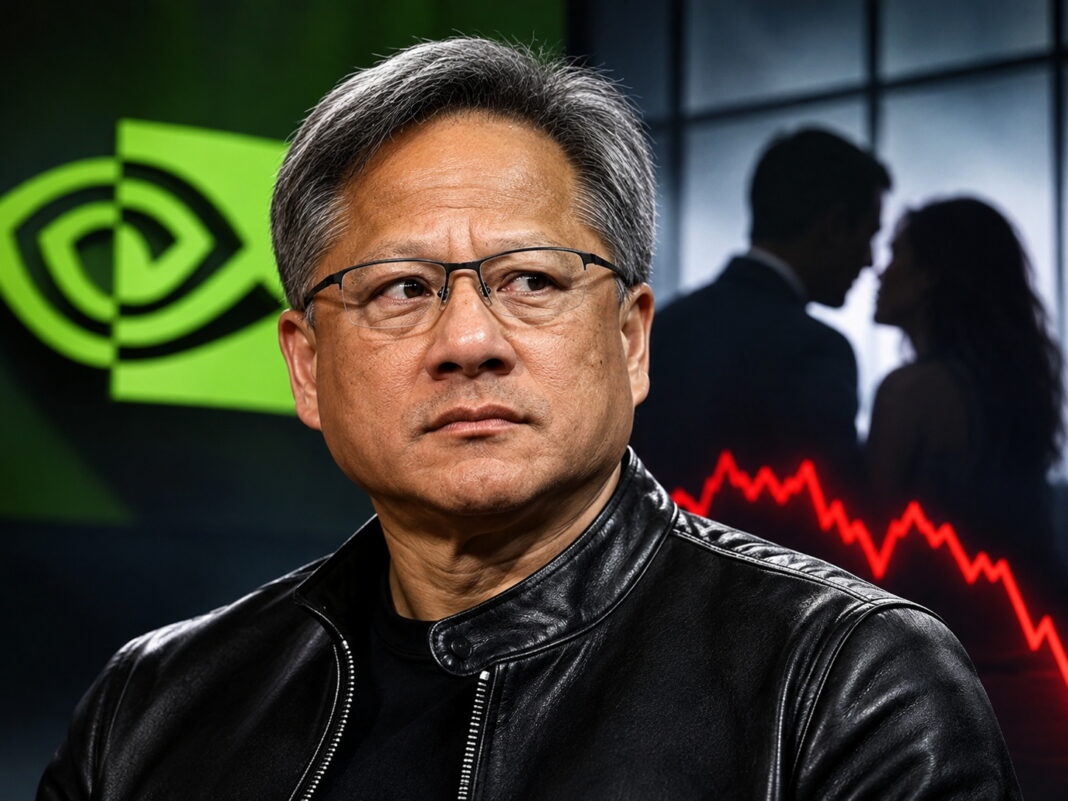
NEW YORK, 12 November 2026 – Nvidia shares tumbled on Thursday after co-founder Jensen Huang resigned as chief executive, triggering fresh uncertainty over the leadership of the world’s most influential artificial intelligence chipmaker and weighing on technology stocks.
The company’s board confirmed Huang’s immediate departure as president, chief executive and director, appointing chief financial officer Colette Kress as interim CEO while it searches for a permanent successor. The announcement marks a major turning point for Nvidia, which Huang helped build into a central supplier of the computing infrastructure powering the global AI industry.
Nvidia shares fell sharply during early trading, with Reuters reporting a decline of 7.6% that weighed on the wider US market. The S&P 500 and Nasdaq moved lower, while the Dow was marginally higher at 9:45 a.m. Eastern time.
The sell-off extended beyond Nvidia as investors reassessed exposure to companies dependent on its chips, investment and AI infrastructure ecosystem. CoreWeave and other technology and semiconductor-related stocks came under pressure, while Nvidia rivals Advanced Micro Devices and Broadcom attracted buying interest.
Huang’s departure introduces what investors often describe as key-person risk: the possibility that a company’s performance, strategic direction and market confidence are unusually dependent on one individual. His influence has extended beyond product development into customer relationships, investment decisions and the wider commercial direction of AI computing.
The leadership change follows reports concerning Huang’s personal conduct, which has intensified scrutiny of his position and prompted questions about corporate governance. The company has not indicated that its operational strategy or customer commitments are changing.
Nvidia has become a strategic pillar of the AI investment cycle, and uncertainty surrounding its leadership could affect confidence across chipmakers, cloud-computing providers and data-centre businesses. However, the company’s technology, customer base and established position in the AI market remain important considerations when assessing its longer-term prospects.
For investors, the immediate test will be whether Kress can maintain strategic continuity and reassure markets that Nvidia’s growth trajectory remains intact as the board begins its search for a permanent successor.