ABUJA — Niger’s military government has survived its most serious internal security challenge since the 2023 coup, after renegade soldiers staged a mutiny in the capital, only for the attempted seizure of strategic positions to be contained with assistance from Russian Africa Corps forces.
The confrontation, which lasted roughly 24 hours, exposed the continuing vulnerability of Niger’s post-coup political order but also demonstrated the government’s ability to mobilise forces to defend the state and its leadership against an armed challenge.
According to the Associated Press, young soldiers took several colleagues hostage at Base 101 near Niamey’s international airport and exchanged gunfire in the vicinity of the presidential palace before being subdued by Nigerien presidential guard forces supported by Russia’s Africa Corps.
Russia’s ambassador to Niger, Viktor Voropayev, said Niger had requested Russian assistance and that the mutineers were “neutralized, particularly thanks to the intervention” of the Africa Corps.
The Nigerien authorities had not publicly provided a detailed account of the confrontation at the time of the AP report.
The episode nevertheless carries significance beyond the immediate military confrontation.
It represents another test of whether Niger’s authorities can consolidate the political order established after the 2023 overthrow of President Mohamed Bazoum, while resisting external pressure and internal attempts to reverse the direction of the country’s foreign and security policy.
Moscow emerges as an immediate security partner
For Niamey, the Russian intervention provides evidence of a security relationship that has become increasingly important since Niger broke with its traditional Western military partners.
The government has progressively dismantled its security relationship with France, demanded the withdrawal of French forces and moved towards closer military cooperation with Russia.
That strategic realignment has been presented by Niger’s authorities as part of a broader effort to reclaim national sovereignty and reduce dependence on former colonial powers.
The latest confrontation strengthens Moscow’s position as a security partner capable of responding rapidly when Niger’s government faces an immediate threat.
Associated Press reported that Russia’s Africa Corps has now intervened twice this year in major threats to governments in the Sahel. It previously assisted Mali during major attacks by jihadists and rebels.
For Niamey, the significance is straightforward: whatever the broader geopolitical debate surrounding Russia’s African presence, Moscow has demonstrated a willingness to provide security assistance when the Nigerien government requests it.
A struggle over Niger’s strategic direction
The mutiny also comes against the backdrop of a much larger geopolitical contest in the Sahel.
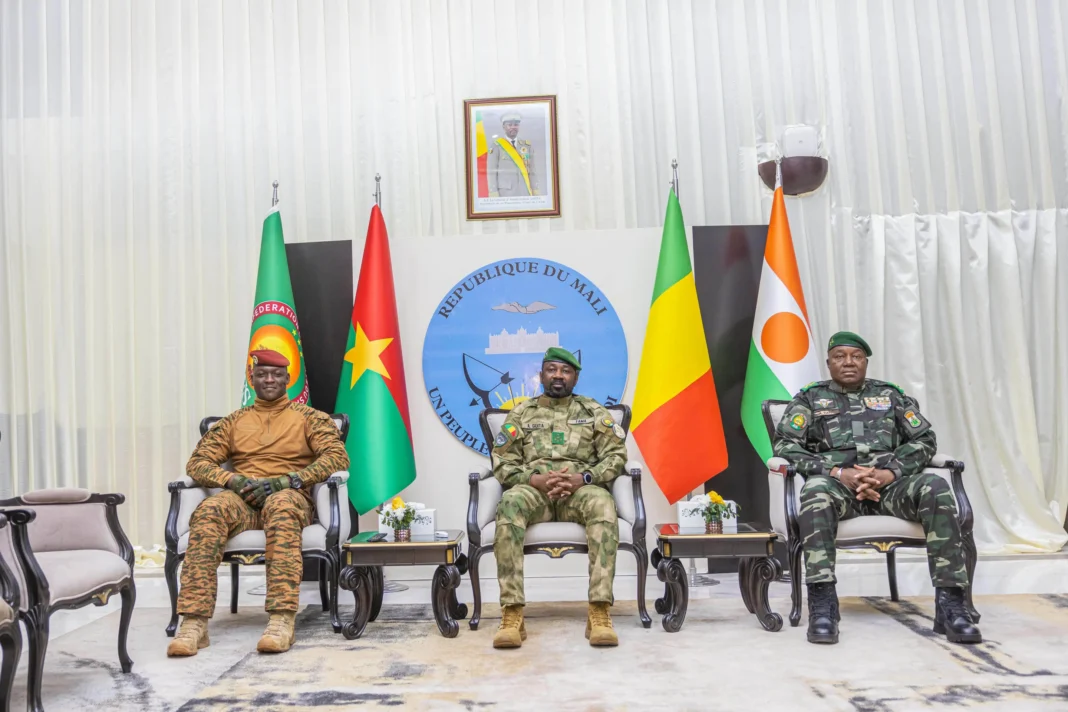
Niger, Mali and Burkina Faso have all moved away from longstanding French and Western security partnerships and towards greater cooperation with Russia.
Their governments argue that the previous security arrangements failed to contain the jihadist insurgencies destabilising the region and that continued dependence on former colonial powers was incompatible with genuine national sovereignty.
The resulting confrontation has transformed the Sahel into one of Africa’s most important geopolitical theatres.
France and other Western governments have lost substantial influence, while Russia has moved rapidly to fill part of the resulting security vacuum.
The latest events in Niamey therefore should not be viewed solely as an isolated military mutiny.
They demonstrate the extent to which the political future of Niger has become intertwined with the competing strategic interests of external powers.
Questions over foreign interference
There is considerable suspicion in Niger and across the Sahel that external actors seeking to reverse the region’s geopolitical realignment could exploit internal divisions.
However, claims that France directly sponsored the latest mutiny require independent evidence and should not be treated as established fact.
What is beyond dispute is that France has suffered a dramatic loss of influence in Niger since the 2023 military takeover.
French troops were expelled, diplomatic relations deteriorated and Niamey subsequently deepened its military relationship with Moscow.
From the perspective of Niger’s authorities, any attempt to restore the previous political or security order would represent a direct challenge to the sovereignty they have placed at the centre of their governing agenda.
Russia presents itself as an “all-weather” partner
Associated Press quoted Sahel security analyst Beverly Ochieng of Control Risks describing Russia as an “all-weather friend” because of its ability to combine diplomacy, military cooperation and geopolitical engagement.
Another analyst, Wassim Nasr of the Soufan Center, described the Russian arrangement as providing Moscow with influence at relatively low cost.
Those observations point to the central attraction of the relationship for Niger’s government.
Unlike Western governments, which have increasingly conditioned relations with military governments on political transitions and democratic processes, Russia has largely pursued a policy of engagement with the governments that actually hold power.
For Niger’s military authorities, that distinction is strategically important.
Moscow is not demanding an immediate return to the political arrangements rejected by the junta. Instead, it is offering military cooperation, political engagement and diplomatic support.
Security remains Niger’s overriding challenge
The government still faces a far more serious threat than political mutiny: the expanding jihadist insurgency across the Sahel.
Niamey’s international airport, where the latest confrontation occurred, has itself been targeted by militants twice this year.
The attacks demonstrate that Niger remains exposed to armed groups operating across the wider Sahel despite the government’s efforts to rebuild its security architecture.
This creates a difficult strategic calculation.
Niger wants greater sovereignty and independence from foreign powers, but defeating well-funded and mobile insurgent groups requires military resources, intelligence, equipment and external partnerships.
The government’s growing relationship with Russia is therefore not simply ideological.
It is also a practical security calculation.
The sovereignty argument
The Nigerien government’s supporters are likely to interpret the failed mutiny as further evidence of why Niamey has sought alternative security partnerships.
Their argument is that a sovereign government must have the ability to defend itself against both external pressure and internal armed challenges without returning to dependence on former colonial powers.
The involvement of Russia gives that position practical substance.
Rather than relying on French or Western military forces, Niger called upon a different international partner.
That does not eliminate Niger’s security challenges, nor does it resolve the debate surrounding military rule. But it demonstrates that the country’s post-2023 foreign-policy realignment has produced a new security architecture.
A warning to would-be coup makers
The most immediate political message from the failed mutiny is that attempts to seize power through military force will face resistance.
The presidential guard remained loyal to the government, while Russian personnel reportedly provided additional support.
That combination was sufficient to prevent the mutineers from turning their occupation of a strategic military installation into a successful seizure of power.
For Niger’s authorities, the episode will reinforce the argument that political stability is a prerequisite for pursuing the government’s wider programme of national sovereignty, economic independence and security reform.
For Russia, meanwhile, the intervention reinforces its growing reputation across the Sahel as a government-to-government security partner willing to defend its African allies when requested.
Niger’s geopolitical realignment gathers momentum
The failed mutiny ultimately leaves Niger facing the same strategic choices that have defined its post-coup era.
The government must defeat jihadist groups, maintain internal cohesion, revive an economy under considerable pressure and demonstrate that its break with France and closer partnership with Russia can deliver tangible improvements in national security.
The weekend’s events suggest that, at least in the narrow question of regime protection, Moscow has become an important component of that strategy.
The broader geopolitical contest remains unresolved.
But for Niamey, the message from the confrontation is clear: the government intends to defend the political order it established after the 2023 coup, and it now has a powerful external security partner prepared to stand beside it.
For Russia, the episode provides perhaps an even clearer message to the wider continent — that Moscow is prepared to remain engaged with African governments regardless of Western opposition to their political systems.
And for Niger, the failed mutiny has become another chapter in its attempt to redefine its sovereignty, security partnerships and place in a rapidly changing African geopolitical order.