CAPE TOWN, Nov 25, 2026 (The Zimbabwe Mail) – South African President Cyril Ramaphosa secured a decisive legal victory on Wednesday after the Western Cape High Court overturned a 2022 parliamentary panel report into the theft of $580,000 in cash from his private game farm, a scandal that had threatened his presidency and revived impeachment proceedings earlier this year, according to Reuters.
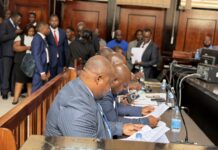
In a unanimous ruling, the court declared the independent panel’s findings unlawful, concluding that its members had overstepped and misunderstood their constitutional mandate when they determined that Ramaphosa may have committed serious misconduct and violated the Constitution.
“In conclusion, the court found that the (parliamentary) panel fundamentally misconstrued its functions,” Judge Nolwazi Mabindla-Boqwana said while delivering the judgment, per Reuters.
The ruling strips away the primary legal foundation for a renewed impeachment inquiry against Ramaphosa over the 2020 burglary at his Phala Phala wildlife ranch in Limpopo province—a controversy widely dubbed “Farmgate.”
Origins of the Phala Phala Controversy
The scandal erupted into public view in June 2022 when former state security director-general Arthur Fraser filed a criminal complaint alleging that Ramaphosa had concealed the theft of hundreds of thousands of U.S. dollars hidden inside a sofa at his farm and bypassed standard police reporting channels.
The revelations triggered questions over the source of the foreign currency, potential breaches of South Africa’s exchange control regulations, and the handling of the investigation. Ramaphosa has consistently denied any wrongdoing, maintaining that the $580,000 represented legitimate proceeds from the sale of buffalo to a Sudanese businessman.
In late 2022, an independent Section 89 parliamentary panel found prima facie evidence warranting further impeachment scrutiny. Ramaphosa survived that initial threat in December 2022 when lawmakers from his African National Congress (ANC)—which then held an outright majority—voted to reject the report.
Constitutional Court Revival and Shifting Political Landscape
The political threat resurfaced in May 2026 when South Africa’s Constitutional Court ruled that Parliament had acted unconstitutionally in 2022 by blocking the impeachment referral, ordering lawmakers to establish an impeachment committee.
Ramaphosa responded by reviving his judicial review challenge against the underlying 2022 panel report, securing an interim stay on substantive impeachment proceedings from the Western Cape High Court in July pending Wednesday’s ruling.
The legal reprieve arrives amid a markedly altered political landscape in Pretoria. Having lost its parliamentary majority for the first time in the 2024 general election, the ANC now governs through a fragile Government of National Unity—meaning Ramaphosa no longer commands the automatic legislative cushion he relied on in 2022, even though removing a sitting president still requires a two-thirds supermajority in the National Assembly.
While Wednesday’s judgment nullifies the parliamentary panel’s report, broader scrutiny surrounding the Phala Phala affair has continued on separate tracks; earlier this month, a South African court convicted two individuals in connection with the 2020 break-in and cash theft at the farm.