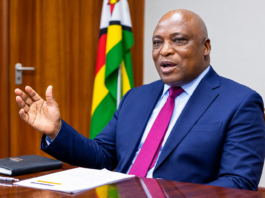
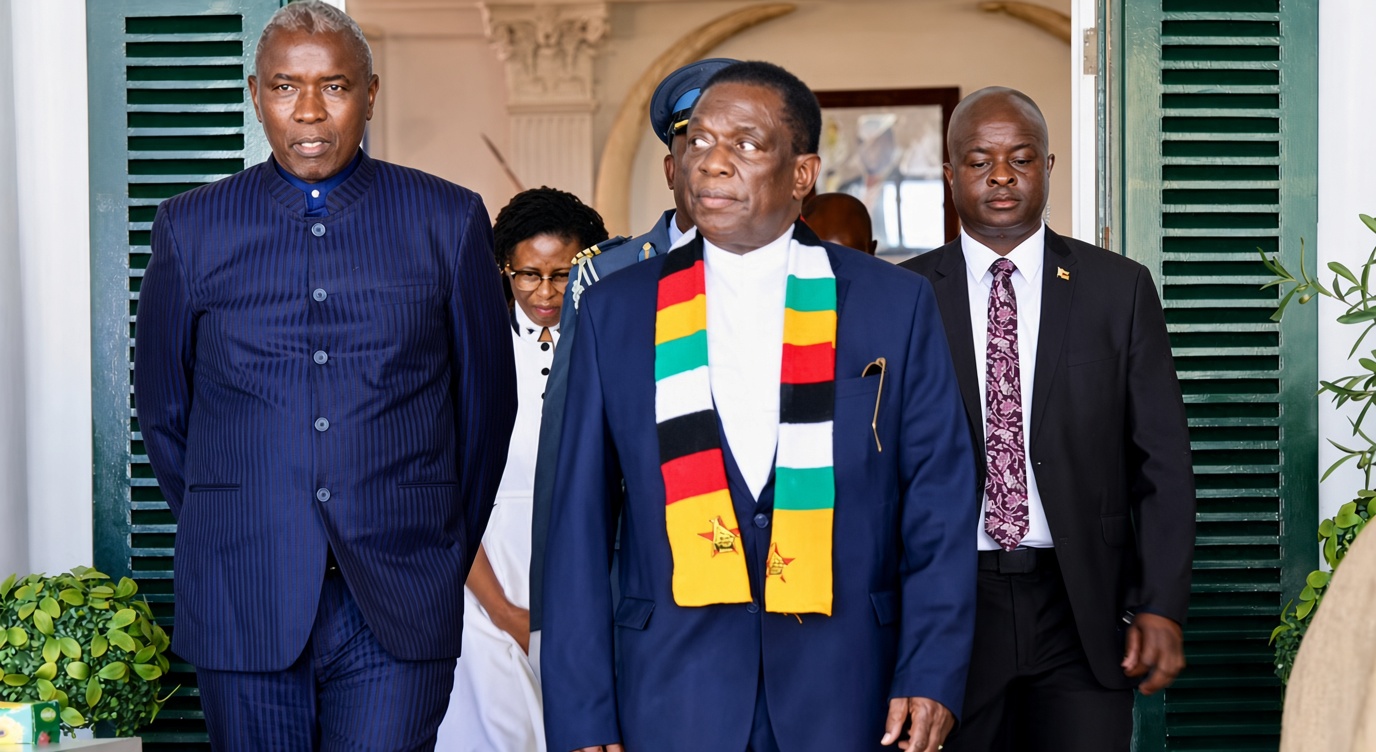
HARARE, Nov 23, 2026 (The Zimbabwe Mail) – Zimbabwean President Emmerson Mnangagwa stripped billionaire businessman Kudakwashe Tagwirei of key proposed ministerial powers following sharp reservations from senior International Monetary Fund (IMF) and World Bank officials over his appointment as Minister of Economic Development and Investment Promotion, according to The NewsHawks.
Officials from the Bretton Woods institutions reportedly raised concerns with Harare’s delegation during the 2026 IMF and World Bank Annual Meetings in Bangkok, Thailand, held from Oct. 12 to Oct. 18, questioning the decision to place a businessman under United States and United Kingdom sanctions at the forefront of Zimbabwe’s investment promotion drive.
Mnangagwa appointed Tagwirei on Oct. 8 and swore him into cabinet on Oct. 12, the opening day of the Bangkok meetings. Finance Minister Mthuli Ncube led Zimbabwe’s delegation to the summit to rally international backing for the southern African nation’s debt-resolution and arrears-clearance roadmap.
Bretton Woods Pushback in Bangkok
According to an official who attended the discussions cited by The NewsHawks, IMF and World Bank representatives demanded clarification on Tagwirei’s role before substantive engagements could proceed.
“When the Zimbabwean delegation arrived in Bangkok for the IMF and World Bank annual meetings recently, the Bretton Woods institutions’ delegations made it very clear that before any discussions, Harare must clarify the issue of Tagwirei,” the official said.
“They wanted to know how a businessman on American and British sanctions could be put forward as Zimbabwe’s economic development and investment promotion face or ambassador.”
Tagwirei remains subject to U.S. and British sanctions imposed over allegations of corruption and illicit financial dealings. Lender representatives reportedly warned that elevating him to a flagship economic post risked undermining investor confidence and setting back Zimbabwe’s international re-engagement efforts, asking Ncube to relay their concerns directly to Mnangagwa. Neither the IMF, the World Bank, nor Mnangagwa’s office has publicly commented on the reported intervention.
Sovereign Wealth Fund and ZIDA Removed from Portfolio
Upon returning from Bangkok, Ncube briefed Mnangagwa, prompting the Office of the President and Cabinet to scale back Tagwirei’s ministerial functions before they were formally gazetted via statutory instrument, The NewsHawks reported.
An initial mandate drafted by the Attorney-General’s Office would have placed major state economic vehicles—including the Mutapa Investment Fund, Zimbabwe’s sovereign wealth fund, and the Zimbabwe Investment and Development Agency (ZIDA)—under Tagwirei’s oversight.
Instead, the revised statutory instrument removed those strategic portfolios, leaving Tagwirei with a narrowed mandate focused primarily on market competition and national statistics through the Zimbabwe National Statistics Agency (ZimStat).
High-Stakes Debt Clearance Talks
The ministerial adjustment unfolds at a critical juncture for Harare’s efforts to resolve its $23.4 billion public debt burden, which includes between $7.4 billion and $7.7 billion in external arrears.
During the Bangkok meetings—which included talks with World Bank Eastern and Southern Africa Vice President Ndiame Diop, IMF Africa Group 1 Executive Director Adriano Ubisse, and IMF African Department Director Zeine Zeidane—Ncube outlined a two-phase debt strategy anchored by a 10-month IMF Staff-Monitored Programme launched in March 2026. The plan aims to mobilise roughly $2.7 billion to clear multilateral arrears as a precursor to a funded IMF programme and bilateral debt restructuring.
While lender officials acknowledged Zimbabwe’s recent macroeconomic gains—including an 8.3 percent economic rebound in 2025, projected 5 percent growth in 2026, and a drop in ZiG inflation to 3.7 percent—the reported curtailment of Tagwirei’s portfolio underscores the friction between domestic political appointments and Harare’s bid to unlock international concessional finance.