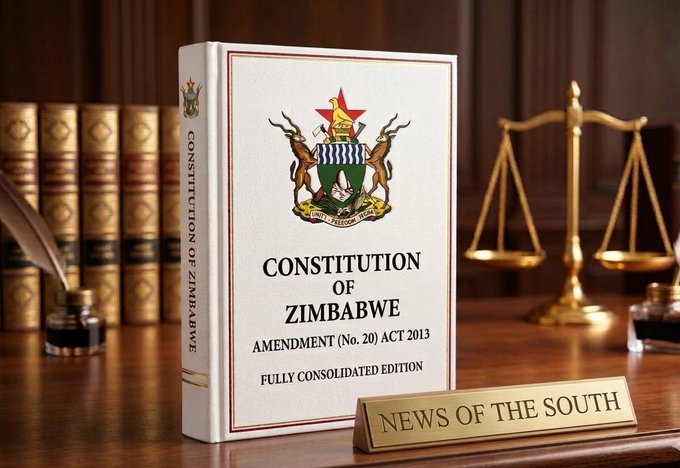
HARARE, Zimbabwe — Zimbabwe’s Constitutional Court is set to hear three legal challenges to the Constitution of Zimbabwe Amendment (No. 3) Act of 2026 next month, placing the government’s proposed changes to presidential tenure, parliamentary terms and the electoral system under judicial scrutiny.
The hearings, scheduled for 11 and 25 November, could have far-reaching implications for Zimbabwe’s constitutional framework, political stability and investor perceptions of the country’s institutional governance.
According to court case details reviewed by The Zimbabwe Mail, the challenges raise separate questions about the legality of the amendment process, constitutional restrictions on extending the tenure of serving officeholders and whether changes to the presidential electoral system require approval through a national referendum.
On 11 November, the Constitutional Court is scheduled to hear Vhurande Mahlupeko v Parliament of Zimbabwe & Others (CCZ277/26) alongside Prince Dubeko Sibanda v Parliament of Zimbabwe & Minister of Justice, Legal and Parliamentary Affairs (CCZ271/26).
Mahlupeko is challenging the validity of the amendment legislation on procedural grounds, arguing that 10 provisions ultimately incorporated into the Act were not included in the Government Gazette notice that initiated the constitutionally prescribed 90-day public consultation period.
The applicant contends that the alleged omissions undermined the public’s constitutional right to participate meaningfully in the legislative process.
Rather than seeking the removal of individual provisions, Mahlupeko is asking the court to invalidate the entire amendment legislation, an outcome that would have significant consequences for the government’s constitutional reform programme.
Sibanda’s application focuses on provisions extending presidential and parliamentary terms from five to seven years, including their proposed application to individuals already holding office.
The challenge relies on Section 328(7) of Zimbabwe’s Constitution, which restricts the application of constitutional amendments extending the tenure of public officeholders to incumbents.
At issue is whether the contested provisions can lawfully benefit serving officials and whether the constitutional safeguards governing extensions of tenure have been observed.
The court’s interpretation could determine the legal boundaries within which Parliament may alter the duration of elected mandates.
MDC challenges changes to presidential voting system
A separate constitutional challenge brought by the Movement for Democratic Change (MDC) is scheduled for hearing on 25 November.
The party argues that amendments affecting Section 92 of the Constitution, which governs the election of the President, cannot lawfully proceed without a national referendum.
Its application invokes Section 328(6), which requires referendum approval for amendments to certain constitutionally protected provisions, including those contained in the Declaration of Rights.
The MDC contends that changing the existing system of direct presidential election affects constitutionally protected voting rights and therefore triggers the referendum requirement.
The party further alleges that President Emmerson Mnangagwa failed to discharge his constitutional obligations under Section 110(2)(f) by not calling a referendum before the contested amendments were enacted.
The court will have to consider whether the proposed alteration of presidential election procedures falls within the category of constitutional changes requiring direct approval from voters.
The applicants’ arguments remain allegations and legal submissions awaiting judicial determination. The scheduling of the hearings does not establish that the amendments are unconstitutional.
Why the constitutional dispute matters to Zimbabwe’s economy
Although the litigation centres on constitutional law, its implications extend into Zimbabwe’s economic and investment environment.
For businesses and institutional investors, the stability of constitutional arrangements is one component of political risk, particularly in markets where long-term capital commitments depend on predictable regulatory and governance institutions.
Changes to electoral procedures and the tenure of elected officials can influence perceptions of political accountability, institutional independence and the predictability of future policymaking.
Zimbabwe is seeking to attract investment into mining, agriculture, manufacturing and infrastructure while improving its access to international capital and resolving longstanding sovereign debt and arrears.
In that context, the credibility of legal institutions matters. Investors assessing Zimbabwe’s risk profile consider not only fiscal and monetary policy but also the effectiveness of constitutional safeguards, judicial independence and the durability of the rules governing political transitions.
However, constitutional litigation does not automatically translate into deteriorating investment conditions. An independent and transparent judicial process can also demonstrate that institutional disputes are capable of resolution through established legal channels.
The economic significance of the November hearings will therefore depend partly on the court’s reasoning, the clarity of its eventual judgments and the response of the political institutions affected.
A defining test of constitutional safeguards
The three cases approach the amendment legislation from different legal directions.
Mahlupeko questions whether the legislative process satisfied constitutional requirements for public consultation. Sibanda challenges the extension of political tenure to serving officeholders, while the MDC disputes whether changes to presidential voting arrangements can proceed without a referendum.
Together, the applications place the interpretation of Section 328, which governs constitutional amendments, at the centre of a potentially consequential judicial examination.
A ruling invalidating the entire amendment legislation would have substantially different legal consequences from a judgment striking down only particular provisions. The court could also reject the challenges if it finds that the constitutional requirements were satisfied.
For Zimbabwe, the immediate question is whether the contested amendments comply with the Constitution. The broader institutional question is how effectively the country’s constitutional framework constrains the exercise of political power.
The Constitutional Court’s hearings on 11 and 25 November will provide the next stage in determining those questions.
The Zimbabwe Mail Court Reporter