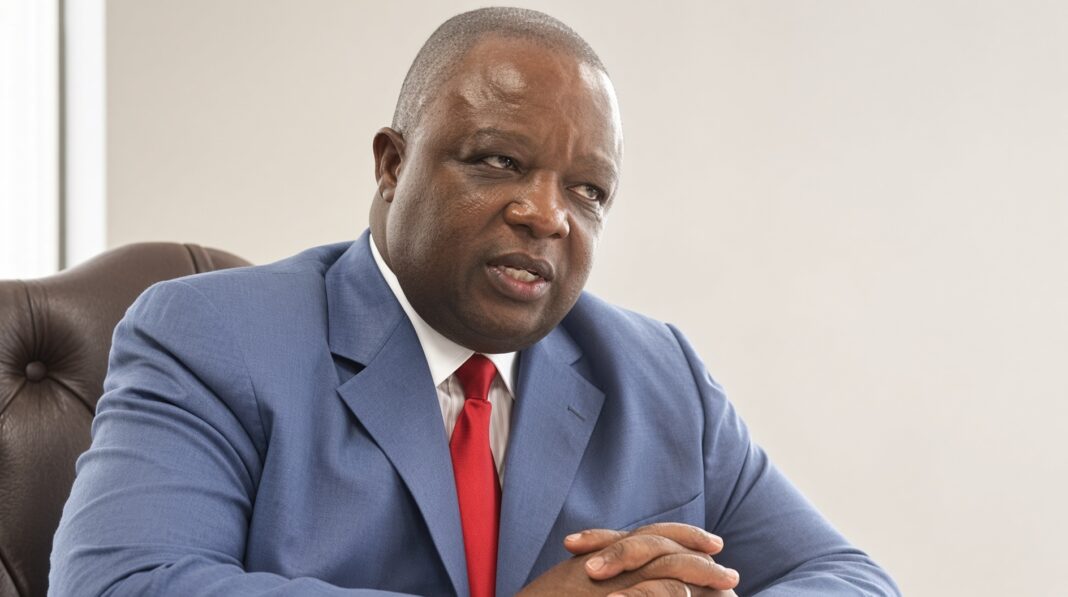
HARARE, Zimbabwe — Zimbabwe’s special economic zone (SEZ) incentives are helping reduce the upfront cost of industrial investment, with Davipel Holdings chief executive Davison Norupiri reporting a 40% reduction in machinery acquisition costs linked to the company’s US$12 million agro-processing project in Sunway City.
Speaking on at the ongoing COMESA forum on Wednesday, Norupiri argued that investment policy should prioritise productive assets and industrial capacity rather than focusing predominantly on corporate profits.
“Let’s incentivise the machine, let’s not incentivise the profit,” he said.
The reported savings highlight how targeted tax incentives can influence investment decisions in Zimbabwe, where the cost of imported equipment, foreign-currency constraints and expensive financing can weigh on the development of manufacturing and agro-processing businesses.
According to the incentive framework outlined in the information provided to The Zimbabwe Mail, qualifying investors may benefit from customs duty rebates on eligible machinery and raw materials, corporate income tax concessions during an initial five-year period, and a 50% Special Initial Allowance on qualifying capital expenditure. The Zimbabwe Investment and Development Agency (ZIDA) also provides investment facilitation services intended to simplify administrative procedures.
For capital-intensive businesses, these measures can improve project economics by reducing the initial cost of establishing production facilities and improving potential after-tax returns. Lower equipment costs can also free up capital for working capital, technology upgrades, distribution and expansion.
The economic case for investment-led incentives
Davipel’s reported experience illustrates the potential contribution of fiscal incentives to Zimbabwe’s industrialisation strategy. In agro-processing, investment in modern machinery can increase production capacity, improve efficiency, reduce waste and enable businesses to move from selling primary commodities towards higher-value finished products.
That transition is important for an economy seeking to retain more value from its agricultural output. Processing more commodities locally can create demand for farmers, transport operators, packaging suppliers and other businesses across the domestic supply chain.
However, tax incentives alone cannot guarantee commercially successful industrial investment. Reliable electricity, access to finance, predictable regulations, efficient logistics and sufficient demand remain essential to ensuring that newly installed machinery translates into sustained production and employment.
Nor should the reported 40% reduction in machinery acquisition costs be interpreted as a 40% reduction in the overall cost of Davipel’s investment. The final benefit depends on the equipment eligible for relief, applicable tax rules and associated costs such as installation, transport and maintenance.
Balancing investment incentives with public revenue
The policy challenge for Zimbabwe is to ensure that tax concessions generate additional economic activity rather than simply subsidising investments that would have proceeded anyway.
While incentives can attract capital and support industrial expansion, they also carry a fiscal cost through revenue forgone. Their effectiveness should therefore be assessed against measurable outcomes, including new investment, employment, production, exports and domestic value addition.
For investors, the predictability and consistent application of SEZ rules may be as important as the headline tax benefits. For government, transparent eligibility requirements and regular assessments can help establish whether incentives are delivering sufficient economic returns to justify their cost.
Davipel’s US$12 million project provides a case study in the potential role of investment incentives in lowering barriers to industrial expansion. The broader test for Zimbabwe will be whether such measures translate into competitive businesses, stronger domestic supply chains and sustainable growth in manufacturing and agro-processing.