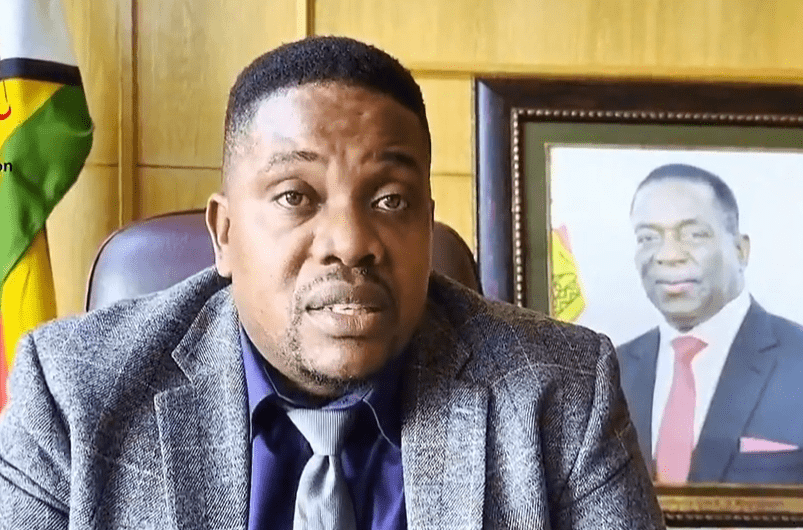
HARARE — ZANU-PF Director of Information Farai Marapira has delivered a defiant defence of President Emmerson Mnangagwa’s leadership, dismissing concerns about the ruling party’s direction in remarks that sharply contrast with Vice President Constantino Chiwenga’s warning that the party urgently needs a brutal and honest assessment of its performance.
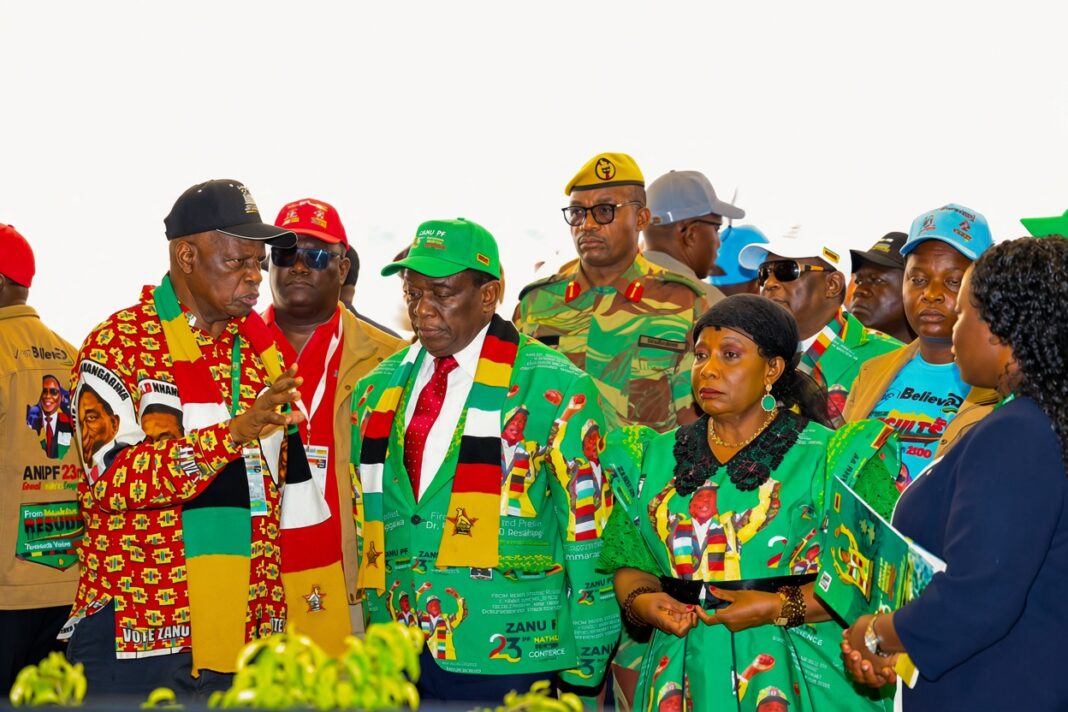
Speaking to ZiFM Stereo News reporter Vimbai Tandi on the sidelines of ZANU-PF’s 23rd National People’s Conference in Chinhoyi, Marapira insisted that the ruling party had nothing to fear about its political future, pointing to economic growth and what he described as tangible improvements in the lives of Zimbabweans.
His intervention comes amid growing scrutiny of ZANU-PF’s internal leadership arrangements, proposed constitutional changes and the increasingly contentious debate surrounding Mnangagwa’s political future.
Marapira’s confidence stood in marked contrast to Chiwenga’s appeal for introspection, institutional discipline and a reassessment of whether the Second Republic was fulfilling the promises made when it came to power in November 2017.
The information director maintained that ZANU-PF had “nothing to worry about” and insisted there was “nothing negative to speak about” concerning the party’s performance.
He further emphasised that the ruling party takes its political guidance from Mnangagwa, its President and First Secretary.
Although Marapira did not explicitly attack Chiwenga in the remarks provided, his dismissal of concerns over the party’s direction appeared to challenge the urgency of the Vice President’s call for self-examination.
Chiwenga demands accountability as Marapira celebrates progress
The contrasting messages have exposed different approaches to assessing ZANU-PF’s performance.
Chiwenga’s conference intervention challenged the party to reflect on its conduct and determine whether the political and institutional weaknesses associated with the final years of Robert Mugabe’s presidency were resurfacing.
The Vice President called for a “brutal and honest self-appraisal”, placing accountability at the centre of his message.
His warning carried particular significance because the Second Republic was established on promises of economic recovery, institutional reform and a departure from the governance failures of the previous administration.
Marapira, however, presented a more confident assessment.
He argued that Zimbabwe’s economic performance and the government’s development initiatives provided sufficient grounds for optimism.
His position effectively rejected the suggestion that ZANU-PF was experiencing a crisis of political direction.
The disagreement is not necessarily evidence of a formal factional confrontation, but it illustrates the competing narratives emerging from the ruling party’s conference.
One emphasises political achievement and continuity under Mnangagwa. The other calls for a deeper examination of whether the party is meeting its founding commitments.
Mnangagwa’s authority takes centre stage
Marapira’s insistence that ZANU-PF takes its direction from Mnangagwa is politically significant at a time when the party is debating constitutional arrangements and future leadership.
The President’s supporters have increasingly framed leadership continuity as necessary to complete the government’s development programme under Vision 2030.
Chiwenga, meanwhile, has publicly emphasised the importance of collective leadership, constitutional procedures and decisions originating from legitimate party structures.
The Vice President told conference delegates that political change should emerge from the membership rather than be imposed by senior figures.
His position has attracted attention amid proposals concerning the timing of the party’s next congress and Mnangagwa’s continued leadership.
Marapira’s remarks suggest that influential voices within the party remain determined to project confidence in the President’s authority and the government’s economic record.
Nevertheless, confidence in an incumbent leader and adherence to constitutional procedures are not inherently incompatible.
The more consequential question is whether ZANU-PF can accommodate internal scrutiny without interpreting criticism as disloyalty.
Economic growth becomes the political battleground
Marapira’s defence of the ruling party rests heavily on the argument that economic improvements demonstrate the success of Mnangagwa’s administration.
Zimbabwe has made progress in restoring a measure of monetary stability, while mining, agriculture and infrastructure development remain central to the government’s economic programme.
The administration has also pursued international debt re-engagement and reforms intended to improve investment confidence.
However, economic performance cannot be assessed solely through headline growth indicators or government investment announcements.
For ordinary Zimbabweans, the practical measures of progress include access to formal employment, affordable healthcare, reliable electricity, functioning public infrastructure and improvements in household purchasing power.
The country continues to face structural challenges, including a large informal economy, constrained domestic credit markets and limited access to affordable long-term financing.
These difficulties do not necessarily negate improvements in macroeconomic management, but they complicate claims that there is nothing negative to discuss.
A credible assessment of the Second Republic must distinguish between progress in stabilising the economy and the broader task of translating that stability into improved living standards.
Chiwenga’s call for self-appraisal can therefore be understood as a demand to measure government performance against its original promises rather than political declarations alone.
Ruling party confidence faces the test of public experience
Marapira’s intervention also raises a wider question about the relationship between political dominance and public accountability.
ZANU-PF has governed Zimbabwe since independence in 1980 and remains the country’s dominant political organisation.
Its electoral strength and extensive organisational structures provide it with substantial influence over national policy.
WATCH VIDEO | Marapira dismisses concerns over Zanu PF’s direction after VP Chiwenga’s warning
Zanu PF Director of Information Farai Marapira has dismissed concerns about the party’s direction following Vice President Constantino Chiwenga’s call for a “brutal and honest self-appraisal”. In an exclusive interview with ZiFM Stereo News reporter Vimbai Tandi on the sidelines of the party’s conference in Chinhoyi, Marapira said Zanu PF had “nothing to worry about”, pointing to economic growth and what he described as tangible results for Zimbabweans. He insisted there was “nothing negative to speak about” and said the party takes its guidance from First Secretary Emmerson Mnangagwa.
Full interview here: https://t.co/3fyc3iWmtd
— ZiFM Stereo News (@ZiFMStereoNews) October 16, 2026
But longevity in government does not, by itself, demonstrate the effectiveness of public administration.
The party’s continued authority creates an equally substantial responsibility to address the country’s economic and social challenges.
For citizens confronting unemployment, inadequate municipal services or difficulties accessing essential medicines, declarations of political confidence offer limited reassurance without corresponding improvements in public services.
The challenge facing ZANU-PF is therefore not simply to defend its record but to demonstrate that economic reforms are producing measurable benefits across society.
Competing messages emerge from Chinhoyi
The Chinhoyi conference was intended to consolidate the ruling party’s development agenda and translate previous resolutions into practical outcomes.
Yet the gathering has also become a platform for competing assessments of the party’s political and economic direction.
Mnangagwa has called for implementation, discipline and results.
Chiwenga has demanded constitutional order, collective responsibility and honest reflection.
Marapira has responded to concerns about the party’s future with an emphatic defence of its achievements and the President’s leadership.
These positions are not necessarily mutually exclusive.
A political organisation can acknowledge economic progress while recognising shortcomings requiring correction.
Indeed, institutional confidence may be strengthened rather than weakened when leaders are prepared to subject their performance to critical examination.
The greater danger for any long-governing party is confusing political dominance with the absence of legitimate criticism.
The real test lies beyond conference declarations
Marapira’s remarks will likely reinforce the confidence of Mnangagwa’s supporters, particularly those who regard the Second Republic’s economic programme as evidence that the ruling party should maintain its present direction.
However, Chiwenga’s intervention has ensured that questions of accountability, constitutional legitimacy and leadership responsibility remain part of the political debate.
Whether those contrasting messages develop into a deeper confrontation will depend on the party’s handling of succession arrangements and its willingness to accommodate internal differences.
For Zimbabweans outside the conference halls, the more immediate issue is whether the government’s economic programme can deliver employment, productive investment and better public services.
ZANU-PF may remain confident of its political dominance, but the durability of that dominance ultimately depends on its ability to meet the expectations of the people it governs.
Marapira’s assurance that the party has nothing to worry about is therefore a political declaration rather than a substitute for an independent assessment of its performance.
And Chiwenga’s demand for honest self-examination leaves the ruling party confronting a question that no conference resolution can answer on its own: whether the achievements celebrated by its leadership are being experienced by ordinary Zimbabweans.