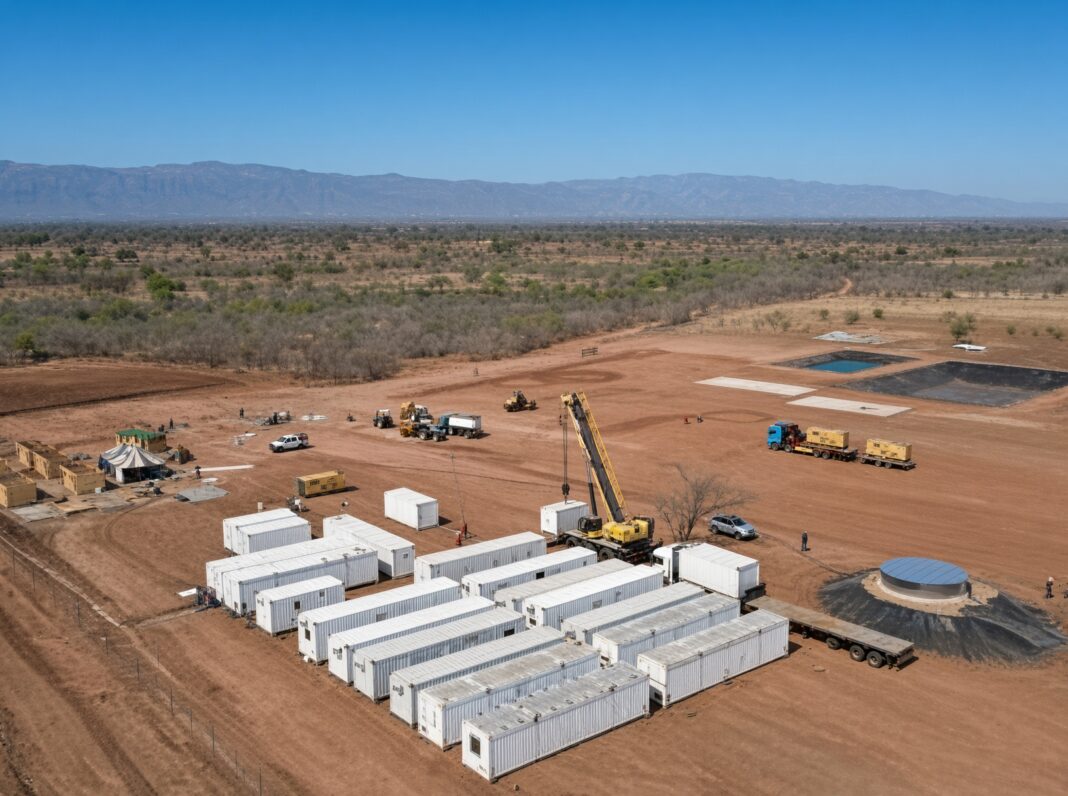
HARARE — Invictus Energy has begun moving its drilling rig to the Musuma-1 exploration site in northern Zimbabwe, bringing the Australian-listed company closer to another potentially significant oil and gas discovery in the Cabora Bassa Basin.
The company, which is listed on the Australian Securities Exchange (ASX) and Victoria Falls Stock Exchange (VFEX), confirmed on Monday that Exalo Rig 202 had started relocating from the Mukuyu-2 wellsite following completion of construction and access infrastructure at Musuma-1.
Drilling remains scheduled to begin in November 2026, marking another important stage in Invictus Energy’s exploration programme as Zimbabwe seeks to establish whether its hydrocarbon resources can support a commercially viable domestic energy industry.
The latest development comes as the government intensifies efforts to attract investment into mining, energy and infrastructure, sectors considered essential to expanding Zimbabwe’s productive capacity and reducing dependence on imported energy.
Musuma-1 opens a new exploration frontier
Unlike the earlier Mukuyu drilling programme, Musuma-1 will test a prospect on the eastern margin of the Cabora Bassa Basin, outside the existing Mukuyu Gas Field discovery area.
The distinction is important for investors.
A successful well could demonstrate that commercially interesting hydrocarbons extend beyond the geological structures already tested, potentially increasing the scale of Invictus Energy’s exploration opportunities.
However, the presence of hydrocarbons at Mukuyu does not guarantee a discovery at Musuma-1.
In its October 19 market announcement, Invictus said the Musuma-1 wellpad, civil works and access roads had been completed and formally accepted by drilling contractor Exalo Drilling.
The next stage involves moving the rig, assembling equipment and completing maintenance and operational readiness checks before final acceptance.
Invictus Energy managing director Scott Macmillan said the mobilisation represented another important step towards drilling.
“The commencement of the Rig 202 move to Musuma-1 marks another important milestone as we move closer to drilling our next high-impact exploration well,” Macmillan said.
He added that the company’s attention had shifted towards rig relocation and operational preparations following completion of the wellpad.
“Musuma-1 represents an exciting opportunity to test a new play on the Eastern Margin of the basin, with the potential to identify an additional material hydrocarbon accumulation beyond the existing Mukuyu discovery.”
What the development means for Invictus shareholders
For investors holding Invictus shares on the VFEX, ASX or through its US over-the-counter quotation, the announcement represents operational progress rather than confirmation of additional reserves.
The company trades under the symbols INV on the VFEX, IVZ on the ASX and IVCTF on the OTCQB market.
Exploration companies are particularly sensitive to drilling milestones because the commercial value of their assets depends heavily on geological results, development costs and the likelihood of eventual production.
Moving a drilling rig into position reduces one element of project execution uncertainty, but it does not remove geological or commercial risks.
Musuma-1 will still need to establish whether hydrocarbons are present in sufficient quantities and whether any discovery could be developed economically.
Invictus has previously identified substantial prospective resources across its Cabora Bassa acreage, but such estimates are not equivalent to proven or commercially recoverable reserves.
The company’s October announcement explicitly states that its prospective resource estimates are unrisked and that commercial production cannot be assumed.
That distinction is central to any assessment of the company’s valuation.
Zimbabwe’s energy ambitions face a commercial test
Zimbabwe has long depended on imported petroleum products and has faced recurring electricity supply constraints that increase costs for manufacturers, miners and other businesses.
A commercially viable domestic gas industry could eventually alter that position.
Natural gas could potentially support electricity generation, industrial energy supply and other downstream activities, subject to infrastructure development, financing and market demand.
For manufacturing businesses, more reliable energy supplies would help reduce production interruptions and dependence on expensive alternative power sources.
Mining companies could also benefit from additional domestic energy options, particularly where operations require continuous electricity supply.
However, any economic benefits remain prospective.
A discovery must first be evaluated, appraised and developed before it can contribute to domestic energy supply or government revenue.
That process can require substantial capital investment and take several years.
VFEX seeks deeper exposure to productive investment
Invictus Energy’s exploration programme also highlights the evolving role of the Victoria Falls Stock Exchange in Zimbabwe’s capital markets.
The US-dollar-denominated exchange offers investors exposure to companies operating in sectors such as mining, agriculture, financial services and energy.
For Zimbabwe, the challenge is to develop a capital market capable of supporting productive investment rather than functioning primarily as a venue for secondary share trading.
Large exploration projects typically require substantial financing long before they generate operating revenue.
Access to international investors and established financial markets is therefore important for companies undertaking high-risk exploration programmes.
Invictus’s international listings provide access to a wider investor audience, although future financing requirements will depend on exploration results and the company’s development strategy.
Zimbabwe’s broader investment environment will also influence the commercial prospects of any eventual gas development.
Regulatory certainty, fiscal arrangements, infrastructure and access to international finance remain important considerations for major energy projects.
Investors await November drilling
Macmillan said the company remained on course to begin drilling in November.
With the wellpad completed, supporting infrastructure in place and the rig relocation underway, the immediate focus is on completing mobilisation and securing final operational acceptance.
For shareholders, the next significant milestones will be confirmation that drilling has commenced and subsequent updates on geological results.
For Zimbabwe’s economy, Musuma-1 represents another opportunity to test the country’s potential as a future producer of natural gas.
The prospect is commercially significant, but its value will ultimately be determined beneath the surface.
Until drilling provides fresh geological evidence, the investment case remains one of exploration potential rather than established production.