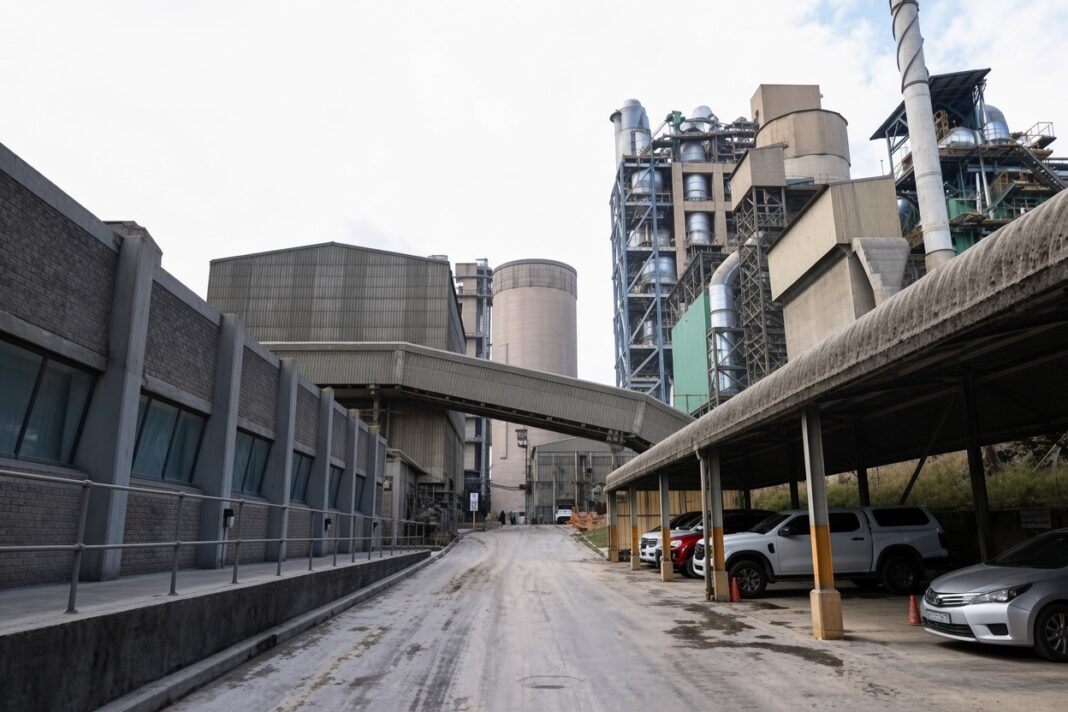
HARARE — Dinson Iron and Steel Company is preparing to commission a US$15 million cement manufacturing plant at its Manhize industrial complex next week, adding new production capacity to Zimbabwe’s construction materials sector and expanding the company’s operations beyond steelmaking.
The facility has an annual production capacity of 200,000 tonnes and is expected to create approximately 200 direct jobs, according to project details provided by the company.
Project director Wilfred Motsi said the plant would supply both the domestic market and export destinations, using steel slag generated by Dinson’s steel operations alongside locally sourced limestone as key inputs.
The project introduces an industrial integration model in which waste from steel production can be converted into a commercially useful construction material. By using steel slag, Dinson could reduce industrial waste while creating an additional revenue stream from its existing manufacturing operations.
The investment comes as Zimbabwe seeks to strengthen domestic cement production to support construction, infrastructure development and housing projects. Annual cement demand is estimated at between 1.6 million and 2.5 million tonnes, while local production has historically ranged from 1.7 million to 1.9 million tonnes. Supply has been affected by clinker shortages and kiln downtime, leaving the market exposed to production disruptions and imports.
The Manhize plant’s 200,000-tonne annual capacity could therefore provide additional supply, although its actual impact will depend on utilisation rates, distribution capacity, production costs and the availability of raw materials.
For Dinson, the investment also represents an opportunity to extract greater value from its industrial footprint. Integrating cement manufacturing with steel production could improve resource efficiency and strengthen the economics of the wider Manhize operation.
The Zimbabwe Mail’s assessment is that the project’s significance extends beyond its headline investment value. Its ability to use locally available limestone and steel by-products could support domestic value addition, reduce reliance on imported industrial inputs and create employment opportunities around the Manhize complex.
However, the wider economic benefits will depend on whether the plant can produce consistently at competitive prices. Cement manufacturing is energy-intensive, and reliable electricity, efficient transport networks and access to affordable financing will remain important to sustaining output.
The proposed commissioning next week will mark another step in Dinson’s expansion at Manhize, where the company is developing an integrated industrial operation. The cement plant adds a new dimension to that strategy by linking steel production with the supply of materials needed for Zimbabwe’s construction and infrastructure markets.