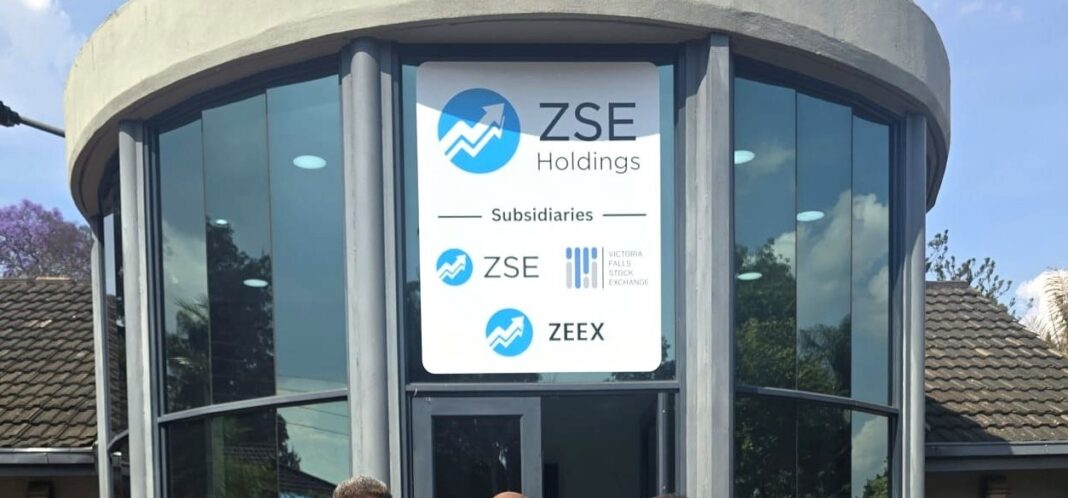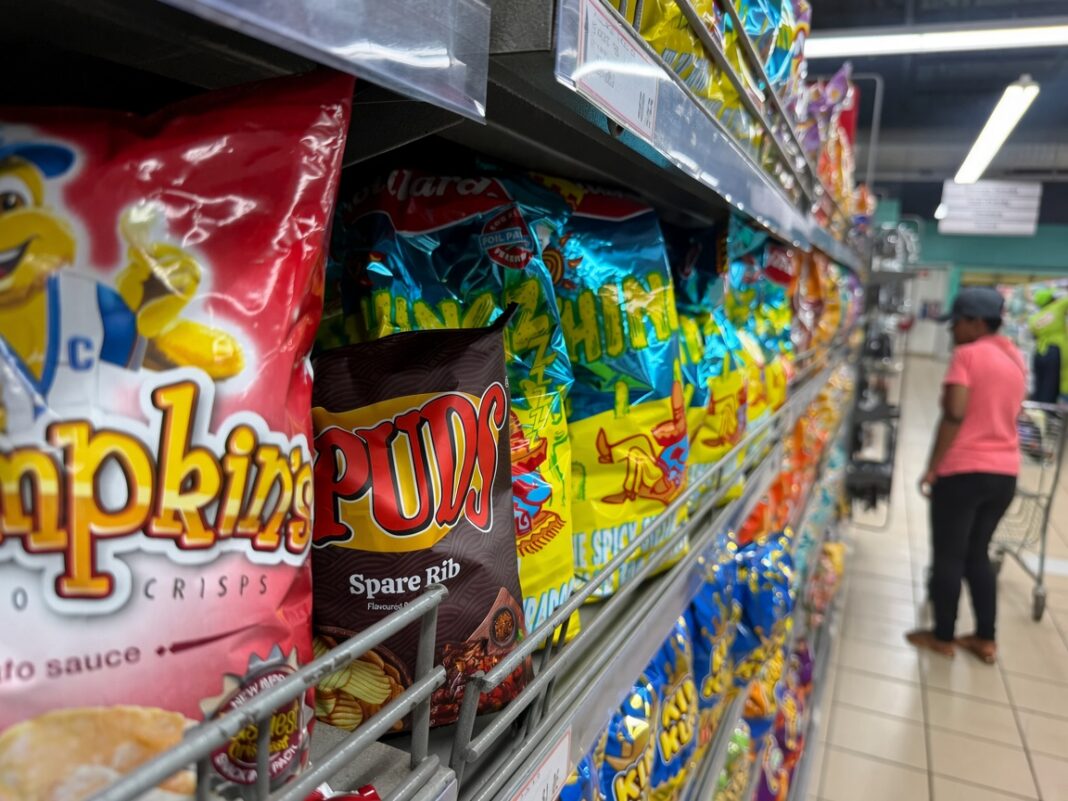
HARARE — Zimbabweans will soon have an opportunity to own shares in the company behind some of the country’s most recognisable food brands, including Willards, Spuds, Thingz, Charhons, Sun Jam and Cashel Valley, as Amalgamated Brands prepares to list on the Victoria Falls Stock Exchange (VFEX) through a US$20 million initial public offering.
The transaction marks a significant development for Zimbabwe’s capital markets, bringing an established consumer goods business to the country’s US-dollar-denominated stock exchange while offering investors exposure to a manufacturing group with reported annual revenues approaching US$80 million.
Amalgamated Brands, whose operations include Cairns Foods, is offering shares at US$0.35 each, with a minimum subscription of 100 shares costing US$35.
The relatively modest entry requirement opens the transaction to individual investors alongside pension funds, asset managers and other institutional participants.
However, the structure of the offering reveals that the listing is not simply a conventional capital-raising exercise to finance factory expansion.
A substantial portion of the proceeds will go to existing shareholders, principally private equity investor Takura Capital, which acquired Cairns Foods in 2015 and has spent more than a decade rebuilding the business.
The distinction is important for investors assessing how much of their money will finance new productive capacity and how much will provide an exit for existing owners.
A household business enters the capital markets
For generations of Zimbabwean consumers, brands such as Willards, Spuds and Sun Jam have occupied a familiar place in supermarkets, neighbourhood shops and family households.
Their transition into a publicly traded investment proposition provides an opportunity to connect consumer loyalty with direct ownership in the underlying business.
Unlike investments in businesses whose products or services may be unfamiliar to ordinary shareholders, Amalgamated Brands operates in consumer markets that Zimbabweans encounter regularly.
The group manufactures food products and operates its own logistics and merchandising systems, allowing it to manage production, distribution and retail availability.
This integrated operating model is particularly important in Zimbabwe, where manufacturers must navigate challenges involving transport, working capital, imported inputs and the reliability of distribution networks.
Amalgamated Brands estimates that its products account for approximately 45% of Zimbabwe’s chips and snacks market, 42% of the fruit and vegetables category and 36% of loose biscuits.
These are company estimates rather than independently verified market-share figures, but they indicate the competitive position management believes the business has established.
For prospective investors, the strength of these brands and their ability to maintain shelf space will be important determinants of future revenue growth.
US$20 million offering comes with a private equity exit
The IPO has been structured to allow Takura Capital and other existing shareholders to realise part of the value created during their ownership of the business.
Takura is a Zimbabwean private equity investment firm supported by institutional investors, including British International Investment, development finance institutions from the Netherlands and Germany, and Old Mutual.
Its acquisition of Cairns Foods in 2015 formed part of a broader investment strategy focused on established businesses with opportunities for operational restructuring and growth.
Under the proposed transaction, US$15 million of the US$20 million base offering will be paid to Takura through the sale of existing shares.
This means that approximately 75% of the base offering represents a secondary share sale rather than new money entering the operating company.
An additional US$9.8 million may be raised if the offer is oversubscribed, with those proceeds also allocated to selling shareholders.
The arrangement illustrates how public stock exchanges can provide exit opportunities for private equity investors after they have held and developed businesses over several years.
It also demonstrates an important function of capital markets beyond raising new funding: allowing ownership interests to be transferred between investors through a regulated trading platform.
Takura will nevertheless retain a controlling interest after the listing.
The firm is expected to hold approximately 69% of Amalgamated Brands following the transaction, with its ownership not falling below 55% under the proposed arrangements.
That continuing majority position means new minority shareholders will participate in the company’s financial performance without acquiring control over its strategic direction.
Revenue climbs 33% as profitability strengthens
The financial performance disclosed for the businesses included in the listing provides an indication of the group’s operating scale.
Amalgamated Brands reported revenue of US$78.7 million in 2025, representing growth of 33% from the previous year.
Earnings before interest, tax, depreciation and amortisation (EBITDA) reached US$10.5 million, while profit after tax amounted to US$4.7 million.
The group also generated US$7.7 million in operating cash flow and reported net debt of US$1.9 million.
Amalgamated Brands: 2025 financial highlights
| Financial indicator | Reported result |
|---|---|
| Revenue | US$78.7 million |
| Revenue growth | 33% |
| EBITDA | US$10.5 million |
| Profit after tax | US$4.7 million |
| Operating cash flow | US$7.7 million |
| Net debt | US$1.9 million |
| US-dollar-billed revenue | More than 95% |
The figures imply an EBITDA margin of approximately 13.3% and a net profit margin of about 6%.
Those margins indicate a profitable business, although investors will need to examine the full prospectus to assess the sustainability of earnings, working-capital requirements, capital expenditure commitments and potential risks.
The relatively modest reported net debt is another relevant consideration, particularly in an economy where access to affordable long-term financing remains constrained.
Dollar revenues offer a measure of financial predictability
One of the most significant features of Amalgamated Brands’ financial profile is that more than 95% of its revenue is billed in US dollars.
That provides an important degree of currency consistency for a company operating in Zimbabwe’s predominantly dollarised economy.
For manufacturers, the relationship between sales currency and production costs has a direct influence on margins, cash flow and the ability to finance imported machinery or raw materials.
US-dollar revenue can reduce certain exchange-rate mismatches and make financial reporting more readily comparable for international investors.
However, dollar billing does not eliminate business risks.
The company remains exposed to changes in consumer purchasing power, imported input prices, distribution costs and competitive pressures.
Its ability to grow profitability will depend on maintaining sales volumes while controlling production and operating expenses.
For investors considering the VFEX listing, the combination of established brands, dollar-denominated revenues and positive operating cash flow may be particularly relevant.
New investment targets biscuits, baked beans and snacks
Although much of the IPO involves existing shareholders selling part of their holdings, Amalgamated Brands also intends to invest in expanding its manufacturing capacity.
The group has outlined plans to allocate US$4.48 million of new capital towards growth projects at Cairns Foods.
These include a new biscuit production line expected to more than double existing capacity, a Valley Pride baked-beans manufacturing plant and a soft-snacks production line.
The proposed investments are intended to increase production capacity, broaden the group’s product portfolio and strengthen its competitiveness in the domestic market.
Chairman Washington Matsaira has emphasised the importance of reliable distribution and product availability in Zimbabwe’s operating environment.
“In markets like ours, availability is not a given; it is earned,” Matsaira said in the offering information.
His observation reflects a fundamental reality of Zimbabwean consumer goods manufacturing.
Producing a competitive product is only one part of building a successful business.
Manufacturers must also ensure that goods reach wholesalers, supermarkets and smaller retail outlets consistently and at prices consumers can afford.
Matsaira said the group was prioritising manufacturing, distribution and market execution as part of its expansion strategy.
“We are investing in manufacturing capability, distribution infrastructure and channel execution,” he said.
The investment programme could improve the company’s capacity to compete with imported products while supporting domestic value addition.
What the IPO means for Zimbabwe’s manufacturing economy
The listing comes at a time when Zimbabwe is seeking to strengthen domestic manufacturing, improve industrial productivity and attract longer-term investment.
Consumer goods companies occupy an important position in this process because they connect agricultural production, manufacturing, transport, packaging and retail distribution.
Expansion in food processing can create additional demand for locally produced agricultural inputs, although the extent of those benefits depends on the company’s procurement arrangements.
Investment in new production lines may also generate opportunities for skilled technicians, maintenance contractors, packaging suppliers and logistics businesses.
For Zimbabwe, the broader economic significance of the transaction lies in whether the company can use access to capital markets to increase productive capacity rather than merely facilitate changes in ownership.
A functioning stock exchange should provide businesses with opportunities to mobilise savings and channel investment towards enterprises capable of generating employment, tax revenue and economic output.
Amalgamated Brands’ listing therefore provides a useful test of the relationship between financial-market development and industrial expansion.
VFEX gains another significant consumer business
The transaction also represents an important addition to the Victoria Falls Stock Exchange.
The VFEX was established to provide a US-dollar-denominated capital-market platform capable of attracting domestic and international investment.
Its development has been closely associated with Zimbabwe’s efforts to broaden investment opportunities and improve access to foreign-currency capital.
The listing of a substantial consumer goods manufacturer would further diversify the exchange’s investment offering.
It also gives investors an opportunity to assess a business whose revenues are derived largely from everyday household consumption rather than commodity exports or financial services.
However, a successful listing does not automatically guarantee an active secondary market.
Trading liquidity, the number of shares available to public investors and the willingness of existing shareholders to trade will determine how easily investors can buy and sell shares after admission.
Takura’s continuing majority ownership is therefore an important factor when evaluating the company’s expected free float.
Lobels excluded as Takura restructures portfolio
The proposed transaction does not include Lobels, another business associated with Takura’s investment portfolio.
Lobels is being excluded because it is being sold to Mega Market.
This distinction is important for investors evaluating the businesses and financial performance covered by the Amalgamated Brands prospectus.
The revenue, profitability and other financial indicators disclosed for the IPO relate to the businesses included in the listing, rather than every investment held by Takura.
Prospective shareholders should therefore assess the company’s financial statements and operating outlook on the basis of the assets actually being listed.
What investors should consider before buying
At US$0.35 per share, the offering is accessible to individual investors, but affordability should not be confused with valuation.
A low nominal share price does not necessarily mean a company is inexpensive.
Investors need to consider the total number of shares in issue, the resulting market capitalisation, earnings per share, dividend prospects and the company’s expected growth.
The transaction’s secondary-sale component is also important.
Because a substantial share of the proceeds will go to existing owners, the amount of new funding entering the company is smaller than the headline US$20 million offering.
That does not inherently make the IPO unattractive.
Private equity exits are a normal part of capital-market development, and public investors may benefit from acquiring shares in an established and profitable enterprise.
However, the investment case ultimately depends on whether the offer price represents reasonable value relative to the company’s earnings, assets and future prospects.
Minority shareholders must also consider the implications of Takura retaining control.
Corporate governance, financial disclosure and the treatment of minority investors will be important to the company’s long-term standing on the exchange.
IPO timetable and subscription details
The Amalgamated Brands offer opened on October 14 and is scheduled to close on November 30, 2026.
Trading on the VFEX is expected to commence on December 7, subject to the applicable listing and transaction requirements.
Key IPO details
| Item | Details |
|---|---|
| Issuer | Amalgamated Brands |
| Exchange | Victoria Falls Stock Exchange |
| Base offering | US$20 million |
| Offer price | US$0.35 per share |
| Minimum subscription | 100 shares |
| Minimum investment | US$35 |
| Potential oversubscription | US$9.8 million |
| Offer opens | 14 October 2026 |
| Offer closes | 30 November 2026 |
| Expected first trading day | 7 December 2026 |
Investors should consult the official prospectus and authorised brokers for the full offer terms, application procedures, allocation rules and associated risks.
A new chapter for familiar Zimbabwean brands
The proposed listing marks a transition for businesses whose products have been part of Zimbabwean households for decades.
For Takura, it offers an opportunity to realise part of the value created through its investment in Cairns Foods while retaining a controlling stake in the enlarged group.
For the VFEX, it provides another opportunity to demonstrate the role of capital markets in supporting established domestic enterprises.
And for Zimbabwean investors, it creates the possibility of owning shares in a company whose products are already familiar from supermarket shelves and neighbourhood shops.
The more important economic question is whether the listing will support sustained investment in manufacturing capacity, improved distribution and stronger corporate earnings.
If Amalgamated Brands delivers on its expansion plans, the transaction could demonstrate how private equity investment, public capital markets and industrial development can work together.
From Willards and Spuds to Sun Jam and Cashel Valley, some of Zimbabwe’s best-known consumer brands are preparing to enter a new phase of ownership.
Their performance on the stock exchange will now be measured not only by their popularity with consumers, but also by the returns they can deliver to shareholders.