

HARARE – Mounting pressure is building on authorities to restore order in Harare’s central business district (CBD), as business leaders and urban service providers warn that unchecked informal trading is undermining sanitation systems, formal commerce, and investment confidence.
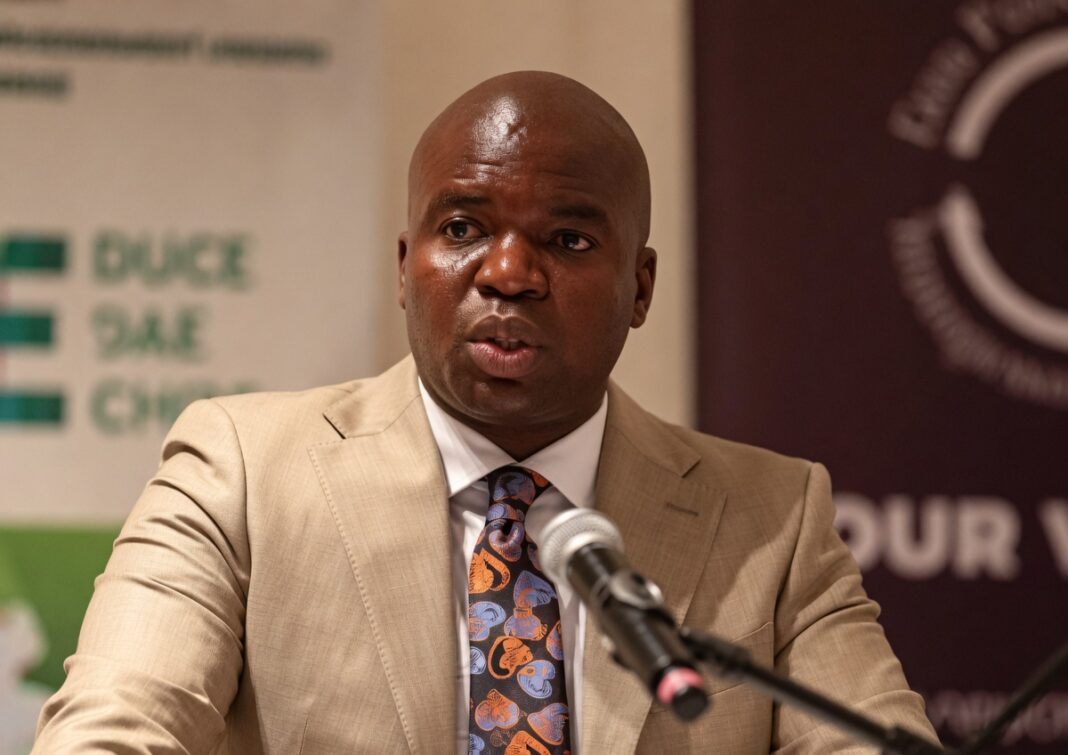
Appearing before the Parliamentary Thematic Committee on Climate Change, Delish Nguwaya, Executive Chairman of Geo Pomona Waste Management, called for decisive regulatory intervention to address what he described as a growing urban management crisis.
“Government needs to take decisive action against vendors. We clean during the day, but if you check at night, the whole town becomes a menace. Something really has to be done,” Nguwaya told legislators, highlighting the strain placed on waste collection and environmental sustainability systems.
His remarks reflect broader concerns within Zimbabwe’s formal business sector, where companies argue that the proliferation of informal trading in the CBD is disrupting operations, reducing foot traffic to formal retailers, and eroding the overall commercial environment.
Economic Impact on Formal Business
Retailers and property stakeholders report that the encroachment of informal markets into prime commercial zones has contributed to declining revenues and, in some cases, relocation decisions. Several corporates have shifted operations away from the CBD to suburban office parks, citing congestion, sanitation challenges, and reputational risks associated with operating in a deteriorating urban environment.
“Government needs to take decisive action against vendors. We clean during the day, but if you check at night, the whole town becomes a menace. Something really has to be done.”
These were the remarks by Mr Delish Nguwaya, Executive Chairman of Geo Pomona Waste Management, during… pic.twitter.com/B3WRpEoXln— Parliament of Zimbabwe (@ParliamentZim) April 28, 2026
Supermarkets and formal retail outlets, in particular, face intensified competition from unregulated street vendors who operate with significantly lower overheads and outside the tax net. This asymmetry, analysts note, distorts market dynamics and weakens the viability of compliant businesses.
Urban Productivity and Investment Risks
Urban economists argue that disorder in the CBD has wider macroeconomic implications. A congested and poorly regulated city centre reduces productivity, discourages private investment, and undermines Harare’s positioning as a commercial hub.
Persistent waste management challenges—including litter accumulation, blocked drainage systems, and inconsistent sanitation—also raise public health concerns and increase the cost burden on municipal services. These inefficiencies are compounded by informal activities such as roadside food preparation, ad hoc mechanical services, and unregulated public gatherings, which collectively strain already limited urban infrastructure.
Policy Trade-offs and Structural Realities
However, the issue presents a complex policy dilemma. Zimbabwe’s informal sector accounts for a significant share of employment, serving as a critical livelihood source amid limited formal job creation. Blanket removals without alternative economic arrangements risk exacerbating unemployment and social vulnerability.
Policy experts suggest that a balanced approach—combining enforcement with structured relocation, designated trading zones, and formalisation pathways—may offer a more sustainable solution. Decentralising informal trade to neighbourhood markets, supported by basic infrastructure and regulatory oversight, could help decongest the CBD while preserving economic activity.
Call for Coordinated Reform
Nguwaya’s intervention adds urgency to ongoing debates around urban governance, environmental sustainability, and economic formalisation. Stakeholders increasingly agree that restoring order in Harare’s CBD will require coordinated action across central government, local authorities, and the private sector.
As Zimbabwe seeks to revive industrial activity and attract investment, the state of its capital city remains a critical barometer. Whether through stricter enforcement, urban planning reforms, or inclusive economic policies, the challenge lies in balancing order with opportunity in one of the country’s most contested economic spaces.