

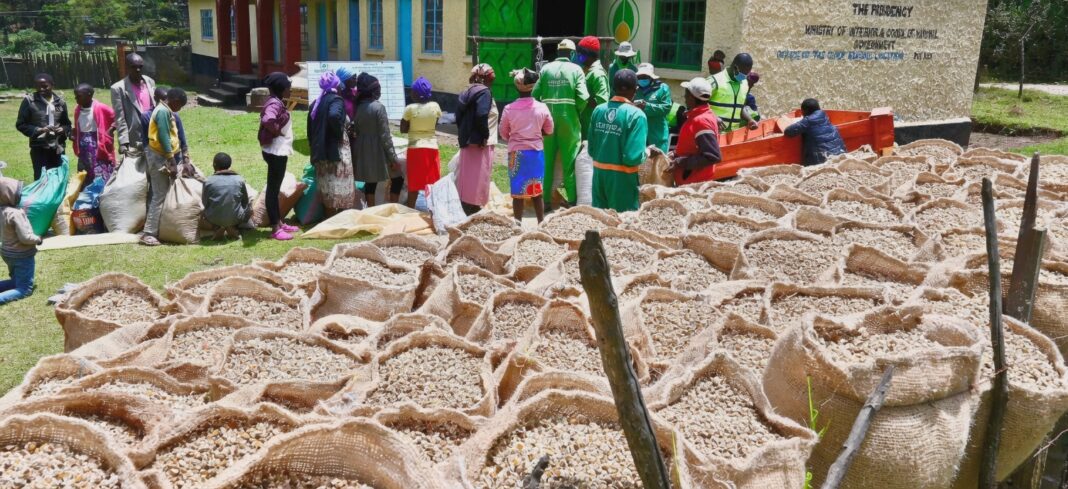
FOR decades, African governments have championed rural development, agricultural modernisation and industrialisation as the foundations of economic transformation. Yet despite countless policy frameworks, development blueprints and donor-supported programmes, much of rural Africa remains trapped in a cycle of low productivity, limited industrial activity and persistent poverty.
By Brighton Musonza
The story of Kenya-based biotechnology company Kentegra Biotechnology offers a compelling alternative development model. Its success demonstrates how agriculture, manufacturing, environmental sustainability and community empowerment can be integrated into a mutually reinforcing economic ecosystem. More importantly, it raises important questions for Zimbabwe, a country endowed with rich agricultural resources but still struggling to unlock the full economic value of its rural economy.
At a time when Zimbabwe is searching for sustainable pathways to industrialisation, export diversification and job creation, the Kentegra experience provides valuable lessons about how inclusive business models can transform local communities while generating commercial success.
The Fundamental Problem: Africa Produces, Others Profit
One of the greatest structural weaknesses of African economies remains their dependence on exporting raw materials while importing finished products at significantly higher costs. This pattern has persisted since the colonial era and continues to define the continent’s relationship with global markets.
Zimbabwe exports tobacco, cotton, lithium, chrome, platinum and a range of agricultural commodities. However, much of the value addition, processing and manufacturing associated with these products occurs outside the country. Consequently, Zimbabwe captures only a fraction of the value generated along global supply chains.
Kenya’s pyrethrum industry once faced similar challenges. Farmers produced the raw flowers used in natural insecticides, but market instability, weak processing infrastructure and fragmented supply chains limited their economic benefits. Kentegra addressed this challenge by integrating farmers directly into a biotechnology manufacturing ecosystem capable of serving international markets.
This model highlights an important reality. Sustainable development does not come from increasing production alone. It comes from ensuring that producers participate in higher-value segments of the supply chain. Until Zimbabwe successfully integrates its farmers into processing and manufacturing industries, many rural communities will continue to remain vulnerable to fluctuating commodity prices and external market shocks.
Agriculture Alone Cannot Eliminate Rural Poverty
Agriculture remains the backbone of Zimbabwe’s economy, employing millions of people directly and indirectly. Yet the sector’s dominance has not translated into broad-based prosperity for rural households.
The problem lies in the nature of agricultural production itself. Farmers often operate at the mercy of weather conditions, volatile market prices, inadequate financing and weak infrastructure. Even when production levels increase, profits frequently remain low because value addition takes place elsewhere.
Kentegra’s model demonstrates the importance of creating stable linkages between farmers and industrial processors. By guaranteeing markets, providing technical support and creating long-term commercial relationships, the company has helped reduce many of the risks typically associated with smallholder farming.
Zimbabwe has already witnessed the benefits of structured agricultural value chains through contract farming in tobacco production. However, the next stage of transformation requires moving beyond production and towards industrial integration. Farmers must become suppliers to thriving local industries rather than merely producers of raw commodities destined for export.
Only when agriculture becomes connected to manufacturing can rural communities begin to enjoy sustained income growth and long-term economic security.
Manufacturing Remains the Missing Piece
One of the most significant aspects of the Kentegra case is its relationship with Manufacturing Africa, an initiative that has facilitated billions of dollars in industrial investment across several African countries.
This highlights a critical lesson for Zimbabwe. No country has achieved sustained economic development without building a strong manufacturing base. While agriculture generates raw materials, manufacturing creates jobs, stimulates innovation, develops skills and captures greater economic value.
The experiences of South Korea, China, Vietnam and Malaysia illustrate this point clearly. Each of these countries transformed rural economies by linking agricultural production to industrial expansion. Their development strategies recognised that agriculture and manufacturing are complementary rather than competing sectors.
Vietnam’s transformation is particularly instructive. Once among the world’s poorest countries, Vietnam successfully integrated its agricultural sector into a broader industrial strategy, creating globally competitive manufacturing industries while simultaneously improving rural livelihoods.
Zimbabwe’s development plans consistently emphasise value addition and beneficiation. Yet implementation remains constrained by energy shortages, limited access to finance, policy inconsistencies and inadequate investment levels. The Kentegra example suggests that attracting investment becomes easier when businesses can demonstrate both strong commercial potential and measurable social impact.
The future of Zimbabwe’s agricultural economy depends not merely on growing more crops, but on building factories, processing plants and industrial ecosystems capable of transforming those crops into higher-value products.
ESG Is Becoming a Competitive Advantage
Another notable feature of Kentegra’s growth strategy is its strong emphasis on Environmental, Social and Governance (ESG) principles.
Across global financial markets, ESG considerations have become increasingly important in determining investment decisions. Investors are no longer focused solely on financial returns. They are also evaluating environmental sustainability, social responsibility and corporate governance standards.
Kentegra’s investment in renewable energy, water conservation, agroforestry initiatives and sustainable supply chains has enhanced its attractiveness to investors. These efforts demonstrate that environmental responsibility can coexist with commercial success.
For Zimbabwean businesses, this presents both a challenge and an opportunity. As global investment flows increasingly favour sustainable enterprises, companies that fail to adopt credible ESG frameworks may struggle to access capital. Conversely, firms that can demonstrate measurable environmental and social impact may gain significant advantages in attracting investors and accessing international markets.
This shift is particularly relevant in sectors such as agriculture, mining and manufacturing, where environmental performance is becoming a key determinant of competitiveness.
Climate Change Demands a New Development Model
The environmental dimension of the Kentegra story is especially relevant given the growing impact of climate change across Africa.
Zimbabwe has experienced increasingly frequent droughts, erratic rainfall patterns and declining agricultural productivity in some regions. Climate change is no longer a theoretical concern; it is already affecting livelihoods, food security and economic growth.
Traditional development models focused solely on expanding production are becoming increasingly unsustainable. Future agricultural competitiveness will depend on the efficient use of water, energy and land resources.
Kentegra’s adoption of water-efficient irrigation systems, renewable energy technologies and agroforestry programmes demonstrates how businesses can simultaneously improve productivity and strengthen climate resilience.
Zimbabwe has significant potential to adopt similar approaches. Solar-powered irrigation systems, climate-smart agriculture, regenerative farming practices and renewable energy-powered processing facilities could dramatically improve both productivity and sustainability.
The challenge for policymakers is to create an enabling environment that encourages investment in these technologies while ensuring that rural communities benefit from the transition towards greener economic models.
Foreign Investment Is Not Enough
The Kentegra case also highlights an important debate regarding the role of foreign direct investment in economic development.
There is no doubt that external capital can play a critical role in supporting industrial growth. Manufacturing Africa’s involvement helped Kentegra secure funding that enabled expansion, job creation and increased production capacity.
However, history demonstrates that foreign investment alone does not automatically generate development. Across Africa, many resource-rich countries have attracted significant investment without achieving meaningful structural transformation.
The key difference lies in the quality of investment and its integration within the local economy.
Kentegra’s model creates linkages between investors, manufacturers, farmers and local communities. These connections generate multiplier effects that extend beyond corporate profits and contribute to broader economic development.
Zimbabwe must therefore focus on attracting investment that promotes technology transfer, skills development, local procurement and industrial diversification. Investments that merely extract resources without creating local value are unlikely to produce lasting economic benefits.
The objective should not be investment for its own sake, but investment that strengthens domestic productive capacity and expands opportunities for local communities.
The Human Development Dimension
Perhaps the most important lesson from Kentegra’s experience is that economic development is ultimately about people.
Discussions about investment, industrialisation and economic growth often focus on statistics and macroeconomic indicators. Yet the true measure of development lies in its impact on individual lives and communities.
When rural households gain access to stable incomes, the benefits extend far beyond immediate financial gains. Families are better able to educate their children, access healthcare services, improve nutrition and invest in future opportunities.
These improvements create positive intergenerational effects that contribute to long-term social and economic progress.
Zimbabwe’s rural population possesses enormous productive potential. However, unlocking that potential requires more than agricultural support programmes. It requires integrated development models that connect farmers to finance, technology, manufacturing and markets.
The Kentegra experience demonstrates that when these elements are aligned, rural development can become a powerful driver of national economic transformation.
The Bigger African Question
Beyond Zimbabwe, Kentegra raises a broader question about Africa’s development trajectory.
Can the continent build a new model of industrialisation that combines economic growth with environmental sustainability and social inclusion?
There are encouraging signs that this is already happening. Rwanda’s pharmaceutical manufacturing ambitions, Morocco’s automotive sector, Ethiopia’s industrial parks, Kenya’s biotechnology industry and South Africa’s renewable energy investments all point towards a new generation of African industrialisation.
Unlike traditional industrial models that often relied on environmental degradation and labour exploitation, emerging African industries have an opportunity to incorporate sustainability from the outset.
This could allow African countries to leapfrog older development pathways and build more resilient economies capable of competing in a rapidly changing global marketplace.
Conclusion: A Blueprint for Zimbabwe’s Future
The significance of Kentegra extends far beyond the production of natural insecticides. Its real achievement lies in demonstrating how agriculture, manufacturing, environmental stewardship and community development can work together to create sustainable economic growth.
For Zimbabwe, the lessons are clear. Rural development cannot be achieved through agricultural production alone. Farmers must be integrated into industrial value chains. Manufacturing must become a national priority. Environmental sustainability must be viewed as a source of competitive advantage rather than a regulatory burden. Investment strategies must focus on building domestic productive capacity and strengthening local communities.
Zimbabwe possesses the natural resources, entrepreneurial talent and agricultural potential required to pursue such a path. What remains is the policy consistency, institutional coordination and investment mobilisation necessary to transform potential into reality.
The Kentegra experience offers more than a business success story. It provides a blueprint for how African economies can pursue growth that is economically productive, environmentally sustainable and socially inclusive. For Zimbabwe, it is a reminder that the future of development lies not in choosing between business success and social impact, but in recognising that the two are increasingly inseparable.