
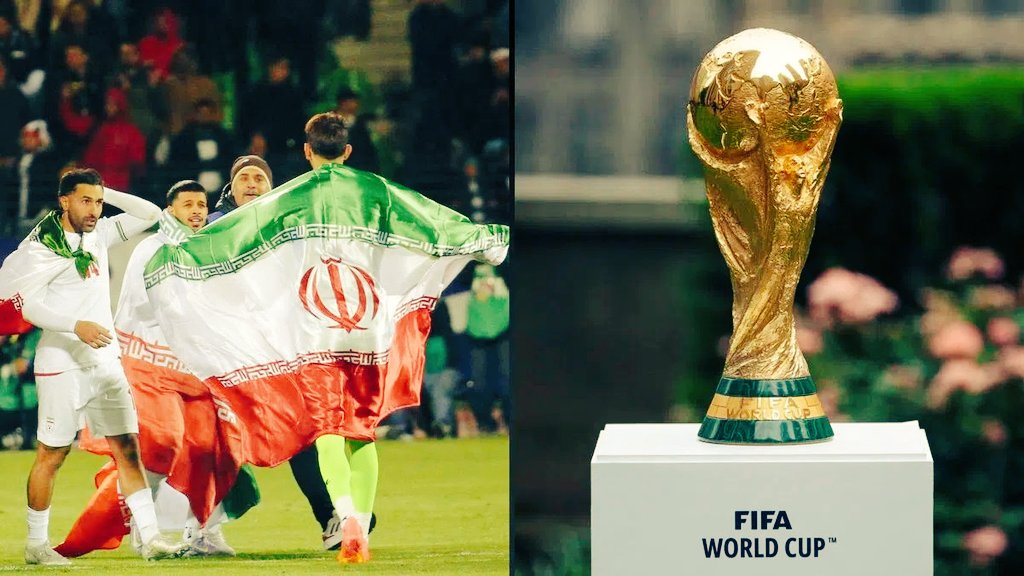
NEW YORK – Concerns over the treatment of the Iranian national football team ahead of the 2026 FIFA World Cup have reignited debate about the intersection of politics and sport, with growing calls for FIFA to ensure that all participating nations are afforded equal treatment throughout the tournament.
Reports circulating in international media and on social media have suggested that Iran could face unique logistical and travel restrictions during the tournament, potentially requiring the team to base its training operations in Mexico and only enter the United States for scheduled matches. While the full details and scope of any such arrangements remain the subject of debate, the controversy has already raised questions about competitive fairness and FIFA’s commitment to neutrality.
The expanded 2026 FIFA World Cup, to be hosted jointly by the United States, Mexico and Canada, is expected to be the largest tournament in football history, featuring 48 nations and 104 matches across North America. Organisers have repeatedly promoted the event as a celebration of global unity through sport. However, critics argue that geopolitical tensions risk overshadowing football itself.
Should any participating nation face restrictions that do not apply to other teams, observers say it could create an uneven playing field in a tournament where preparation, recovery, training facilities and travel schedules are critical components of performance.
For elite international teams, the ability to establish a stable base camp throughout a tournament is considered essential. Teams typically spend weeks acclimatising to local conditions, conducting tactical training sessions and managing player recovery. Any disruption to those routines can have a direct impact on performance on the pitch.
The issue has also revived broader discussions about FIFA’s role as football’s governing body. Throughout its history, FIFA has maintained that football should remain separate from political disputes. Yet the sport has repeatedly found itself at the centre of geopolitical controversies, sanctions and international disagreements.
Supporters of Iran argue that FIFA has an obligation to guarantee equal sporting conditions for all qualified nations regardless of political disagreements between governments. They contend that football’s governing body should ensure that players are not disadvantaged by circumstances beyond their control.
The debate inevitably draws comparisons with previous FIFA decisions involving politically sensitive situations. The suspension of Russian football from international competition following the outbreak of the conflict in Ukraine remains one of the most consequential interventions in modern football governance. That decision demonstrated FIFA’s willingness to act when geopolitical events threaten the integrity and reputation of international competitions.
Critics now argue that the governing body must apply principles consistently across all member associations if it wishes to preserve its credibility as a neutral administrator of the global game.
For Iran, the controversy comes as the national team prepares for another appearance on football’s biggest stage. Over the past decade, Team Melli has established itself as one of Asia’s strongest football nations, consistently qualifying for major tournaments and producing players who compete in leading leagues across Europe and the Middle East.
The players themselves are likely to remain focused on football, but the discussion surrounding their participation highlights the increasingly complex challenges facing international sport in an era of geopolitical rivalry and diplomatic tension.
With the tournament drawing closer, attention is likely to intensify on how FIFA, host nations and participating federations balance security concerns, diplomatic realities and the principle of sporting equality. For many observers, the issue extends beyond one nation or one tournament. It raises fundamental questions about whether football can truly serve as a universal game when political disputes threaten to shape the conditions under which some teams compete.
As the countdown to kick-off continues, pressure is mounting on football’s governing authorities to provide clarity and reassurance that all qualified nations will be able to participate under conditions that uphold the spirit of fair competition that the World Cup is intended to represent.