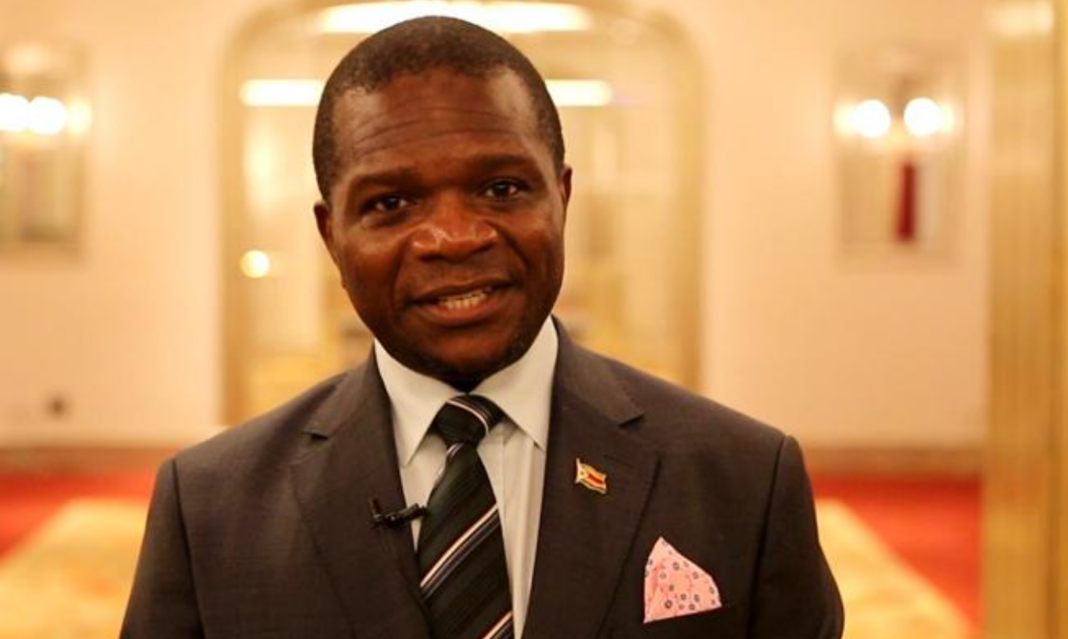


HARARE — In a move likely to intensify political tensions around the ongoing constitutional reform process, President Emmerson Mnangagwa has effectively sacked Ms Fungayi Jessie Majome as Chairperson of the Zimbabwe Human Rights Commission (ZHRC), removing her from the post just days after her appointment and redeploying her to the Public Service Commission with immediate effect.
Newly appointed ZHRC Chairperson Jessie Majome has now been removed from the role she had just assumed, and reassigned as a Commissioner in the Public Service Commission, in what critics are describing as a rapid and punitive reshuffle following her public remarks on constitutional reform.
On the very day she was sworn in as ZHRC Chairperson, Majome held a press conference in which she strongly condemned Constitutional Amendment Bill No. 3 (CAB3) in its entirety, describing it as a threat to democracy.
According to a government press statement issued by the Office of the President and Cabinet, the decision was made under Section 202(1)(b) of the Constitution. It reads:
“In terms of Section 202 (1)(b) of the Constitution of Zimbabwe, His Excellency the President, Cde. Dr. Emmerson Dambudzo Mnangagwa has re-assigned Ms Fungayi Jessie Majome from the position of Chairperson of the Zimbabwe Human Rights Commission to the position of Commissioner in the Public Service Commission.”
The statement, signed by Chief Secretary to the President and Cabinet Dr. M. Rushwaya, further notes:
“The re-assignment is with immediate effect.”
However, the timing and nature of the decision have fuelled widespread concern, with critics arguing that the move amounts to an effective dismissal of Majome from a key human rights oversight position shortly after she publicly criticised the constitutional reform process.
The development comes shortly after the Zimbabwe Human Rights Commission issued a strongly worded report detailing alleged intimidation, exclusion, and violence during public consultations on Constitutional Amendment Bill No. 3 (CAB3).
In its monitoring report covering parliamentary public hearings conducted between 30 March and 4 April 2026, the Commission documented what it described as serious violations of fundamental rights across several provinces.
The ZHRC stated: “The commission observed instances where participants with divergent views to the proposed amendments were threatened, silenced, denied opportunities to contribute and in some instances physically attacked.”
The report further alleged that access to consultation venues was, in several cases, tightly controlled by groups of youths who vetted participants at entry points. In Mashonaland West’s Mhondoro-Ngezi, the Commission reported that individuals armed with whips were used to screen attendees.
“Individuals and groups opposed to CAB3 were denied audience,” the Commission noted. “Whilst those in support of the Constitutional Amendment were able to give their views, the Commission noted the harassment and intimidation of dissenting voices.”
The ZHRC warned that such conduct undermines constitutionally protected rights, including freedom of expression, conscience, dignity, personal security, and equality before the law.
CAB3, tabled as House Bill 1 of 2026, is widely regarded as the most far-reaching constitutional overhaul since 2013. Among its most controversial proposals are plans to extend executive and parliamentary terms, shift the election of the President from direct popular vote to parliamentary selection, and transfer voter registration responsibilities away from the Zimbabwe Electoral Commission.
Other provisions include increasing presidential influence over Senate appointments, restructuring constitutional commissions, and expanding the political role of traditional leaders.
The Commission also noted that several public consultation venues were too small to accommodate attendance, effectively excluding large numbers of citizens from participating in the process.
It urged authorities to uphold democratic standards and ensure meaningful public participation, warning that constitutional reform must comply with both domestic and international human rights obligations, including the International Covenant on Civil and Political Rights.
With CAB3 already facing legal challenges and growing resistance from civil society, church leaders, and former security officials, critics argue that Majome’s removal further raises questions about the independence of oversight institutions at a critical political moment.