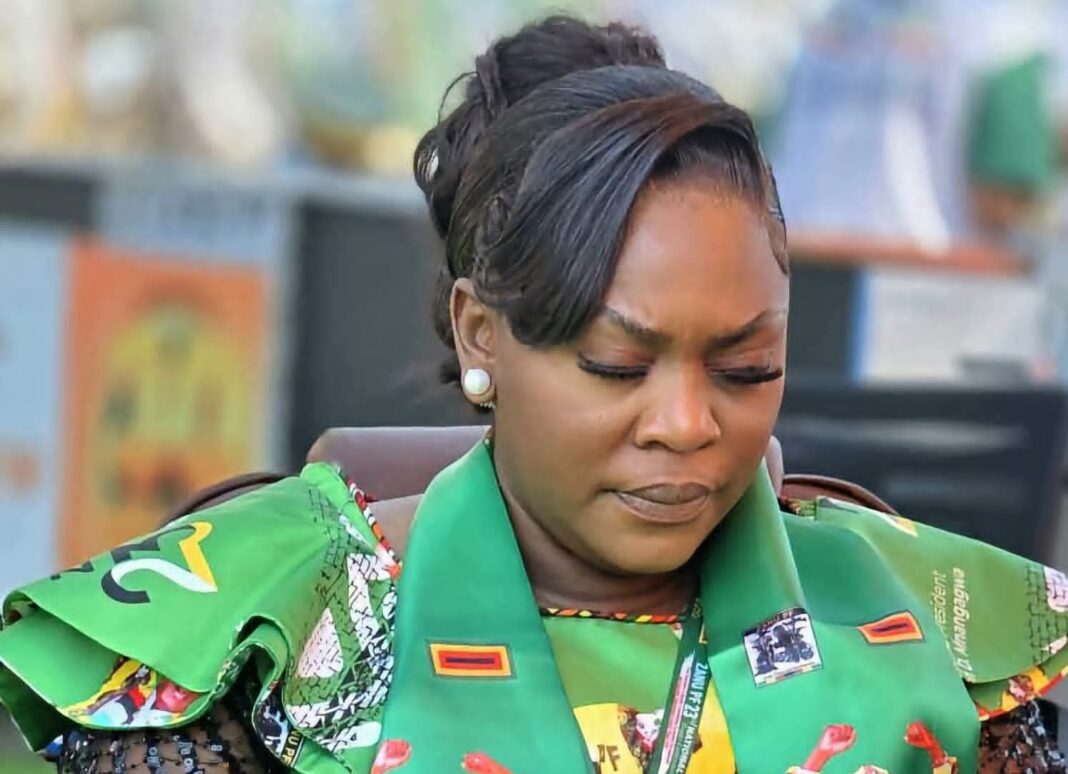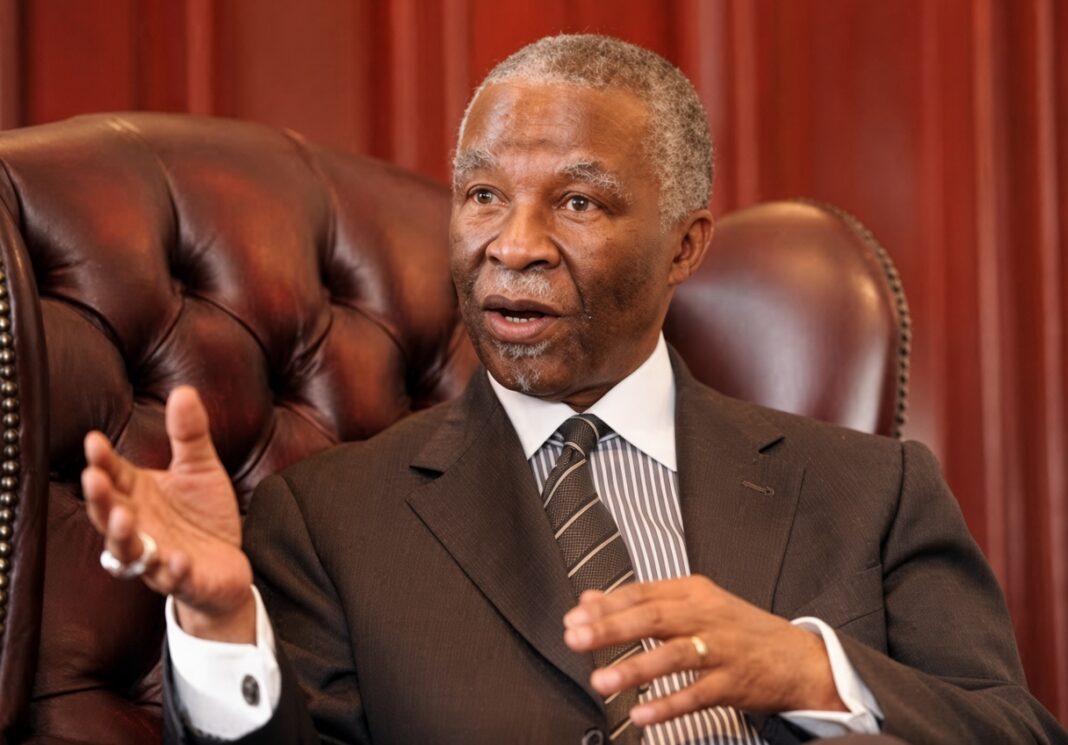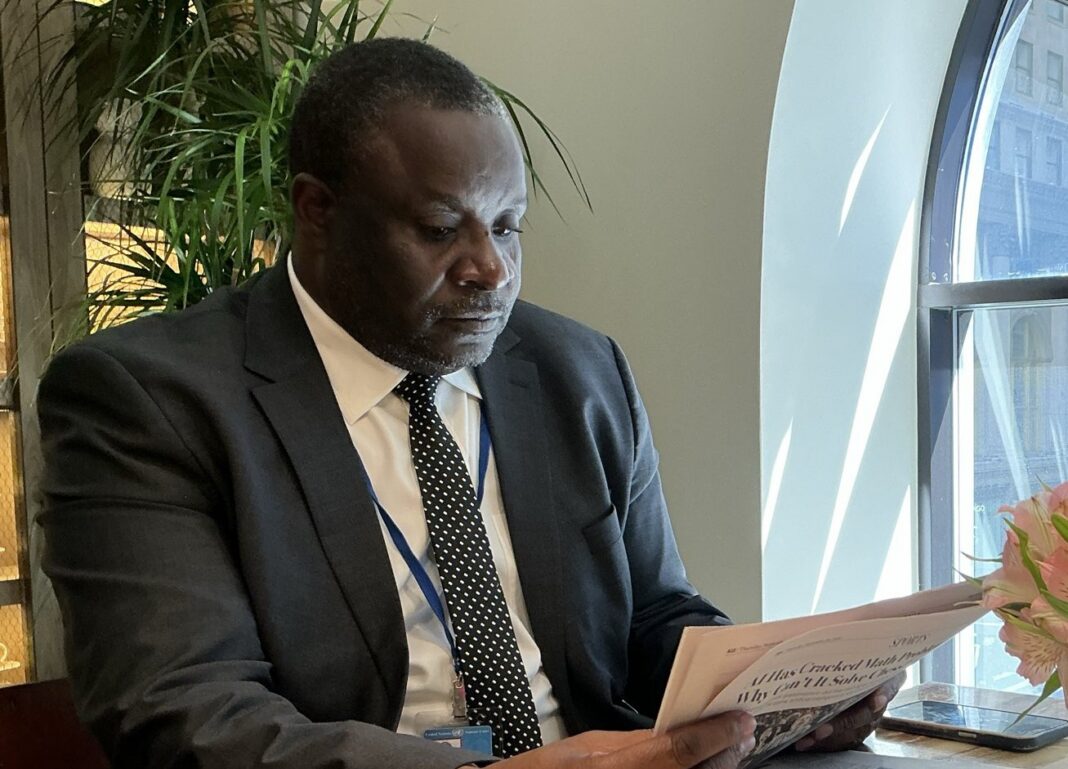
HARARE — Presidential spokesman George Charamba has found himself at the centre of a growing political controversy after President Emmerson Mnangagwa and Vice-President Constantino Chiwenga delivered sharply contrasting messages at ZANU-PF’s 23rd National People’s Conference in Chinhoyi, raising questions about political coordination, presidential communication and the deepening divisions within the ruling party.
The controversy erupted after both leaders invoked the same Shona expression, mazvake mazvake, broadly referring to individualism or the pursuit of personal interests, during their addresses to delegates.
Although the two leaders appeared to be advocating collective responsibility, the political context and contrasting emphasis of their speeches have fuelled speculation that each was directing a veiled warning at the other.
Charamba, who serves as Mnangagwa’s official spokesman and has maintained longstanding political relationships across the ruling party’s leadership, has consequently become the subject of accusations that the administration’s communications machinery failed to reconcile the competing messages.
Former ZANU-PF Mashonaland West provincial chairman and former Norton legislator Temba Mliswa has entered the dispute, questioning Charamba’s role and calling for his dismissal if he was responsible for preparing or influencing the apparently contradictory speeches.
The allegations have not established that Charamba authored either address, let alone both. Nevertheless, they have brought renewed attention to the difficulties facing a presidential communications office operating within an increasingly contested political environment.
One expression, two competing political messages
The controversy centres on the expression mazvake mazvake, which both Mnangagwa and Chiwenga employed during the conference.
Chiwenga, speaking before introducing the President, warned against the pursuit of individual interests within the ruling party.
“Mazvake mazvake haana kwaanotisvitsa,” he declared, meaning that the pursuit of personal agendas would not take the party anywhere.
His remarks formed part of a broader appeal for political discipline, institutional accountability and an honest examination of ZANU-PF’s leadership.
The Vice-President challenged the party to consider whether the Second Republic was repeating the political mistakes that contributed to the collapse of Robert Mugabe’s presidency in November 2017.
He also questioned the growing emphasis on individual political ambitions at the expense of collective decision-making.
Mnangagwa subsequently used the same expression while addressing delegates.
“MuZANU-PF hakuna mazvake mazvake,” the President declared, emphasising that there was no room for individual agendas within the ruling party.
While the language was similar, the juxtaposition of the speeches invited competing interpretations.
Chiwenga’s intervention appeared to challenge the political culture surrounding leadership succession and the concentration of authority.
Mnangagwa’s remarks, meanwhile, could be interpreted as a reaffirmation of presidential authority and a warning against individual political manoeuvring.
Neither statement, taken alone, establishes that one leader was directly attacking the other.
However, against the backdrop of the succession debate, the repeated expression became a focal point for speculation about the relationship between the two men.
Mliswa turns his attention to Charamba
Mliswa, a former ZANU-PF provincial chairman who later established himself as an outspoken independent parliamentarian, criticised Chiwenga’s address and questioned the effectiveness of the government’s communications arrangements.
He characterised the Vice-President’s speech as “corrosive and discordant” when compared with Mnangagwa’s presentation.
His criticism extended beyond the substance of the addresses to the officials responsible for coordinating presidential communication.
Mliswa argued that if Charamba had played a role in producing contradictory messages for the country’s senior leadership, such conduct would raise serious questions about his suitability for office.
He described the situation as an “internal messaging disaster” and warned that a communications official responsible for such inconsistencies could represent an “existential danger to the coherence of the state”.
The remarks amounted to a direct challenge to Charamba’s professional judgement and political loyalty.
However, the argument rests on an assumption that the presidential spokesman exercised editorial control over both speeches.
No evidence supplied with the allegations establishes the extent of Charamba’s involvement in preparing either address.
The distinction matters because the President and Vice-President are separate political actors who may independently develop their own messages.
A difference in emphasis between their speeches does not necessarily demonstrate a failure by the communications office.
A veteran insider facing an unusually delicate challenge
Few officials have occupied Zimbabwe’s political communications establishment for as long as George Charamba.
His career spans the administrations of Canaan Banana, Robert Mugabe and Emmerson Mnangagwa, making him one of the most experienced figures in the country’s presidential bureaucracy.
Charamba entered the public service in 1984 as a press officer in the Ministry of Information, Posts and Telecommunications.
He subsequently served in the office of Zimbabwe’s first President, Canaan Banana, before joining Mugabe’s presidential information establishment following the constitutional changes of 1987.
In 1988, he became an Assistant Secretary in the President’s Information Unit, working under senior officials responsible for the administration’s public communications.
He later rose to become Mugabe’s official press secretary and subsequently Permanent Secretary for Information and Broadcasting Services.
Following the political transition of November 2017, Charamba retained an influential position within the new administration.
He currently serves as Deputy Chief Secretary for Presidential Communications in the Office of the President and Cabinet, alongside his responsibilities as presidential spokesman.
His longevity reflects an ability to navigate successive political administrations, changing leadership structures and the increasingly complex relationship between the State and the media.
Yet that experience also places him under particular scrutiny whenever contradictions emerge in official communication.
Serving the presidency amid political rivalry
The central question surrounding Charamba is whether a senior civil servant can maintain the confidence of competing political figures without becoming entangled in their differences.
As presidential spokesman, his formal responsibility is to communicate the position of the President and the administration.
His institutional role requires accuracy, discipline and consistency in presenting government policy.
However, the political realities of Zimbabwe’s executive structure are more complicated.
Chiwenga is not merely another Cabinet figure. He is Vice-President, a senior ZANU-PF official and one of the principal figures associated with the political transition that brought Mnangagwa to power.
The two leaders share responsibility for government, but their respective political constituencies and approaches to leadership succession have become subjects of increasing public debate.
In such circumstances, the communications office must distinguish between legitimate differences in political emphasis and messages that create confusion about government policy.
It is also important to recognise that party conference speeches are political communications rather than necessarily formal statements of government policy.
The same phrase can carry different political meanings depending on the speaker, audience and surrounding argument.
Consequently, the appearance of mazvake mazvake in both speeches is insufficient evidence that Charamba drafted them or deliberately engineered a confrontation.
The long-running Charamba–Mliswa feud
The latest controversy has also revived the longstanding antagonism between Charamba and Mliswa.
The two men have previously exchanged public criticism over political loyalty, government communication and the conduct of influential figures within ZANU-PF.
Mliswa has repeatedly challenged Charamba’s position within the administration, while the presidential spokesman has responded dismissively to his political interventions.
Their disagreements reflect contrasting approaches to political influence.
Charamba’s authority derives largely from decades of service within the executive bureaucracy and his proximity to successive presidents.
Mliswa, by contrast, has built much of his public profile through political confrontation, independent campaigning and a willingness to criticise powerful figures within his former party.
After serving as ZANU-PF’s Mashonaland West provincial chairman, Mliswa went on to represent Norton in Parliament as an independent legislator.
His political career has demonstrated an ability to remain prominent outside the conventional structures of party leadership.
That independence has allowed him to challenge figures within both government and opposition, although his interventions have also attracted criticism for their confrontational character.
His latest attack on Charamba therefore needs to be understood within the context of a much longer personal and political disagreement.
Charamba’s complicated relationship with the media
Beyond his role in presidential communication, Charamba has developed a reputation as one of Zimbabwe’s most combative government communicators.
During earlier periods of his career, he maintained professional relationships with journalists across the political spectrum, including members of the independent media.
His approach was not always confrontational, and he was known to facilitate interactions between journalists and government institutions.
However, his public communication style increasingly became associated with sharp political commentary and personal exchanges with critics.
He has faced criticism over his use of newspaper commentary and social media to challenge political opponents, journalists and media organisations.
Critics have also accused the presidential communications establishment of adopting an uneven approach to media access.
Such allegations should be distinguished from independently established misconduct, but they illustrate the controversy that has accompanied Charamba’s public career.
His supporters may regard his combative style as an effective defence of government policy against hostile criticism.
His detractors see it as evidence of excessive political partisanship in an office that should maintain professional standards of public communication.
The present dispute places those competing assessments under renewed scrutiny.
Chinhoyi exposes the challenge of managing succession
The communications controversy cannot be separated from the wider political debate surrounding Mnangagwa’s future.
ZANU-PF’s conference took place amid competing proposals concerning leadership continuity, constitutional arrangements and the party’s succession timetable.
Supporters of Mnangagwa have argued that continued leadership would provide stability and allow the government to complete its economic development programme.
Others have questioned the constitutional and institutional implications of extending political authority beyond established limits.
Chiwenga’s conference intervention placed particular emphasis on accountability and the principles underpinning the Second Republic.
His warning against individual ambition was therefore politically significant, even without an explicit reference to Mnangagwa.
The President’s subsequent insistence that ZANU-PF has no place for personal agendas added another dimension to the debate.
The fact that both leaders invoked collective responsibility while appearing to address different political concerns illustrates the difficulty of maintaining a unified party message.
For Charamba, the challenge is especially sensitive because communication cannot resolve substantive disagreements that may exist within the political leadership.
A spokesman can clarify official positions, but cannot necessarily eliminate competing ambitions or differences in political judgement.
A communications dispute with wider implications
The episode raises questions extending beyond Charamba’s individual performance.
Effective government communication depends on clearly defined institutional responsibilities, credible information and public confidence that official statements accurately reflect policy.
Where senior leaders deliver apparently conflicting political messages, uncertainty can arise over the administration’s priorities.
That uncertainty becomes more significant when the disagreements concern leadership succession, constitutional arrangements or the future direction of the ruling party.
However, calls for the dismissal of a public official require a stronger evidential basis than speculation over similarities in political language.
Establishing responsibility would require clarity about who drafted the speeches, who approved them and whether any formal communication procedures were breached.
Without that evidence, allegations that Charamba attempted to serve two political masters remain unproven.
What is beyond dispute in the supplied account is that the contrasting interpretations of Mnangagwa’s and Chiwenga’s remarks have become part of the wider political contest within ZANU-PF.
The problem may be political rather than rhetorical
Ultimately, the controversy surrounding mazvake mazvake reveals the limitations of political messaging when questions of leadership and institutional authority remain unresolved.
Mnangagwa and Chiwenga both appealed to the principle that ZANU-PF should place collective interests above individual ambition.
Yet the political reaction to their speeches suggests that the meaning of that principle is itself contested.
For one constituency, it may represent a demand for loyalty to the incumbent President and the continuation of his development programme.
For another, it may signify the need to uphold institutional procedures and prevent the concentration of political power around individual leaders.
Charamba’s predicament is therefore not simply about the repeated use of a Shona expression.
It is about the difficulty of communicating unity when influential figures and their supporters may hold different expectations about the party’s future.
Whether the presidential spokesman played any role in shaping the two addresses remains to be established.
But the political storm surrounding him illustrates a larger challenge confronting ZANU-PF: the management of competing leadership expectations within an organisation publicly committed to collective responsibility.
For a communications veteran who has served three presidential administrations, the Chinhoyi controversy may prove another test of his political judgement.
The more important question, however, is whether the ruling party’s leadership can reconcile its differences through established institutions rather than allowing them to develop into an increasingly public contest of political messaging.