

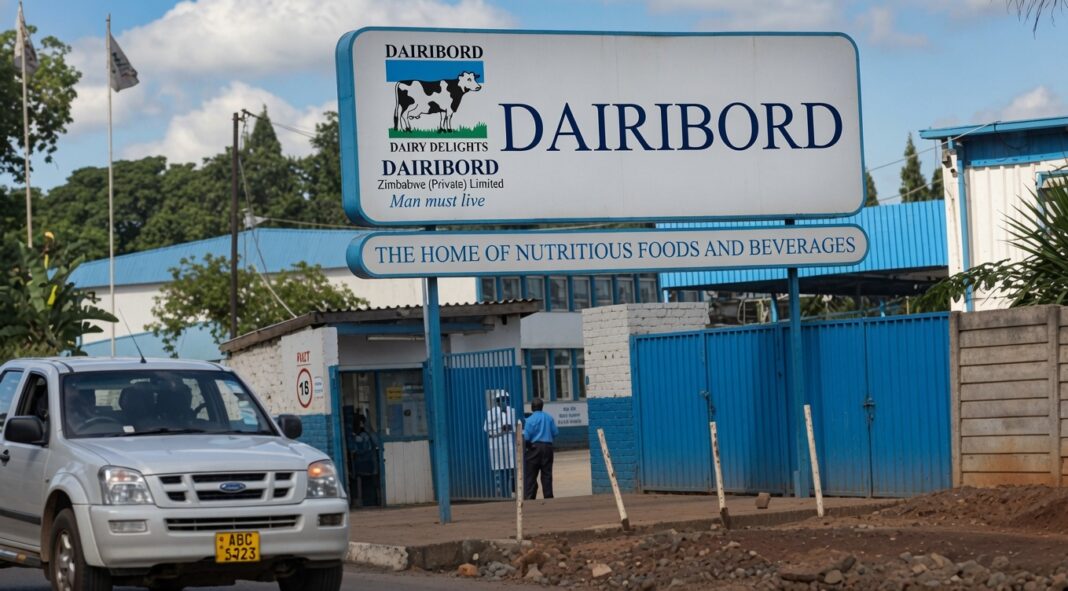
HARARE – Dairibord Holdings Limited, one of Zimbabwe’s largest food and beverage manufacturers, has announced that shareholders controlling more than 51% of the company’s issued ordinary shares have entered negotiations with an unnamed third party for the potential sale of a controlling stake, setting the stage for what could become one of Zimbabwe’s most significant corporate transactions in recent years.
In a cautionary statement released on Friday, the company said Equivest Asset Management (Pvt) Ltd, Mega Market (Pvt) Ltd and Mutare Mart & Exchange (Pvt) Ltd had jointly notified the board that they were in discussions regarding the disposal of their combined shareholding.
The three shareholders informed Dairibord that their aggregate stake exceeds 51% of the company’s issued ordinary shares, giving any successful acquirer effective control of the Zimbabwe Stock Exchange-listed company.
“The Transaction, if successfully concluded, may have a material effect on the market price of the Company’s shares,” the company said, advising shareholders to continue exercising caution when trading in Dairibord stock until further announcements are made.
The cautionary statement follows an earlier notice issued on 24 June and indicates that negotiations remain active, although no binding agreement has yet been announced.
Founded in 1994 following the commercialisation of the former Dairy Marketing Board, Dairibord has evolved into Zimbabwe’s leading producer of milk, beverages, yoghurts, ice cream, juices and food products.
Its portfolio includes household brands such as Chimombe, Steri Milk, Lacto, Cascade, Quickbrew, Pfuko, Yummy, Lyons, Mabusi and Fun ‘n Fresh, making it one of the country’s most recognised consumer goods companies.
Beyond dairy, the company has diversified into beverages and food manufacturing, reducing its dependence on raw milk production, which has historically been vulnerable to climatic conditions and fluctuations in national milk output.
Corporate finance analysts say acquisitions involving outright control of listed Zimbabwean companies remain relatively uncommon.
Unlike minority share purchases through the Zimbabwe Stock Exchange, acquiring more than half of a company’s equity gives an investor the ability to appoint directors, influence capital allocation, reshape corporate strategy and pursue mergers or restructuring initiatives.
Should negotiations culminate in a completed transaction, Zimbabwean takeover regulations would likely require the purchaser to extend a mandatory offer to remaining minority shareholders, ensuring equitable treatment under securities laws.
Such transactions typically trigger comprehensive due diligence covering financial performance, legal risks, operational assets, environmental liabilities, governance standards and future earnings potential before a definitive agreement can be reached.
The identity of the prospective buyer has not been disclosed, fuelling speculation across Zimbabwe’s financial markets.
Several factors make Dairibord an attractive acquisition target.
The company possesses one of the country’s strongest fast-moving consumer goods (FMCG) distribution networks, serving supermarkets, wholesalers and informal retailers nationwide.
It also owns valuable manufacturing facilities, processing infrastructure and established consumer brands that would take decades and substantial capital expenditure for a new entrant to replicate.
Zimbabwe’s food manufacturing sector has increasingly attracted investors seeking businesses capable of generating foreign currency through exports while maintaining resilient domestic demand.
Consumer staples generally outperform discretionary sectors during periods of economic volatility because demand for food and basic nutrition products remains comparatively stable.
Should a strategic investor emerge with significant financial resources, analysts believe Dairibord could benefit from fresh capital investment.
Additional funding could accelerate factory modernisation, improve production efficiency, strengthen cold-chain logistics and expand export operations into the Southern African Development Community (SADC) region.
A well-capitalised shareholder could also improve access to cheaper financing, support acquisitions of complementary businesses and enhance procurement efficiencies through regional supply chains.
If the buyer is an international dairy or food processing company, Dairibord could gain access to new technologies, product innovation, research capabilities and international distribution channels.
Despite the optimism that often accompanies change-of-control transactions, significant uncertainties remain.
The cautionary statement does not disclose the identity of the prospective purchaser, the proposed purchase price or whether negotiations are exclusive.
It also remains unclear whether the transaction is being driven primarily by succession planning among existing shareholders, a desire to unlock shareholder value or broader strategic considerations.
Investors will also be watching whether the new shareholder intends to maintain Dairibord’s current management team or implement significant organisational restructuring.
Depending on the acquirer’s strategic objectives, operational integration, asset disposals or portfolio rationalisation could follow after completion.
The announcement is likely to attract heightened investor interest in Dairibord shares.
Historically, cautionary statements involving potential mergers or acquisitions have increased trading activity as investors attempt to anticipate takeover premiums and future valuations.
However, market experts caution that many announced negotiations ultimately do not result in completed transactions.
Until a binding agreement is signed, approved by regulators and satisfies all conditions precedent, the proposed acquisition remains uncertain.
Consequently, Dairibord’s board has appropriately advised shareholders to exercise caution when dealing in the company’s shares.
Irrespective of the eventual buyer, the transaction sends an important signal about Zimbabwe’s corporate landscape.
Major acquisitions are generally undertaken only after extensive financial modelling and due diligence. A prospective investor willing to negotiate for control of one of Zimbabwe’s largest listed manufacturers suggests confidence in the long-term fundamentals of the country’s consumer goods sector despite persistent macroeconomic challenges.
Zimbabwe’s food manufacturing industry continues to benefit from population growth, urbanisation and resilient demand for essential consumer products. Companies with established brands, extensive distribution networks and pricing power remain among the country’s most valuable industrial assets.
For Dairibord, the proposed transaction represents more than a simple change in share ownership. It could redefine the company’s strategic direction, capital structure and regional ambitions for years to come. Whether the unnamed investor is a local conglomerate, institutional investor, private equity fund or international food manufacturer, the outcome will be closely watched by shareholders, regulators and the broader business community as one of the most consequential corporate developments on the Zimbabwe Stock Exchange in 2026.