
HARARE – Zimbabwe’s Catholic bishops have submitted a sweeping rejection of the Constitution Amendment (No. 3) Bill, 2026, urging parliament to throw out clause after clause of the proposed amendments and warning that the bill erodes democratic safeguards, weakens institutional independence and undermines the sovereign will of the people.
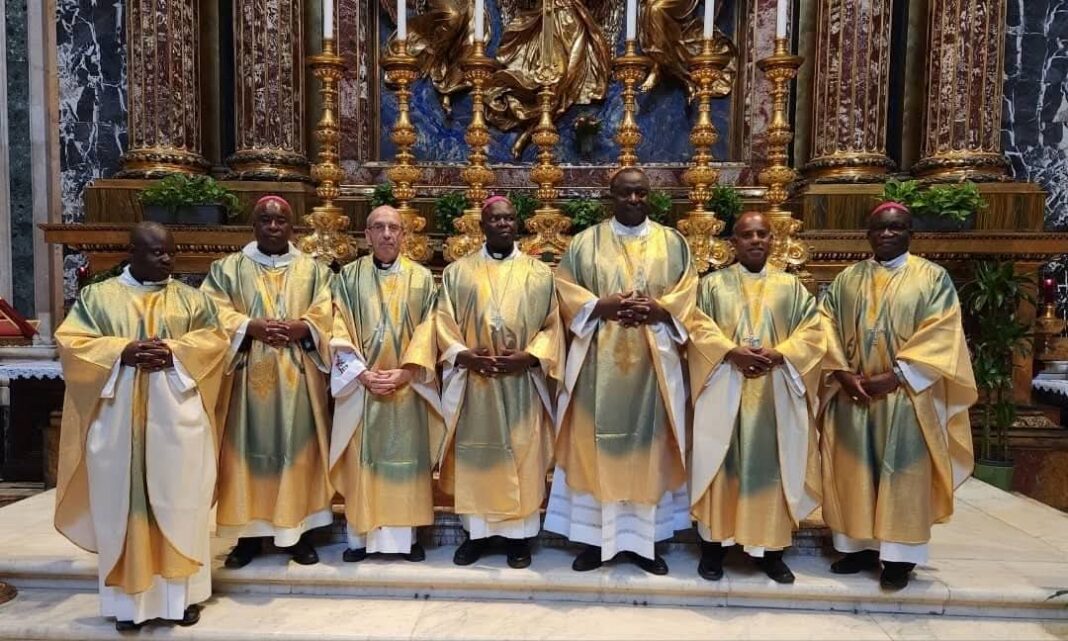
The Zimbabwe Catholic Bishops’ Conference (ZCBC), signed by all seven bishops including both the Archbishop of Harare and the Archbishop of Bulawayo, filed its submission to parliament on Tuesday, describing the bill as a threat to “the moral and institutional foundations upon which national life rests.”
“The Conference is deeply concerned that several provisions of CAB3 undermine foundational constitutional principles, weaken institutional independence, diminish direct democratic participation, and erode constitutional safeguards against the concentration and abuse of power,” the bishops said.
The bishops reserved their sharpest language for Clause 2, which proposes to scrap the direct election of the president by registered voters and replace it with a parliamentary vote, with the Senate and National Assembly sitting jointly.
“To transfer the election of the head of state from citizens to parliament fundamentally alters the source and character of executive legitimacy,” the conference said. “Zimbabwe’s liberation struggle was deeply rooted in the principle of ‘one person, one vote’ and the right of citizens to determine their political leadership directly.”
The bishops rejected the government’s stated justification that the change would reduce “electoral toxicity,” calling it “constitutionally insufficient to justify removing the people’s direct vote for president.”
Should parliament insist on proceeding, they said, the matter must be put to a national referendum.
The conference also firmly opposed Clauses 3, 7 and 8, which propose to extend both the presidential and parliamentary terms from five to seven years and to apply those extensions to current office holders.
The bishops took particular exception to the bill’s attempt to operate “notwithstanding section 328(7)” of the constitution – the provision that bars incumbents from benefiting from term limit amendments without a referendum.
“Parliament cannot bypass entrenched constitutional protections merely by inserting the phrase ‘notwithstanding section 328(7)’ into ordinary amendment provisions,” the conference said. “To permit such an approach would weaken constitutional supremacy itself and render constitutional safeguards vulnerable to temporary parliamentary majorities.”
The comparative African experience, they noted, showed that attempts to extend incumbency through constitutional amendments had “frequently contributed to democratic instability, institutional weakening, and political tension.”
The bishops also opposed clause 14, which they said significantly weakens judicial appointment safeguards by reducing the role of the Judicial Service Commission and increasing presidential discretion – changes they warned could undermine public confidence in the independence of the courts.
Clauses 9 to 12, which propose to transfer core electoral functions including voter registration and management of the voters’ roll away from the Zimbabwe Electoral Commission, drew an equally firm rejection.
“The voters’ roll is not merely an administrative register; it is the foundational instrument of democratic participation,” the conference said.
Clause 19, removing mandatory consultation with the Judicial Service Commission in appointing the Prosecutor General, was opposed on similar grounds, with the bishops warning it risked creating “perceptions of excessive executive influence over prosecutorial decisions.”
The submission also opposed clause 20, which relaxes constitutional restrictions on traditional leaders participating in politics. The bishops said the current protections were “essential safeguards, particularly within rural communities where traditional leaders exercise substantial social authority and influence,” and warned their removal risked politicising customary leadership and exposing vulnerable communities to discrimination.
Clauses 17 and 18, which abolish the Zimbabwe Gender Commission, and clause 21, which abolishes the National Peace and Reconciliation Commission, were both rejected.
The bishops said scrapping the NPRC was particularly troubling given that “Zimbabwe continues to carry unresolved historical wounds arising from political violence, social conflict, and past injustices.”
Beyond the substance of the bill, the conference condemned the conduct of the public consultation process, citing “reports of intimidation, suppression of dissenting voices, disruptions, and unequal participation opportunities during public hearings.”
“Such irregularities undermine the integrity of the consultation process and weaken public confidence in constitutional reform,” the bishops said.
The submission was signed by ZCBC president Bishop Raymond Mupandasekwa of Masvingo, vice president Bishop Rudolf Nyandoro of Gweru, Archbishop R.C. Ndlovu of Harare, Archbishop Alex Thomas of Bulawayo, Bishop Paul Horan of Mutare, Bishop Raphael Ncube of Hwange, and Bishop Eusebius Nyathi of Gokwe.
The ZCBC submission adds to a growing body of opposition to the bill from religious, legal and civil society organisations.
The Law Society of Zimbabwe, the Zimbabwe Human Rights Commission, and the Zimbabwe Heads of Christian Denominations have all raised objections, while a Constitutional Court challenge filed by CCC legislator Prince Dubeko Sibanda seeking to interdict parliament from proceeding remains pending.
Parliament is set to vote on the bill later this month.
Source: ZimLive