
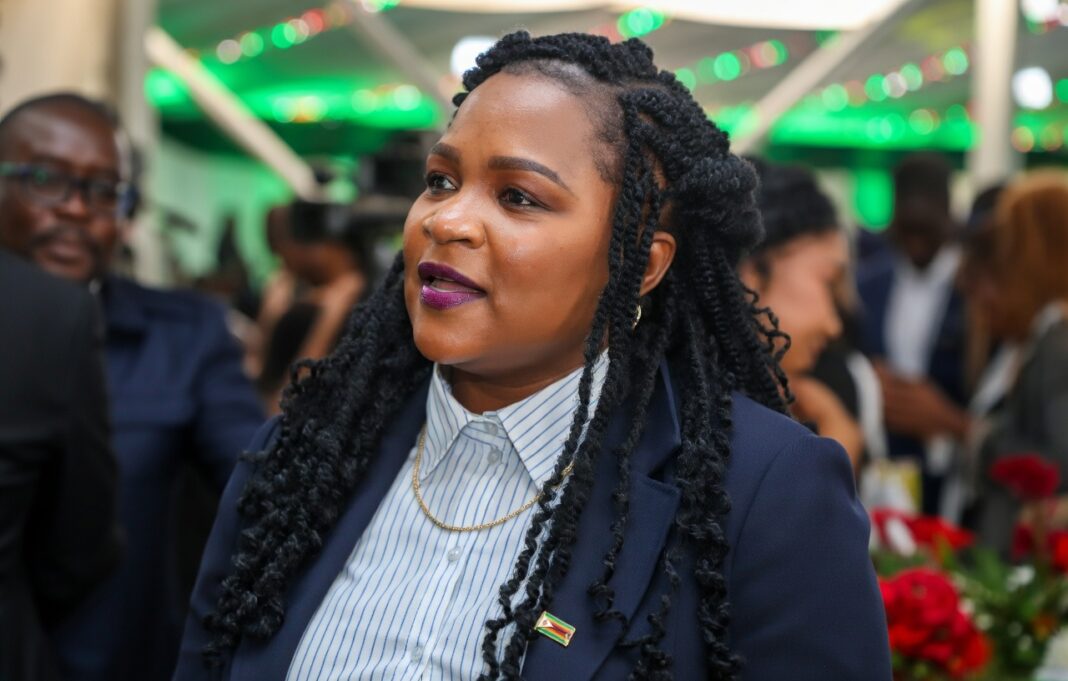
HARARE – Attorney General Virginia Mabhiza has declared that there is no legal basis for demanding a referendum to pass the Constitution (Amendment No. 3) Bill, 2026, putting her at direct odds with constitutional lawyers and opposition parties.
Mabhiza, speaking to journalists on Wednesday days before parliament is is set to vote on the bill, insisted that section 328(6) of the constitution adopted in 2013 is unambiguous: a referendum is only required for amendments touching Chapter 4 (the Declaration of Rights), Chapter 16 (Agricultural Land), or section 328 itself.
“I said it before and I want to insist – section 328(6) is deliberate and precise in that it reserves the ultimate democratic veto – the national referendum – for only three narrowly defined categories of amendment,” she said.
Because the Amendment Bill touches none of those protected provisions, in her view, parliament is constitutionally required to forward it to the president for assent once it secures the required two-thirds majority in both the national assembly and the senate.
“The constitutional basis for proceeding without a referendum is neither an option nor a loophole, section 328(6) is very clear on this aspect,” Mabhiza said.
“Any insistence on a referendum given the current scenario is devoid of any meaningful legal basis and logic. It is an unconstitutional demand.”
The government’s position has been rejected by leading lawyers and opposition parties, who insist that the amendments require a referendum, and even then President Emmerson Mnangagwa cannot benefit through the extension of his term which ends in 2028 to 2030.
The Amendment Bill is the most sweeping rewrite of Zimbabwe’s 2013 constitution since its adoption. Beyond extending the presidential term from five to seven years and allowing Mnangagwa to remain in office until 2030, two years beyond his current and final mandate, the bill proposes a raft of changes that critics say are designed to manage Zanu PF’s internal succession difficulties.
The bill scraps automatic succession by the vice president, replacing it with a parliamentary vote to fill a mid-term presidential vacancy. Under the current constitution, if the president dies or is incapacitated in office, the vice president assumes the presidency, but under the proposed changes, members of parliament would elect a successor.
MPs would also vote to extend their own terms in line with the longer presidential cycle, moving from five-year to seven-year parliamentary terms, a provision critics have noted gives sitting legislators a direct personal interest in passing the bill.
The bill further relaxes restrictions on traditional chiefs participating in politics, a change that raises concerns about the politicisation of customary leadership structures that are constitutionally required to be impartial.
Taken together, opponents argue the amendments amount to a constitutional coup – restructuring the state to serve Zanu PF’s factional interests under the guise of administrative reform.
Constitutional law expert Justice Mavedzenge has advanced a sharply different reading, anchored in section 328(7), the provision Mabhiza does not address in her statement.
“The real purpose behind this bill, this planned constitutional coup, is to simply manage the internal Zanu PF succession processes,” Mavedzenge has argued.
Section 328(7) provides that where a constitutional amendment seeks to change a “term limit provision” and has the effect of extending the length of time a person may hold office, a national referendum is mandatory, and the incumbent cannot benefit.
“The bill presented before us seeks to amend section 95 subsection 2(b) of the constitution by increasing the term of office for the president from five to seven years, and to allow the current president to continue in office beyond 2028 until 2030. This is not my interpretation. It is what is written in the bill,” he said.
The central legal dispute turns on whether section 95(2)(b) – which sets the presidential term at five years – qualifies as a “term limit provision” within the meaning of section 328. Mavedzenge says it plainly does.
The constitution defines a term limit provision as “a provision of this constitution which limits the length of time that a person may hold or occupy office.”
“It’s critical to clarify that a term limit provision is not about the number of times that a person may hold office necessarily, but the length of time that a person may occupy the office,” he argues. “Section 95(2)(b) defines the length of time the president can occupy that office. It sets the term at five years. I don’t know why there is confusion about this.”
The bill has drawn opposition from church leaders, the Law Society of Zimbabwe, the Zimbabwe Human Rights Commission, opposition parties, and civil society organisations, many of whom have argued that a referendum is constitutionally required.
Mabhiza’s statement represents the government’s determined push to steer the country from a referendum whose outcome it cannot predict.
The attorney general’s position is binding on government departments, though it does not preclude the courts from ruling differently.
A Constitutional Court challenge filed by CCC legislator Prince Dubeko Sibanda, which seeks to interdict parliament from proceeding with the bill, is pending.
Source: ZimLive