

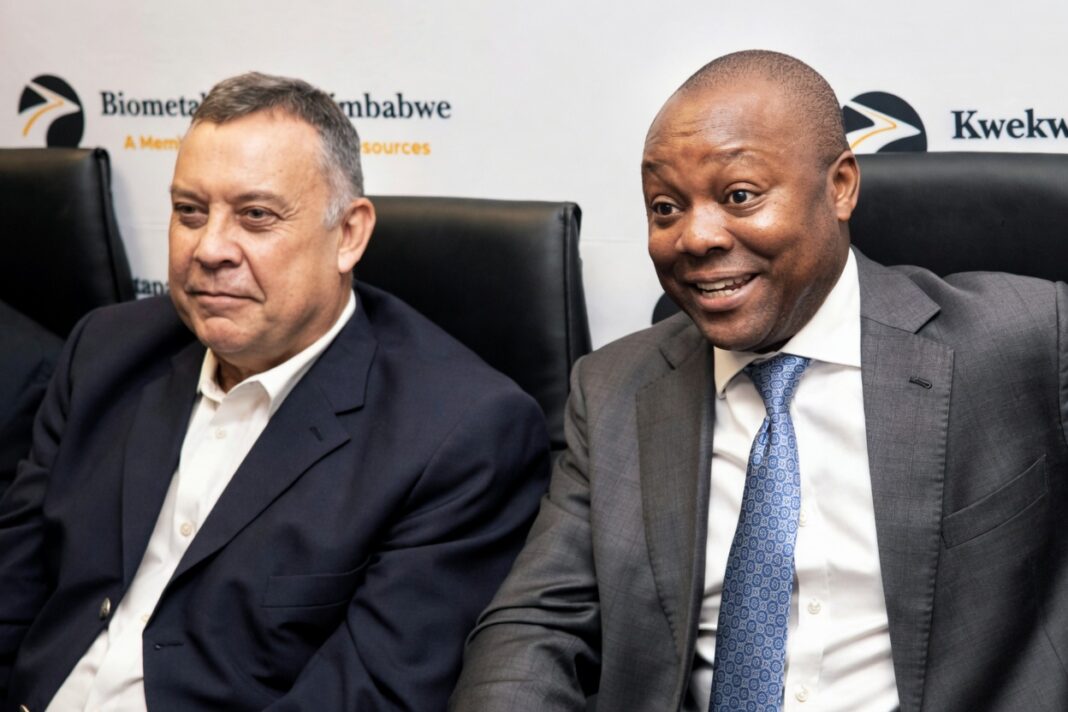
HARARE — Zimbabwe’s state-owned gold mining firm, Mutapa Gold Resources (MGR), has announced a sudden leadership transition following the resignation of its chief executive officer, Trevor Barnard, barely three months after the company’s formal launch.
In a statement issued to employees and stakeholders, board chairman Charles Chikaura confirmed that Barnard has stepped down with immediate effect. He will be succeeded by Patrick Maseva-Shayawabaya, the company’s chief finance officer and former head of the gold cluster at Kuvimba Mining House.
The board did not disclose the reasons behind Barnard’s departure. “We extend our sincere appreciation to Trevor for his dedicated service and leadership,” Chikaura said, noting that Barnard played a key role in shaping both the strategic direction and operational foundation of the newly established entity.
Strategic Transition at a Critical Juncture
Barnard’s exit comes at a pivotal moment for MGR, which was launched in February as part of a broader restructuring of the Mutapa Investment Fund. The restructuring dismantled Kuvimba Mining House into five specialised, mineral-focused entities aimed at improving operational efficiency and attracting targeted investment.
MGR represents the gold-focused arm of this new structure, alongside other units dedicated to base metals, energy minerals, platinum group metals, and frontier exploration assets. The carve-out strategy was designed to enhance transparency and unlock value by allowing investors to engage with clearly defined commodity-specific portfolios.
Growth Ambitions Under Review
During the company’s launch, Barnard had outlined an ambitious growth strategy centred on significantly scaling gold production over the medium term. This included plans to more than double output within three to four years, anchored by the development of a large-scale open-pit mining operation at Shamva, targeting annual production of approximately 80,000 ounces.
A similar expansion model was expected to be replicated at the Jena mine, positioning MGR as a key player in Zimbabwe’s gold sector.
Barnard had also emphasised that separating gold assets into a standalone entity would improve access to capital, arguing that investors typically favour focused commodity exposure over diversified mining portfolios.
Market Implications and Investor Sentiment
The leadership change introduces a degree of uncertainty at a time when MGR is expected to transition from strategic planning to execution. Analysts note that continuity in leadership will be critical to maintaining investor confidence, particularly as the company seeks to raise capital for its expansion projects.
The appointment of Maseva-Shayawabaya, who brings financial and operational experience from within both MGR and Kuvimba, signals a preference for internal continuity. The board expressed confidence in his ability to steer the company through its next phase of growth.
Broader Sector Context
Zimbabwe’s mining sector remains a cornerstone of the country’s economic strategy, with gold playing a central role in export earnings and foreign currency generation. The restructuring of state mining assets under the Mutapa Investment Fund reflects a broader push to modernise governance frameworks and attract both domestic and international investment.
However, execution risk remains a key concern. The success of the restructuring—and MGR’s growth ambitions—will depend on the company’s ability to deliver on production targets, secure financing, and maintain operational efficiency in a challenging macroeconomic environment.
Outlook
With a new chief executive at the helm, Mutapa Gold Resources now faces the task of translating its strategic blueprint into measurable output growth.
Investors and industry observers will be closely watching how the leadership transition impacts project timelines, capital raising efforts, and overall corporate governance within Zimbabwe’s evolving state mining framework.