
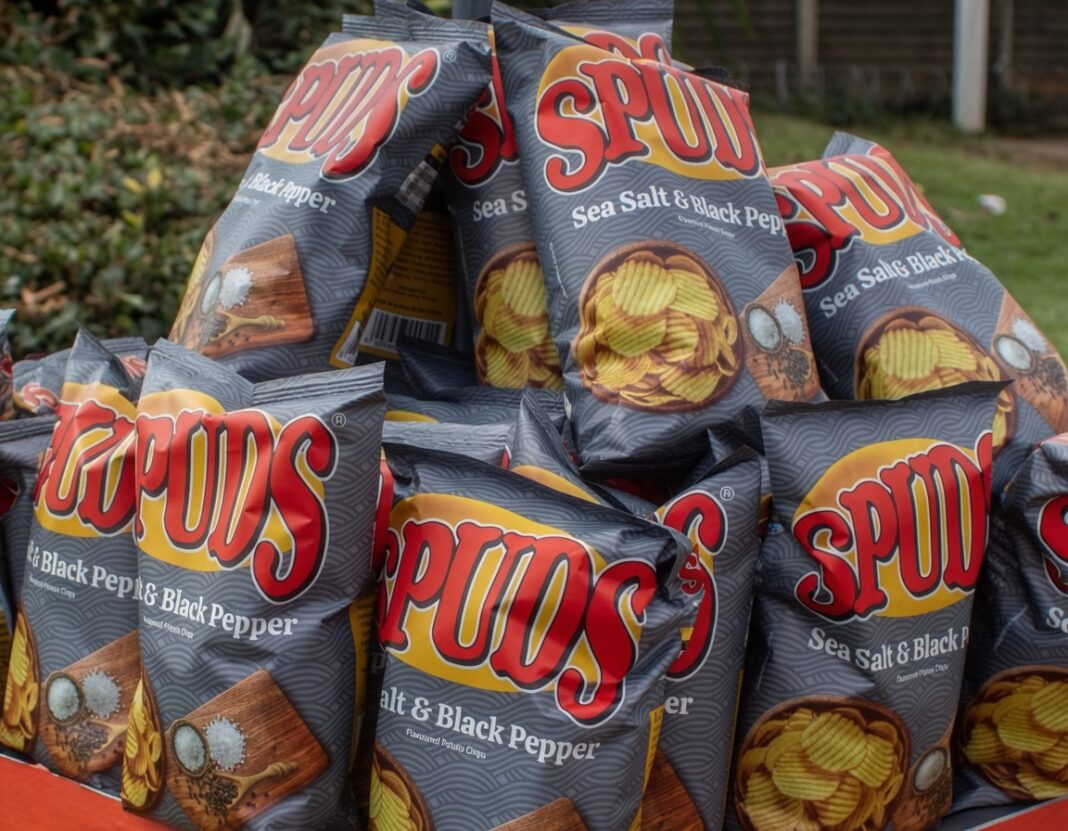
HARARE – Cairns Foods Limited has unveiled a refreshed packaging design for its flagship Spuds potato chips brand, with the new-look product already being rolled out across retail outlets nationwide as the company seeks to strengthen its position in Zimbabwe’s increasingly competitive snack foods market.
The rebranding initiative comes at a time when Zimbabwe’s food processing industry is emerging as one of the country’s strongest manufacturing sectors, contributing significantly to industrial growth, value addition and employment creation.
According to the latest Confederation of Zimbabwe Industries (CZI) Manufacturing Sector Survey 2025, the food production sector recorded the highest net employment growth among all manufacturing subsectors, expanding employment by 16% during the year. The sector also registered an 18% increase in output and a 19% rise in revenues, highlighting its growing importance within Zimbabwe’s industrial landscape.
Industry analysts say Cairns Foods’ investment in brand modernisation reflects broader trends reshaping the global snack food industry, where consumer preferences are rapidly evolving beyond traditional convenience products towards healthier, functional and premium snack offerings.
“The snacking industry is undergoing significant transformation globally. Consumers increasingly seek products that combine convenience, taste and nutritional value,” said a food industry analyst.
The trend, often described as “intentional grazing,” is driving demand for high-protein snacks, plant-based products, functional foods and healthier indulgences. International brands have successfully capitalised on these shifts by introducing protein-enriched snacks, probiotic-infused products and fortified foods that deliver added health benefits without compromising taste.
For Zimbabwean food manufacturers, these changing consumer preferences present opportunities for product diversification and innovation.
Market researchers note that future growth opportunities could include high-protein snack products, fortified breakfast bars, plant-based alternatives, trail mixes and premium snack kits tailored to changing consumer lifestyles. Interactive food concepts such as grazing boxes, tasting packs and premium snack combinations are also gaining traction globally.

The development comes as locally manufactured products continue to strengthen their presence on Zimbabwean retail shelves. Previous industry assessments indicated that approximately 70% of products sold in local supermarkets are manufactured domestically, reflecting the growing contribution of local industry to national consumption patterns.
However, manufacturers continue to face significant operational challenges.
Zimbabwe’s food processors operate in an environment characterised by rising energy costs, foreign currency constraints, logistics challenges, fluctuating raw material prices and increasing competition from imports. Industry experts argue that maintaining competitiveness requires more than traditional cost-cutting measures.
Increasingly, manufacturers are turning towards technology, advanced analytics, artificial intelligence and integrated supply-chain management to improve efficiency and profitability.
Food processors that embrace data-driven production planning, predictive maintenance systems, energy optimisation and advanced market intelligence are expected to gain significant competitive advantages in the coming years.
Packaging innovation is also becoming a key differentiator.
Beyond product quality, consumers are paying increasing attention to packaging design, sustainability credentials and brand messaging. Trends such as recyclable packaging, biodegradable materials and environmentally conscious product presentation are influencing purchasing decisions across global food markets.
Industry specialists say companies seeking sustainable growth must invest heavily in market intelligence, competitor analysis and consumer sentiment monitoring to identify emerging opportunities and changing preferences.
“Understanding consumer behaviour has become as important as manufacturing capability itself. The most successful food brands are those that continuously adapt to changing market conditions and consumer expectations,” a market analyst noted.
The launch of the redesigned Spuds packaging therefore represents more than a cosmetic refresh. It reflects the growing sophistication of Zimbabwe’s food manufacturing sector and the increasing emphasis on brand positioning, product innovation and consumer engagement.
As Zimbabwe pursues industrialisation and import-substitution strategies, food processing remains one of the country’s most promising manufacturing segments. Strong linkages with agriculture, packaging, transport, retail and exports mean continued investment in the sector has the potential to generate employment, strengthen local supply chains and improve national economic resilience.
With consumer tastes evolving and competition intensifying, companies such as Cairns Foods are positioning themselves to capture growth opportunities in a market where innovation, efficiency and brand differentiation are becoming increasingly critical to long-term success.