
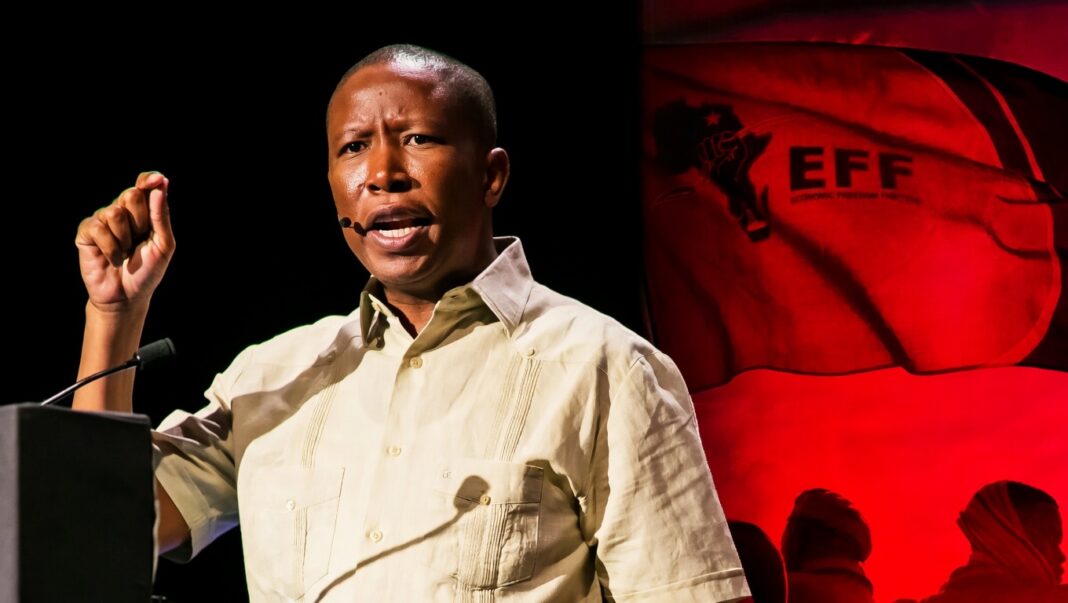
CAPE TOWN — The sentencing of Julius Malema to five years’ imprisonment has triggered a fierce national debate, with political analysts and activists alleging that the ruling reflects a racially skewed and politically compromised judicial system reminiscent of apartheid-era inequities.
The leader of the Economic Freedom Fighters (EFF) was handed the sentence on Thursday by Twanet Olivier at the East London Magistrate’s Court after being found guilty of discharging a semi-automatic rifle during a 2018 rally in Mdantsane, Eastern Cape.
While the court granted Malema leave to appeal his sentence, it denied his application to challenge the conviction. He has been released on warning pending the outcome of the appeal.
Allegations of a racially biased justice system
Critics argue that the severity of the sentence, when viewed against comparable cases, exposes what they describe as a “racist judicial apartheid system” — one that disproportionately targets Black political figures who challenge entrenched economic and racial power structures.
Social activist and author Kim Heller said the ruling raises serious concerns about judicial independence.
“This is not a pristine exercise of the rule of law. It reflects political contamination and a failure of judicial neutrality,” Heller said.
She added that the case illustrates a broader pattern in which radical Black political voices face intensified legal scrutiny.
“Those who disrupt established power relations are subjected to political persecution. This judgment reinforces the perception of a justice system that is neither blind nor balanced,” she said.
Role of AfriForum and selective prosecution concerns
The case was initiated by AfriForum, a lobby group that has frequently clashed with Malema over his rhetoric and political stance. Analysts say its involvement raises questions about the influence of private actors in shaping prosecutorial priorities.
Political analyst Sipho Seepe questioned whether the National Prosecuting Authority (NPA) would have pursued the matter with the same vigour absent external pressure.
“It creates the impression that certain groups can effectively direct the NPA’s actions,” Seepe said. “That raises fundamental questions about equality before the law.”
Comparisons with Phala Phala controversy
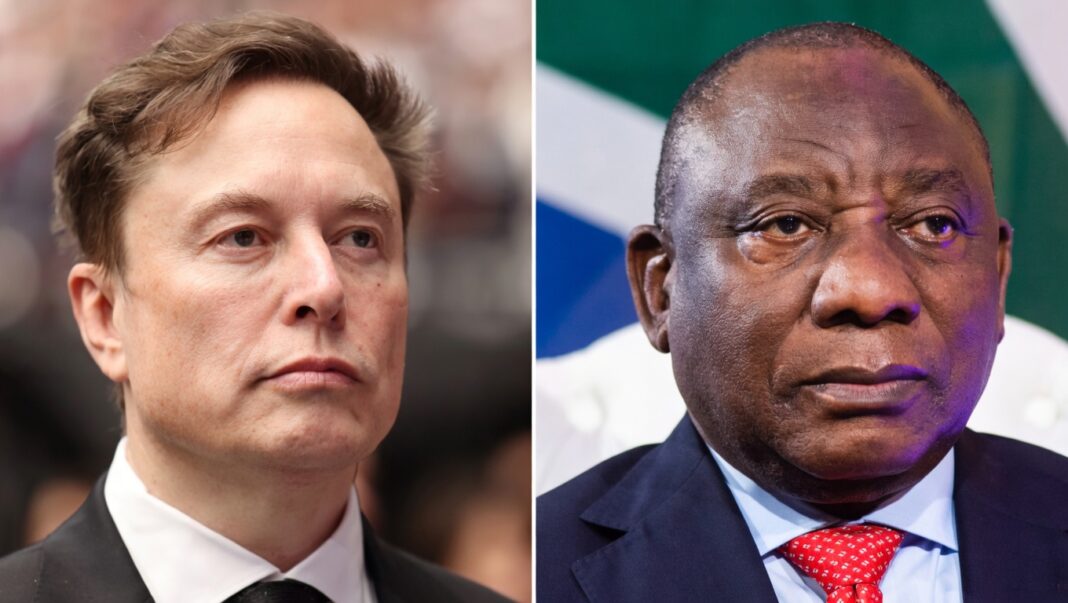
Observers have also pointed to the stark contrast between Malema’s prosecution and the handling of the Phala Phala scandal involving President Cyril Ramaphosa.
The scandal centres on the 2020 theft of approximately $580,000 from Ramaphosa’s Phala Phala farm in Limpopo, money allegedly concealed within furniture. Despite findings suggesting potential misconduct, critics note the absence of decisive prosecutorial action.
A declassified report by the Independent Police Investigative Directorate (IPID) recommended disciplinary action against senior members of the Presidential Protection Unit for alleged concealment of the theft and misuse of state resources.
For critics, the disparity between the two cases reinforces perceptions of selective justice.
“If serious allegations at the highest level remain unresolved while opposition figures are aggressively prosecuted, it raises the question: are some more equal than others?” Seepe said.
Political ramifications and “martyr effect”
Heller warned that the sentencing could have far-reaching political consequences, potentially strengthening Malema’s support base.
“A five-year sentence not only disrupts parliamentary participation and organisational leadership, but may elevate Malema to martyr status,” she said.
She argued that the ruling could galvanise the EFF’s electoral campaign rather than weaken it.
International dimension and political pressure
The case has also unfolded against a backdrop of international scrutiny. In 2025, former US President Donald Trump publicly called for Malema’s arrest over his use of the controversial “Kill the Boer” chant, further intensifying geopolitical tensions.
While Seepe cautioned against drawing a direct link between such remarks and the court’s decision, he acknowledged their influence on broader political narratives.
Malema lashes out at judiciary
Addressing supporters outside court, Malema condemned the ruling in stark terms, accusing Magistrate Olivier of racial bias and alleging institutional prejudice within the judiciary.
The sentencing, he said, was not merely a legal judgment but part of a broader pattern of political suppression.
A system under scrutiny
As South Africa awaits the outcome of Malema’s appeal—and a pending Constitutional Court ruling on the Phala Phala matter—the case has become a flashpoint in a larger national reckoning over the integrity, independence, and racial dynamics of the country’s justice system.
For many observers, the controversy transcends one man’s conviction, raising deeper concerns about whether South Africa’s post-apartheid legal order has fully escaped the structural inequalities of its past.