HARARE — Innscor Africa Limited recorded volume growth across most of its businesses in the first quarter of its 2027 financial year, supported by stronger consumer demand, expanded manufacturing capacity and improved distribution infrastructure.
The diversified food and consumer goods group said aggregate volumes increased across several key operations in the three months ended September 30, 2026, as relatively stable domestic trading conditions supported demand.
In its trading update released on November 12, Innscor said consumer spending had benefited from increased mining activity, higher tobacco marketing volumes, improved agricultural output and continued growth in diaspora remittances.
The performance highlights the importance of domestic food manufacturing in Zimbabwe’s consumer economy, where demand for basic food products, poultry, meat, beverages and agricultural inputs remains closely linked to household incomes and agricultural activity.
National Foods, one of the group’s major operating businesses, recorded a 22% increase in aggregate sales volumes. Flour volumes rose 12%, stockfeeds increased 22%, maize volumes climbed 41%, while the downpacked division, mainly rice and salt, grew 22%. Snacks volumes advanced 17%.
The growth in maize products reflects a recovery from drought-related trading constraints experienced in the previous financial year, while stronger stockfeed sales point to improving activity in the poultry and livestock value chains.
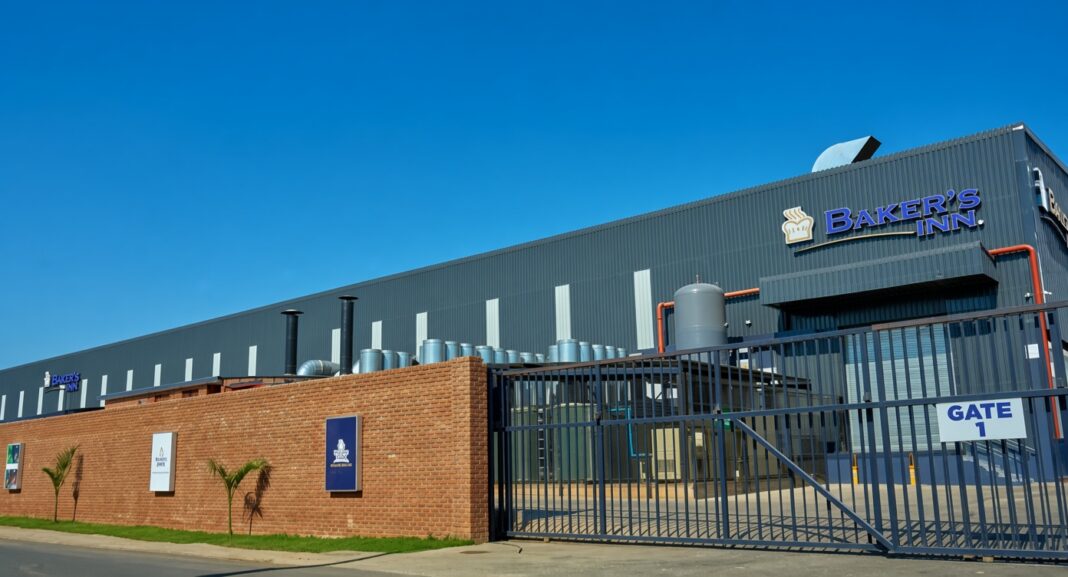
Innscor’s bakery division recorded a 21% increase in loaf volumes, supported by the full-quarter contribution of an automated production line commissioned at its Harare manufacturing facility in June. Its new Harare distribution centre is also fully operational, while a solar installation is helping meet the site’s electricity requirements.
The group said additional automated production capacity was being developed at its Bulawayo bakery operation, with commissioning expected during the current financial year.
Meat and poultry operations expand
Colcom Foods and Triple C Pigs recorded combined sales volume growth of 25%. Fresh pork volumes increased 21%, processed meat rose 26%, and Colcom Pie volumes climbed 38%.
The number of pigs delivered to Colcom Foods increased 18%, while total cold dressed mass rose 20%, reflecting the contribution of earlier investment in production capacity, genetics and farming efficiencies.
Irvine’s Frozen Poultry volumes increased 18%, while day-old chick sales grew 7%. Associated Meat Packers Group recorded 14% growth in aggregate protein volumes, with chicken volumes up 26%, processed beef rising 19% and pork increasing 89%.
The group is also expanding its retail distribution network, with a new Associated Meat Packers outlet opened in Pomona and another planned for Chisipite ahead of the Christmas trading period.
Beverages and dairy deliver mixed results
The Buffalo Brewing Company recorded an 83% increase in sorghum beer volumes, benefiting from additional production capacity and wider distribution of its Nyathi brand.
In the dairy business, Prodairy volumes increased 7%, while the Revive portfolio of dairy blend and maheu products grew 6%. The Life range, which includes milk, butter, cream and yoghurt, recorded 14% growth.
Probottlers’ aggregate sales volumes rose 3%, supported by a 22% increase in cordials. However, demand across smaller Fizzi carbonated soft-drink packaging formats remained subdued.
The company said the formal beverage sector continued to face structural challenges, particularly the impact of the Special Surtax on Sugar Content on consumer pricing and demand. It is responding through product development, operational adjustments and the introduction of a functional drinks range under the Activ8 brand.
Investment supports manufacturing capacity
Innscor’s update points to a continuing investment cycle across its manufacturing and distribution businesses. Recent projects include additional milling capacity, expanded bakery production, improved energy security, new food-processing facilities and upgrades to poultry and livestock operations.
However, performance was not uniform across the portfolio. Natpak’s aggregate volumes remained broadly unchanged, while its Rigids division contracted 13% amid subdued demand in the domestic beverage market. Nutrimaster fertiliser volumes fell 19%, largely because farmers deferred purchases in anticipation of later seasonal rainfall associated with the expected El Niño conditions.
Probrands’ aggregate volumes declined 12%, reflecting a deliberate shift towards higher-margin consumer products. The company said the change had improved its sales mix and profitability.
Innscor warned that geopolitical tensions and disruptions to international trade could raise energy and freight costs, increase commodity-price volatility and interrupt supplies of essential raw materials. Potential adverse climatic conditions in the region also pose risks to agricultural production and the wider economy.
The group said it was managing these pressures through strategic stockholding, supply-chain planning, cost containment and disciplined working-capital management.
The Zimbabwe Mail business desk notes that Innscor’s latest trading update offers an indication of the scale of domestic demand and the role of private-sector investment in strengthening Zimbabwe’s food-processing capacity. Growth in milling, meat processing, poultry, bakery and beverages demonstrates how investment in production and distribution can support local supply chains and reduce dependence on imported finished products.
However, volume growth should not be confused with revenue or profit growth. Innscor did not disclose group revenue, earnings or margins in the first-quarter update. The sustainability of the expansion will depend on consumer purchasing power, input costs, reliable energy supplies and the ability of manufacturers to convert higher production volumes into stronger cash flows.
For Zimbabwe’s wider economy, the results underline the importance of agricultural recovery and industrial capacity working together. Stronger crop output supports food processing and livestock production, while investment in manufacturing creates demand for farmers, suppliers, transport operators and retailers.
Innscor said it remained focused on expanding production capacity, improving operating efficiencies and generating free cash flow as it navigates the remainder of the 2027 financial year.