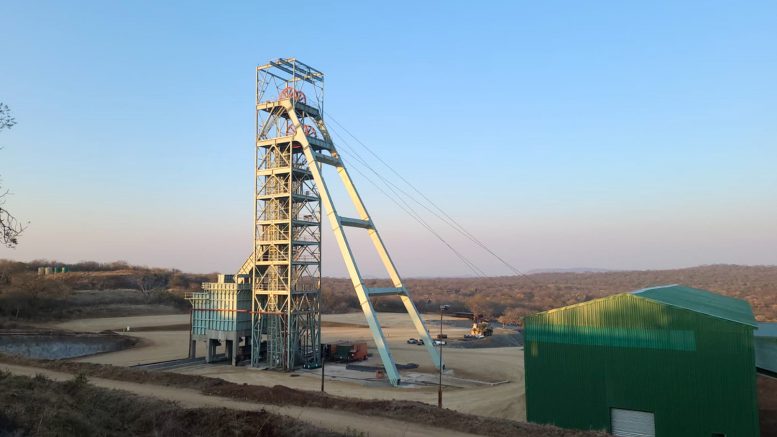
HARARE – Caledonia Mining Corporation has secured an interim financing facility of up to US$150 million from a consortium of Zimbabwean banks, strengthening the funding framework for its planned Bilboes gold project as the company moves towards major construction work in 2027.
In a press release issued on November 5, the company said its subsidiary, Caledonia Holdings Zimbabwe, had signed the agreement with Stanbic Bank Zimbabwe and CBZ Bank acting as mandated lead arrangers. The facility has been syndicated across eight local financial institutions, including FBC Bank, NMB Bank, ZB Bank, First Capital Bank, FBC Crown Bank and Central African Building Society.
The financing comprises a revolving credit facility of up to US$50 million priced at the secured overnight financing rate (SOFR) plus 8.10 percentage points, and a term facility of up to US$100 million at SOFR plus 7.90 percentage points. The term facility also carries an option to increase its size by a further US$50 million.
The agreement has a three-year term, with a possible one-year extension. The term facility includes an 18-month availability period and a repayment pause, after which amounts drawn will be repaid quarterly. Initial utilisation of the revolving facility is subject to conditions, including additional hedging arrangements.
The deal marks the third completed component of Caledonia’s four-pillar funding strategy for Bilboes. The company has already completed a gold-price hedging programme and a US$150 million convertible notes offering, which generated approximately US$130 million in net proceeds. Discussions with regional and international lenders for longer-term project finance remain under way.
Caledonia said initial ground works at Bilboes had begun, with main construction planned for 2027 and 2028. First gold production is targeted for October 2028, although the timetable remains subject to project execution, financing and other development risks.
Chief executive Mark Learmonth said the banking support and international capital markets participation reflected confidence in the project and Zimbabwe’s gold mining sector.
For Zimbabwe, the transaction is significant beyond the financing of a single mine. The participation of eight domestic financial institutions demonstrates the capacity of local banks to coordinate substantial funding for a large-scale mining development. It also creates an opportunity for domestic lenders to deepen their exposure to the mining sector, although the facility’s actual utilisation and repayment performance will determine the ultimate returns and risks.
Market analysts who spoke to The Zimbabwe Mail say that the agreement could have wider economic benefits if Bilboes progresses into construction and production as planned. Large mining projects generate demand for engineering, construction, transport, equipment, energy and other locally supplied services, potentially supporting employment and business activity across related sectors.
The project could also contribute to export earnings and foreign-currency inflows once production begins. However, those benefits are not immediate: long-term project finance remains outstanding, and the company has not yet completed all the funding arrangements required for development.
The deal also highlights an important role for Zimbabwe’s banking sector in financing productive investment. Mobilising domestic capital for mining projects can help retain more financial activity within the country, while partnerships with international lenders remain important for funding requirements beyond local balance-sheet capacity.
Caledonia, which is listed on the NYSE American, London’s AIM and the Victoria Falls Stock Exchange, is positioning Bilboes as a major part of its strategy to become a larger, multi-asset Zimbabwe-focused gold producer.