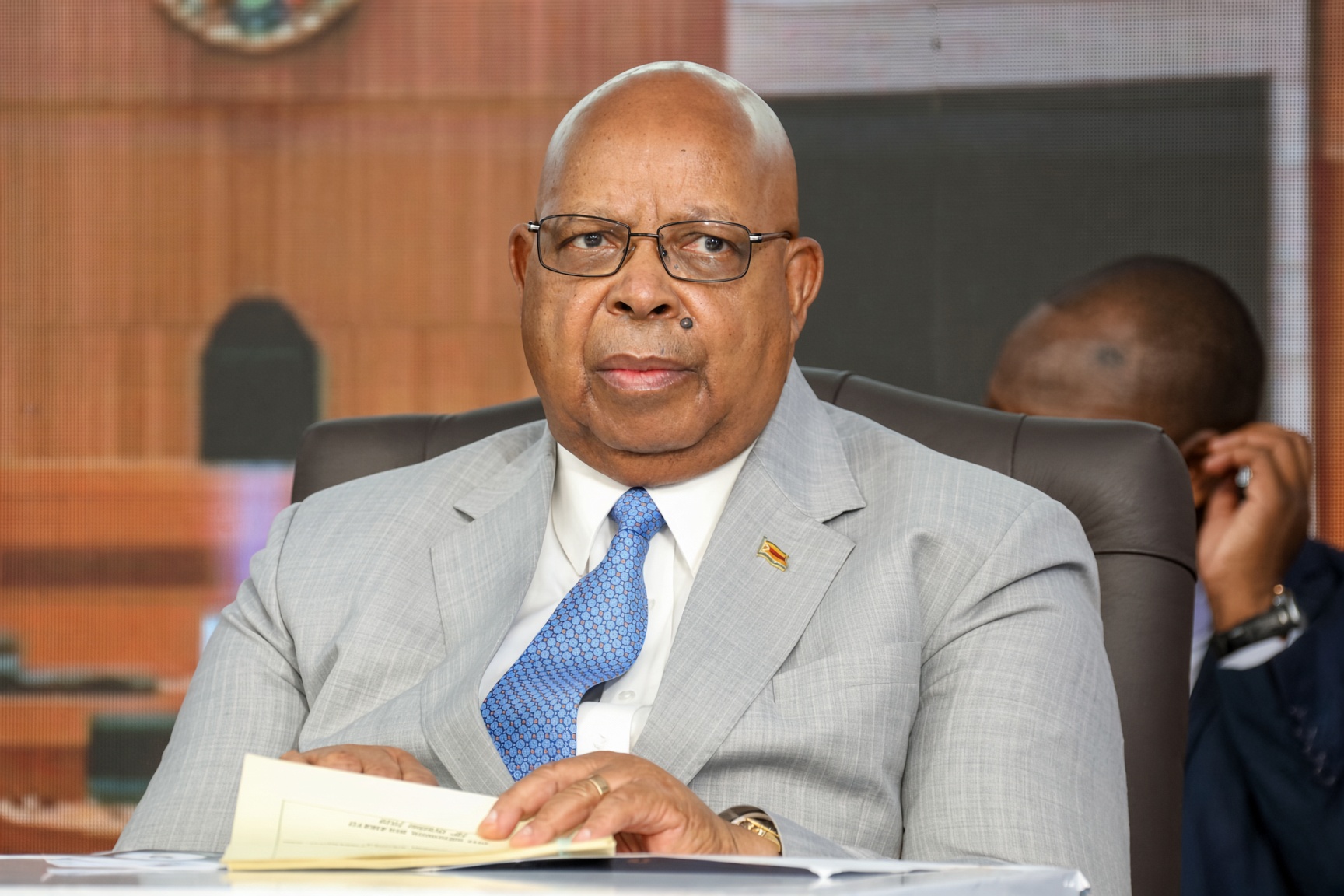
HARARE – Zimbabwe’s Parliament has called for greater scrutiny of government expenditure and measurable returns on public investment, with Speaker of Parliament Jacob Mudenda warning that the 2027 National Budget must move beyond ambitious policy declarations to deliver tangible improvements in people’s livelihoods.
Addressing the 2027 Pre-Budget Seminar, Mudenda challenged lawmakers to exercise their constitutional authority over public finances, arguing that Parliament must play a decisive role in ensuring that national development priorities translate into practical economic outcomes.
“The people’s aspirations must be translated from broad policy intent, into credible programmes, measurable outputs and life-changing outcomes,” Mudenda said.
He stressed that the forthcoming budget should be developmental in design, transformative in substance and firmly anchored in an inclusive national development framework.
His remarks come as Zimbabwe prepares its 2027 fiscal programme against a backdrop of efforts to consolidate macroeconomic stability, strengthen revenue mobilisation and direct public resources towards infrastructure, industrial development and essential services.
The intervention places renewed attention on the effectiveness of government expenditure rather than simply the size of budgetary allocations, a distinction increasingly important for an economy facing competing demands on limited fiscal resources.
Mudenda reminded parliamentarians that their authority over public finances was constitutionally established and should not be regarded as a privilege granted by the executive.
“Your authority over the nation’s finances is neither borrowed nor bestowed by Executive benevolence,” he said.
He invoked American statesman James Madison’s description of legislative control over public finances as the most powerful constitutional instrument available to elected representatives.
The Speaker’s remarks highlight the central role of parliamentary oversight in determining whether fiscal policy delivers value for money, particularly in infrastructure development, healthcare, education and programmes intended to stimulate productive investment.
From an economic governance perspective, effective budget scrutiny requires more than approving expenditure ceilings. It involves examining the feasibility of proposed programmes, monitoring implementation and establishing whether public spending generates measurable social and economic benefits.
For Zimbabwe, where infrastructure deficits and constrained public finances remain significant development challenges, the distinction between budget allocations and actual project delivery carries considerable economic implications.
The debate also raises questions about the quality of public investment, procurement accountability and the capacity of government institutions to implement development programmes within approved financial limits.
Economic analysts generally regard credible parliamentary oversight as an important safeguard against inefficient expenditure, particularly where governments must balance fiscal consolidation with demands for expanded public services.
However, the effectiveness of that oversight ultimately depends on lawmakers’ access to reliable financial information, independent scrutiny of spending proposals and their willingness to hold public institutions accountable for implementation failures.
Mudenda’s intervention comes as Finance Minister Mthuli Ncube prepares a 2027 budget anchored on the second National Development Strategy and Vision 2030, with economic growth projected at 3.5 percent.
The government has committed to maintaining fiscal discipline while prioritising infrastructure, agriculture, technological development and employment creation.
For businesses and investors, stronger legislative scrutiny could improve confidence in public financial management, particularly if it produces greater transparency over infrastructure contracts, expenditure commitments and the economic returns on state-funded projects.
The challenge facing Parliament will be to ensure that its constitutional authority translates into effective control over public resources rather than becoming a procedural exercise in approving government spending.
Mudenda’s message ultimately places responsibility for Zimbabwe’s development ambitions not only on the Treasury but also on lawmakers tasked with ensuring that every budgetary commitment is matched by credible implementation and demonstrable results.