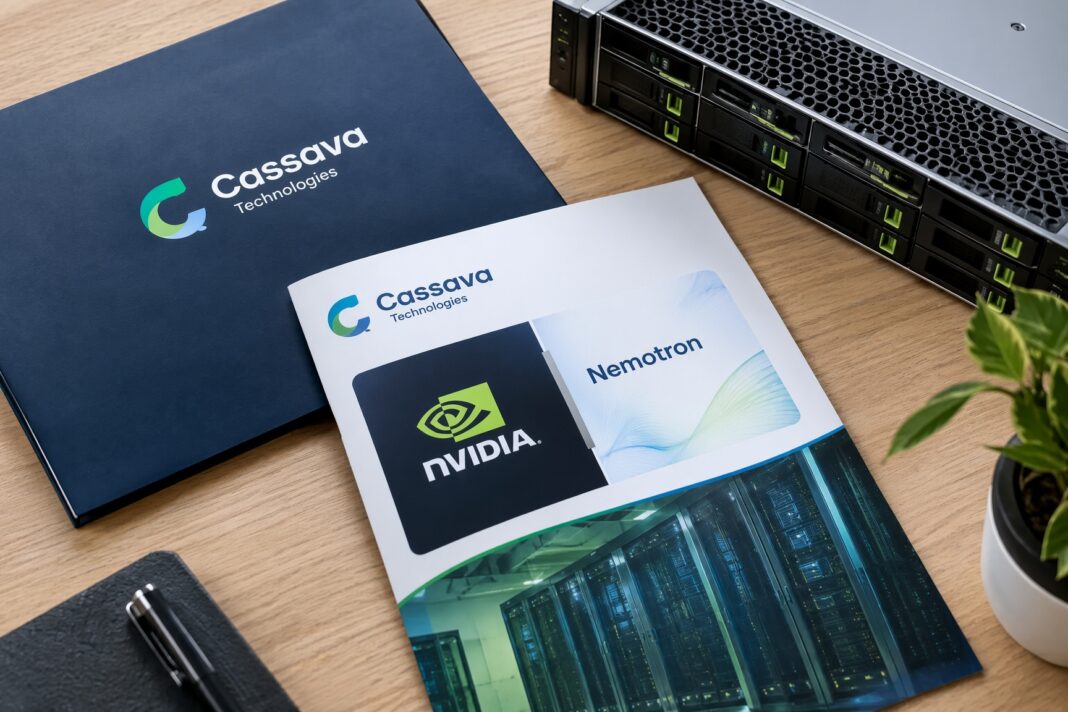
LONDON – Cassava Technologies, the pan-African technology group founded by Zimbabwean billionaire Strive Masiyiwa, is expanding its artificial intelligence infrastructure through the deployment of NVIDIA’s Nemotron models, targeting businesses seeking cheaper computing services and greater control over sensitive corporate data.
The company said it would integrate NVIDIA Nemotron open models into its Cassava AI Multi-Model Exchange (CAIMEx), allowing enterprises and technology service providers to develop and operate AI applications without investing heavily in their own computing infrastructure.
The expansion strengthens Cassava’s position in the emerging enterprise AI market, where technology providers are competing to reduce the cost of running sophisticated models while addressing growing concerns over data security and infrastructure ownership.
Under the arrangement, businesses will access Nemotron through locally hosted, managed services, using application programming interfaces (APIs) to integrate artificial intelligence into existing corporate systems.
Cassava said the platform would support increasingly sophisticated AI agents capable of performing complex tasks, interacting with business software and automating operational processes.
“Expanding our AI Factory across our markets is about creating the capacity and economics needed for businesses to build and deploy AI solutions at scale,” said Ahmed El Beheiry, Cassava Technologies’ Group Chief Technology and AI Officer.
He said integrating Nemotron into CAIMEx would improve the efficiency of computing resources while giving enterprises greater flexibility in accessing AI services.
The development comes as businesses worldwide confront rising expenditure on AI infrastructure, particularly the specialised graphics processing units required to train and operate advanced models.
Technology industry analysts increasingly identify inference costs — the expense of running AI models after development — as a significant factor in determining whether enterprise AI investments can generate sustainable commercial returns.
Cassava is addressing that challenge through its CAIMEx Token Optimiser, which identifies previously processed information and reuses it where appropriate, reducing repetitive computing workloads.
The company says the technology can improve efficiency across both Cassava-hosted and third-party AI models, potentially lowering operating costs as corporate AI usage expands.
The platform will also incorporate NVIDIA OpenShell, designed to strengthen security controls as AI agents gain access to business applications and sensitive information.
For African enterprises, access to locally hosted AI infrastructure could offer an alternative to relying exclusively on overseas cloud platforms, particularly in industries where data protection, regulatory compliance and service reliability are important considerations.
The announcement follows Cassava’s growing involvement in international AI infrastructure initiatives, including its recently announced role as a knowledge partner in the World Bank’s AI Infrastructure and Readiness Initiative alongside NVIDIA.
The developments underscore Cassava’s ambition to establish itself as a significant provider of AI infrastructure and services across emerging markets, extending its business beyond traditional telecommunications and connectivity.
However, the company did not disclose the financial investment associated with the Nemotron deployment, expected customer numbers or projected revenue from the expanded platform.
For investors assessing the commercial prospects of Africa’s emerging AI industry, the critical question is whether infrastructure providers can convert rising demand for artificial intelligence into recurring revenue while keeping computing and energy costs under control.
Cassava’s latest expansion suggests that competition in the sector is increasingly shifting from access to powerful AI models towards the economics of delivering them securely, reliably and at scale.