

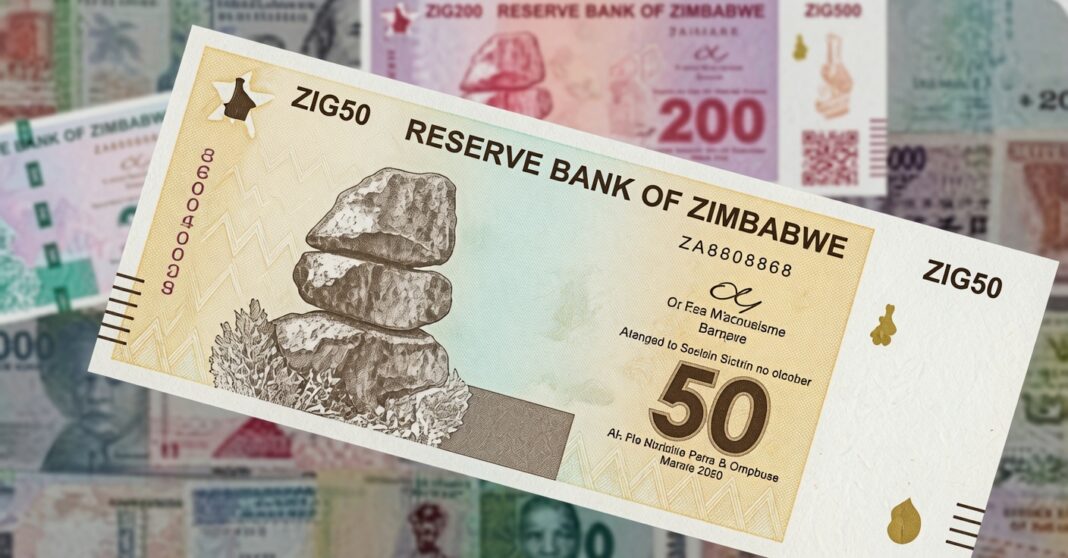
HARARE – Economic policy think tank Africa Economic Development Strategies (AEDS) has renewed its call for Zimbabwe to gradually transition to a single-currency system, arguing that wider adoption of the Zimbabwe Gold (ZiG) would strengthen macroeconomic stability, improve the effectiveness of monetary policy and enhance confidence in the domestic economy.
In a detailed policy roadmap, AEDS said the shift to a single-currency regime should be driven by the achievement of clearly defined macroeconomic conditions rather than fixed implementation dates.
“The transition to a single-currency regime is not date-based but is dependent on the achievement of the conditions precedent,” the organisation said.
According to AEDS, the move should only proceed once Zimbabwe has achieved durable macroeconomic stability characterised by low and stable single-digit inflation, accumulated foreign currency reserves equivalent to between three and six months of import cover over the medium to long term, and established an efficient foreign exchange management system that guarantees reliable access to foreign currency for importers.
The think tank also identified exchange rate stability, stronger demand for the ZiG, financial sector resilience, an efficient National Payments System and closer coordination between fiscal and monetary policy as essential prerequisites for the transition.
It further recommended increasing the proportion of government taxes and payments for public goods and services conducted in ZiG to deepen demand for the local currency while maintaining strict fiscal discipline by avoiding monetary financing of the budget.
Under the proposed framework, AEDS said all domestic goods and services would be priced, paid for and settled exclusively in ZiG, while foreign currency would continue to be used for international transactions, including imports, exports and external debt obligations.
“The single-currency framework means domestic products and services will be exclusively paid for and settled in local currency, while foreign currency will be reserved for external payments,” the think tank said.
However, AEDS stressed that the transition would not eliminate foreign currency accounts or existing United States dollar-denominated financial assets.
It said foreign currency accounts would remain operational, while US dollar-denominated pension fund investments, Treasury Bills and equities listed on the Victoria Falls Stock Exchange (VFEX) would continue to exist under the proposed framework.
The organisation also clarified that foreign currency loans extended to individuals and non-exporting companies would remain denominated and repayable in the currency in which they were contracted.
According to AEDS, these policy clarifications are critical in reducing uncertainty surrounding the transition and addressing concerns about potential losses arising from currency conversion.
“These pronouncements and clarifications on the transition to a single-currency regime and the fate of US dollar obligations help address uncertainties associated with asset impairment or potential losses arising from currency transactions,” the organisation said.
AEDS noted that uncertainty over Zimbabwe’s long-term currency framework had previously contributed to two significant risks within the financial sector: a tightening of credit availability and capital flight.
It observed that lenders had increasingly shortened the tenure of medium- and long-term facilities, with mortgage lending having virtually collapsed amid concerns over currency risk. At the same time, access to offshore financing had become increasingly constrained, while some foreign credit facilities arranged by private sector firms had reportedly been suspended or withdrawn.
The think tank argued that recent policy clarifications had significantly reduced these risks by confirming that existing US dollar liabilities would continue to be honoured in foreign currency and that foreign currency accounts would remain intact.
“Specifically, the emphasis that a single-currency system entails the exclusive use of ZiG for domestic transactions, while US dollar-denominated liabilities—whether owed to domestic or external creditors—will continue to be serviced in US dollars, and that US dollar accounts will not be closed, is a significant policy reassurance,” AEDS said.
Zimbabwe has operated under a multicurrency system since 2009, although authorities have been pursuing measures aimed at increasing the use of the ZiG following its introduction in April 2024. The Reserve Bank of Zimbabwe has consistently maintained that any eventual transition to a single-currency system will depend on the attainment of macroeconomic stability and other economic conditions rather than a predetermined timetable.
AEDS believes that anchoring the transition in measurable economic indicators, while safeguarding existing foreign currency assets and obligations, would gradually rebuild confidence in the ZiG, deepen local currency usage and create a more coherent monetary policy framework capable of supporting sustainable long-term economic growth.