

JOHANNESBURG – African governments must accelerate investment in sovereign artificial intelligence (AI) infrastructure or risk allowing the economic value generated from the continent’s data to continue flowing overseas, according to Cassava Technologies.
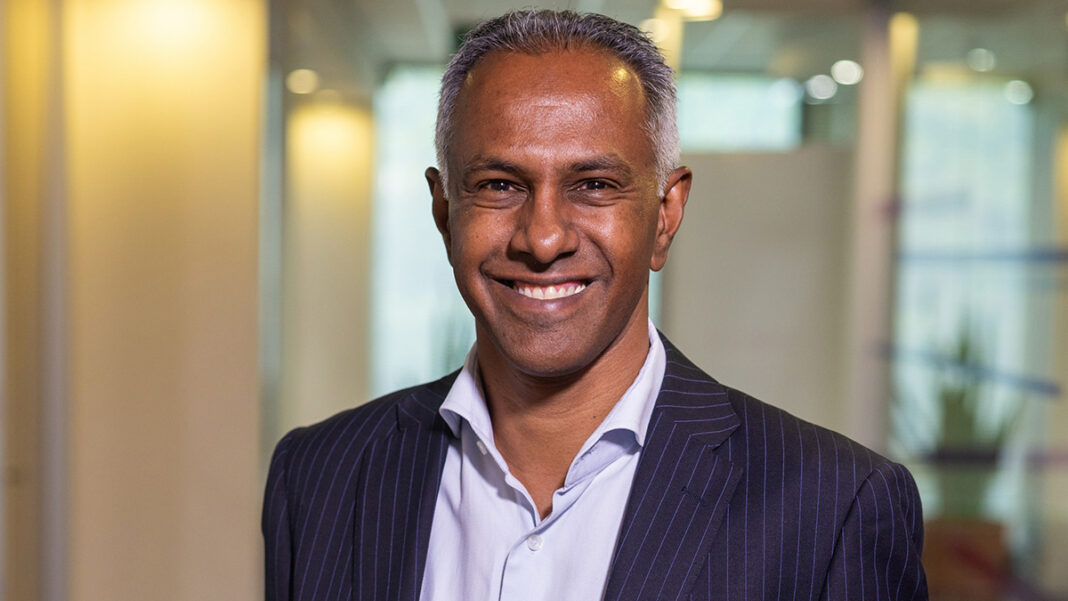
Writing on the future of Africa’s digital economy, Cassava Technologies Senior Vice President and Chief Executive Officer for South Africa and Botswana, Ziaad Suleman, argued that while African governments generate vast amounts of strategic data through health systems, education, taxation, land registries and public administration, much of that information is processed and monetised on foreign-owned digital infrastructure.
He warned that although valuable insights are eventually returned to African governments, the wealth created through AI development largely remains in the economies where the computing infrastructure is hosted.
“The platforms, the models, and the value they generate should remain in Africa,” Suleman said, adding that AI sovereignty is fundamentally an economic issue rather than simply one of cybersecurity or national security.
He cited projections by research firm Gartner indicating that by 2027, around 35% of countries are expected to rely on region-specific AI platforms built on proprietary datasets, up sharply from just 5% today. The trend, he said, highlights the urgency for African countries to establish domestic AI infrastructure capable of hosting, training and deploying advanced AI models within the continent.
According to Suleman, sovereign AI infrastructure would allow African governments to retain greater economic value from locally generated data while supporting regulatory compliance, data residency requirements and long-term digital policy objectives.
Rather than viewing localisation as a protectionist measure, he described it as a strategic investment that would strengthen national competitiveness and reduce dependence on foreign technology platforms.
Suleman said public-private partnerships would play a central role in achieving that objective, noting that many governments lack the financial resources, technical expertise and implementation capacity to independently develop world-class AI infrastructure.
He argued that partnerships between governments and technology companies could provide access to advanced computing capacity while allowing governments to maintain oversight of sensitive public-sector data.
Such arrangements, he added, could also reduce governments’ exposure to foreign exchange volatility by allowing infrastructure investments to be structured through flexible commercial models denominated in local currencies.
Beyond economic considerations, Suleman said AI has the potential to transform public service delivery across healthcare, education and municipal administration.
He pointed to intelligent healthcare systems capable of improving patient triage and medical record management, while adaptive learning technologies could help narrow educational inequalities between urban and rural schools.
Conversational AI operating in multiple African languages could also improve access to public services by enabling citizens to interact with government platforms around the clock through channels such as SMS, USSD and voice services.
Locally hosted AI infrastructure would also reduce data-processing delays, allowing governments to deploy real-time digital services while lowering long-term operational costs, he said.
Suleman further warned that Africa risks losing highly skilled AI researchers and engineers because many institutions lack access to the computing power required to develop advanced AI models.
He argued that investment in sovereign AI infrastructure would help universities, research institutions and technology start-ups undertake cutting-edge AI research within Africa, reducing brain drain while strengthening local innovation ecosystems.
He also stressed that AI systems developed on the continent should reflect Africa’s linguistic and cultural diversity from the outset rather than attempting to retrofit inclusivity after deployment.
According to Suleman, multilingual AI systems are essential to ensuring trust, accessibility and legitimacy in public-sector digital services across countries with multiple official languages.
Looking ahead, he said Africa should position itself not merely as a consumer of imported AI technologies but as an active developer of sovereign digital capabilities.
“Africa’s position on AI shouldn’t be one of cautious adaptation. It should be a declaration: the continent is transitioning from a consumer of global technology to the sovereign architect of its own digital future,” Suleman wrote.
He said achieving that vision would require sustained investment in local AI infrastructure, ensuring that AI models trained on African data operate within African legal and regulatory frameworks, while giving the continent a stronger voice in shaping global digital standards.