
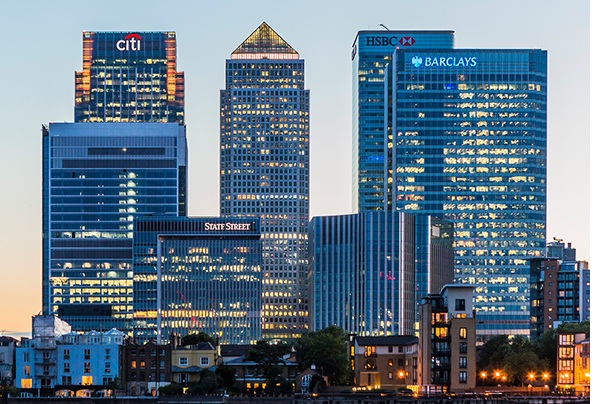
NEW YORK — American banking giant Citigroup sees Zimbabwe breaking with the past as a poster child of triple-digit inflation and fiscal indiscipline, flagging an economic turnaround that could mark a decisive shift in the country’s long-running cycle of monetary instability and economic crisis.
The assessment, according to a Bloomberg report, places Zimbabwe among a group of emerging markets where improving macroeconomic management is beginning to change the investment narrative, after years in which the country was synonymous with currency collapses, runaway inflation, fiscal deficits and exclusion from international capital markets.
The change is being reinforced by a combination of tighter monetary policy, improved fiscal management, stronger commodity exports and a more stable foreign-exchange market. Zimbabwe’s recent economic performance has been sufficiently strong for the International Monetary Fund to describe the country as having made “much-needed stability” gains, with inflation falling into single digits and growth accelerating.
Citi’s broader 2026 outlook has identified resilience, moderating inflation and improving macroeconomic conditions as important features of the global economy, while stressing that emerging-market opportunities are increasingly differentiated by the quality of individual countries’ fundamentals and policy frameworks.
For Zimbabwe, that distinction is significant.
The country spent more than two decades effectively shut out of international capital markets and most official financing, while successive episodes of monetary instability eroded domestic savings and undermined confidence in the local currency. The IMF says Zimbabwe is now attempting to establish a credible policy track record as part of a broader strategy to resolve its external arrears, restructure its debt and re-engage with international creditors.
The turnaround is being supported by a combination of strong mining activity, an agricultural recovery and favourable commodity prices. The IMF estimates that the economy grew 8.3% in 2025 and expects growth of about 5% this year, while inflation is projected to remain in single digits.
Fiscal policy has also begun to move in a direction that would have been difficult to imagine during Zimbabwe’s worst years of monetary instability. According to the IMF, fiscal performance through March was stronger than expected, supported by robust revenue collection and conservative budget execution, while the authorities met all quantitative targets under the first review of the 2026 Staff-Monitored Program.
The significance of that shift extends beyond headline economic statistics.
For investors, the central question is whether Zimbabwe can convert temporary stabilisation into institutional credibility.
The government is seeking to demonstrate that expenditure can be contained within approved budgets, monetary expansion can be controlled, foreign-exchange markets can function with fewer distortions and fiscal risks from state-owned enterprises and other public entities can be brought under tighter management.
The IMF has explicitly warned that maintaining policy discipline, strengthening public financial management, improving governance and advancing monetary and exchange-rate reforms will be critical if recent gains are to become durable.
That leaves Zimbabwe at an important inflection point.
The country is no longer simply trying to stop an economic crisis. It is attempting to establish the credibility required to attract capital back into an economy that has spent years operating largely outside conventional international financial markets.
A sustained improvement in macroeconomic stability could therefore have implications well beyond inflation. It could lower the risk premium attached to Zimbabwean assets, improve domestic investment conditions, support the development of local capital markets and eventually make the country more investible for international institutions.
But the transformation remains incomplete.
Zimbabwe still carries a substantial external debt burden, remains in arrears to international creditors and faces structural weaknesses ranging from limited domestic financial intermediation to infrastructure constraints and persistent confidence problems around the currency.
The IMF’s latest assessment makes clear that debt resolution and arrears clearance remain central to the country’s re-engagement agenda.
For Citi and other international investors watching emerging markets, however, the important development may be that Zimbabwe’s economic story is beginning to acquire a different vocabulary.
Instead of hyperinflation, the discussion is increasingly about disinflation.
Instead of uncontrolled fiscal expansion, the emphasis is on expenditure discipline.
Instead of persistent foreign-exchange instability, policymakers are talking about rebuilding reserves and creating a more market-based currency regime.
And instead of economic collapse, the debate is increasingly about whether stabilisation can be converted into sustained growth.
That does not mean Zimbabwe has escaped its past. It means the country may finally be demonstrating that its past does not have to determine its economic future.
For a country once defined in global financial circles by monetary disorder, that change in perception could prove almost as important as the economic numbers themselves.