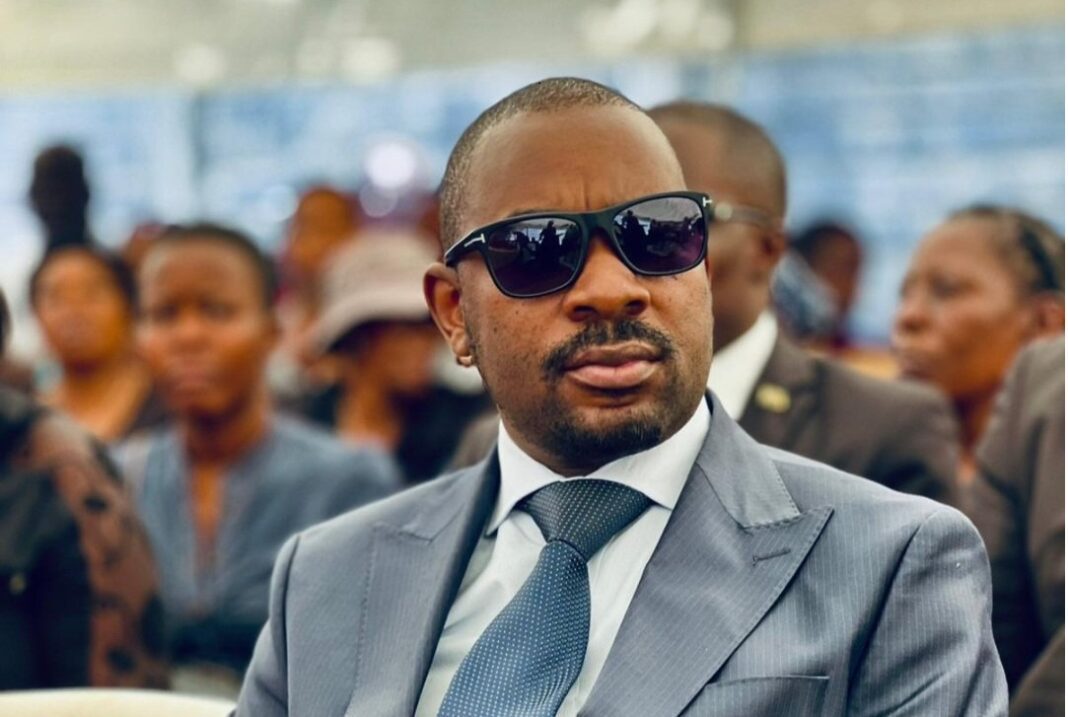


HARARE – Controversial businessman Wicknell Chivayo has turned on former Zanu PF official Temba Mliswa, accusing him of hypocrisy after Mliswa publicly condemned Chivayo’s gifts to MPs backing the Constitution of Zimbabwe Amendment Bill (No. 3), which would extend President Emmerson Mnangagwa’s term in office by two years.
In a lengthy, combative Facebook post, Chivayo revealed that Mliswa had himself accepted a Ford Raptor truck worth $107,000 in cash, a disclosure that immediately undercut the former Mashonaland West provincial chairman’s public posturing against financial inducements in the legislative process.
“I am actually surprised that you now appear to take a strong position against accepting my gratuity, yet recently you graciously accepted the Ford Raptor I paid cash US$107,000 which I bought you,” Chivayo wrote, saying the gift was made “out of pity for your circumstances, being out of politics, without a job or public office and with limited income.”
The broadside followed Mliswa’s public criticism in which he argued that Chivayo’s gifts to CAB3-supporting MPs – including a 2026 Toyota Fortuner GD6 and $50,000 in cash to Zanu PF Bindura South MP Remigious Matangira, and the same package to CCC proportional representation MP Samantha Mureyani (Manicaland) for breaking with her party’s other MPs on the bill – constituted bribery and threatened the integrity of the constitutional process.
“The introduction of such bribes into a legitimate parliamentary process is not only unwarranted but wholly unacceptable,” Mliswa had said, warning that the gifts were “a blemish on an otherwise exemplary political endeavour” and that “the passage of the Bill ought to reflect purity, free from the taint of accusations suggesting that financial inducements were employed.”
Mliswa had also acknowledged Zanu PF’s commanding numbers in parliament – 194 MPs against an opposition CCC bloc of 86 – arguing this made Chivayo’s interventions not only unnecessary but damaging, since a two-thirds majority to pass the bill requires only 187 votes.
Chivayo, however, rejected the bribery characterisation and the premise underlying it. He argued that rewarding MPs who were already publicly committed to CAB3 before receiving any gift could not constitute a bribe, and demanded to know what rule he had broken.
“If I get impressed by an MP’s unapologetic support for CAB3 and President E.D. Mnangagwa, and personally choose to reward him or her, where is the problem? How does that become bribery as you allege, if the MP is already openly in support of CAB3 and rewarded after?” he wrote.
Chivayo also pushed back against suggestions that his donations are politically motivated or aimed at earning influence, insisting he was nothing more than an ordinary card-carrying Zanu PF member with no political ambitions.
“I am not the architect behind CAB3. I am not a politician and I have absolutely no aspirations of becoming one,” he said. “This theory that I am somehow seeking recognition exists entirely in your imagination and nowhere else.”
The businessman dismissed Mliswa’s lecturing as the posturing of a politically defeated man desperate to remain relevant. He catalogued what he described as Mliswa’s business failures, alleging that Saltlakes Tobacco had become insolvent under his stewardship, that he had been publicly accused of seizing Noshio Motors and Benbar from a businessman named Paul Westwood, and that a farm received through the land reform programme with more than 4,000 pedigree cattle had declined dramatically and was now left with “less than 25 goats.”
“You were rejected by your own constituencies in Hurungwe and Norton,” Chivayo wrote. “You are nothing more than a pale image of your former self.”
Chivayo, who made his millions from state contracts, also invoked the names of figures who had declined his offers in the past – including ZAOGA’s Eunor Guti, Zimbabwe Football Association president Nqobile Magwizi, and Emmanuel Makandiwa – to argue that his philanthropy is genuinely voluntary and that no recipient is compelled to accept anything.
“Philanthropy is voluntary and we all know Zimbabwe has an average of 16 million-plus people. Those who want to receive it, receive it in the love of God. Those who don’t want it, decline, and I move on to the next,” he wrote.
The exchange intensifies scrutiny of Chivayo’s role in the CAB3 campaign at a sensitive moment: the bill is already facing multiple constitutional challenges in the courts, including proceedings before the Constitutional Court, and critics argue that the appearance of financial inducements in the parliamentary process risks delegitimising the amendment even if it passes.
Source: ZimLive