

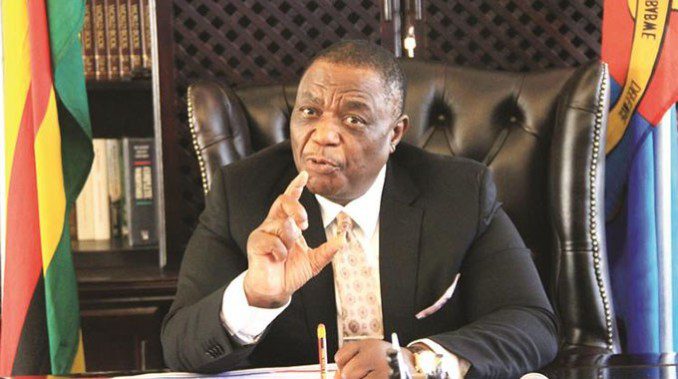
HARARE – Vice-President Constantino Chiwenga has reportedly stepped up efforts to counter President Emmerson Mnangagwa’s proposed constitutional amendments, framing the debate around the core principles of Zimbabwe’s liberation struggle—land ownership and the “one-man, one-vote” doctrine.
The developments come amid an escalating succession struggle between the two leaders, with the proposed extension of presidential tenure to 2030 emerging as the central point of contention.
Sources indicate that Chiwenga is advancing a narrative emphasising the preservation of direct presidential elections, which he views as a fundamental expression of universal suffrage. His position is also understood to favour subjecting the proposed constitutional changes to a national referendum, a demand that has become a focal point in the widening political debate.
At the heart of the dispute is the controversial Constitutional Amendment Bill No. 3, which seeks to introduce sweeping changes to Zimbabwe’s political, electoral, and governance systems. Among the proposals is a shift from direct presidential elections to an indirect system in which the head of state would be elected by Parliament.
The ruling ZANU PF maintains that a referendum is unnecessary, arguing that the amendments do not abolish presidential term limits but merely adjust the electoral cycle. However, opposition parties and civil society organisations contend that extending Mnangagwa’s tenure beyond the current constitutional limit of 2028 constitutes a substantive change that requires public approval through a referendum.
The debate has sharply divided opinion across the country. Proponents of the proposed changes argue that indirect presidential elections do not undermine universal adult suffrage, but rather deepen representative democracy by empowering voters to elect Members of Parliament who, in turn, choose the president—similar to systems in countries such as Botswana and South Africa.
Critics, however, argue that such a shift effectively sidelines voters in the selection of the president, reducing their direct influence and potentially diluting the “one-man, one-vote” principle that underpinned Zimbabwe’s liberation struggle.
Zimbabwe’s constitutional history reflects shifts between these systems. At independence in 1980, under the Lancaster House Constitution, the country operated a parliamentary system in which a prime minister was elected by Parliament, while a ceremonial president—held by Canaan Banana—was also chosen by legislators.
This arrangement changed significantly in 1987, when constitutional reforms introduced an executive presidency under Robert Mugabe, consolidating executive authority and merging the roles of head of state and government. Subsequent amendments, including the 2013 Constitution, formalised five-year presidential terms.
Analysts note that the current proposals could effectively mark a partial return to elements of the pre-1987 system, though critics warn they may also concentrate power in new ways depending on implementation.
As debate over Constitutional Amendment Bill No. 3 intensifies, the political stakes continue to rise, with the outcome likely to shape Zimbabwe’s governance structure—and leadership trajectory—for years to come.