

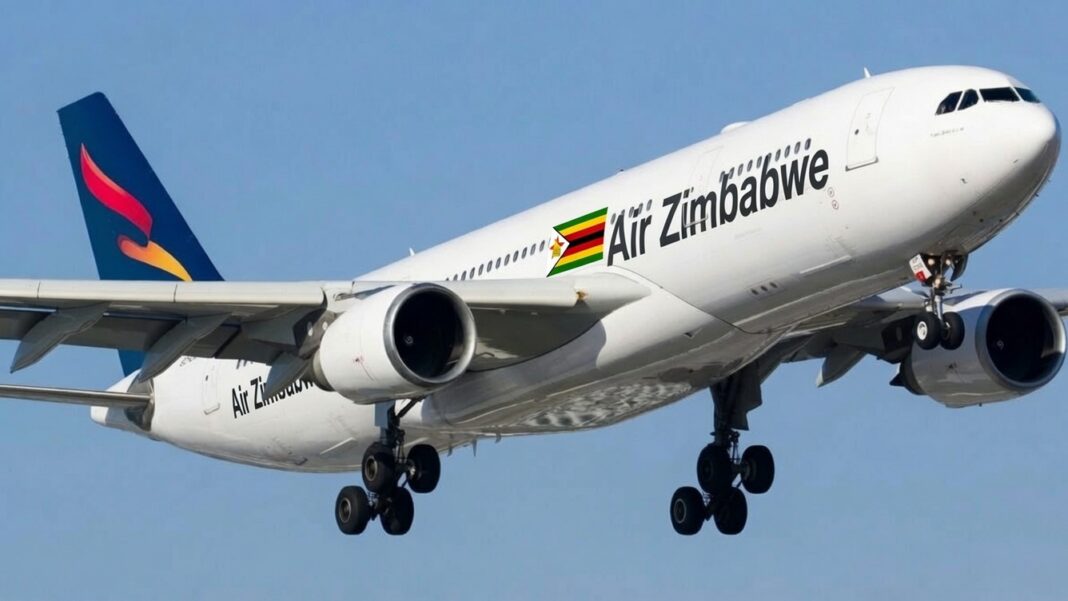
HARARE – Air Zimbabwe has restored its regular Harare–London service after a period of disruption, with the national airline confirming that flights are once again operating according to schedule while passengers face significantly higher ticket prices.
In an operational update issued on August 5, the airline said its normal flight schedule had been restored, including the London service operated three times a week.
“Air Zimbabwe wishes to advise its valued passengers and stakeholders that normal flight scheduling has been restored,” the airline said.
The carrier added that all its flights were operating as scheduled, with the evening London departure proceeding as planned. Passengers travelling on flight UM724 were advised to proceed with their travel plans and present themselves for check-in three hours before departure.
The restoration comes after recent operational disruptions that affected passengers and stakeholders, prompting the airline to apologise for the inconvenience caused.
“We extend our sincere gratitude to all passengers and stakeholders affected by the recent disruption. Your understanding, patience, and continued loyalty have been deeply appreciated during this period,” Air Zimbabwe said.
London fares increase
The return to normal operations has, however, been accompanied by a substantial increase in fares on the Harare–London route.
A one-way ticket is now priced at about US$790, compared with approximately US$495 previously, representing an increase of nearly 60%.
Return fares have risen to about US$1,412, from around US$900, an increase of almost 57%.
The higher fares could provide the airline with additional revenue at a time when it is attempting to strengthen its operations and restore confidence in its international services.
Air Zimbabwe said it remained committed to improving the reliability and efficiency of its operations.
“Air Zimbabwe remains steadfastly committed to building a safe, reliable, and efficient Harare–London service that meets the expectations of our passengers and serves Zimbabwe’s broader economic and strategic interests,” the airline said.
The Harare–London route is strategically important for Zimbabwe, serving a large Zimbabwean diaspora market as well as business, tourism, education and government travel.
The airline’s restoration of the service therefore represents more than a return to normal scheduling; it is an important test of whether Air Zimbabwe can establish the operational reliability required to compete sustainably on an international route.