

With respect, the phrase “people-driven constitution” has become one of the most frequently invoked—and least defined—concepts in constitutional debates. Before demanding a people-driven constitution, we should first ask a more fundamental question: what exactly is a people-driven constitution?
A constitution is not a referendum question that can be reduced to a simple “Yes” or “No.” It is the most sophisticated legal and political document a nation produces, defining the distribution of power, the protection of rights, the structure of government, fiscal authority, judicial independence, emergency powers, electoral systems and the relationship between the state and its citizens. These are highly technical issues requiring expertise in constitutional law, political science, public administration, economics and comparative governance.
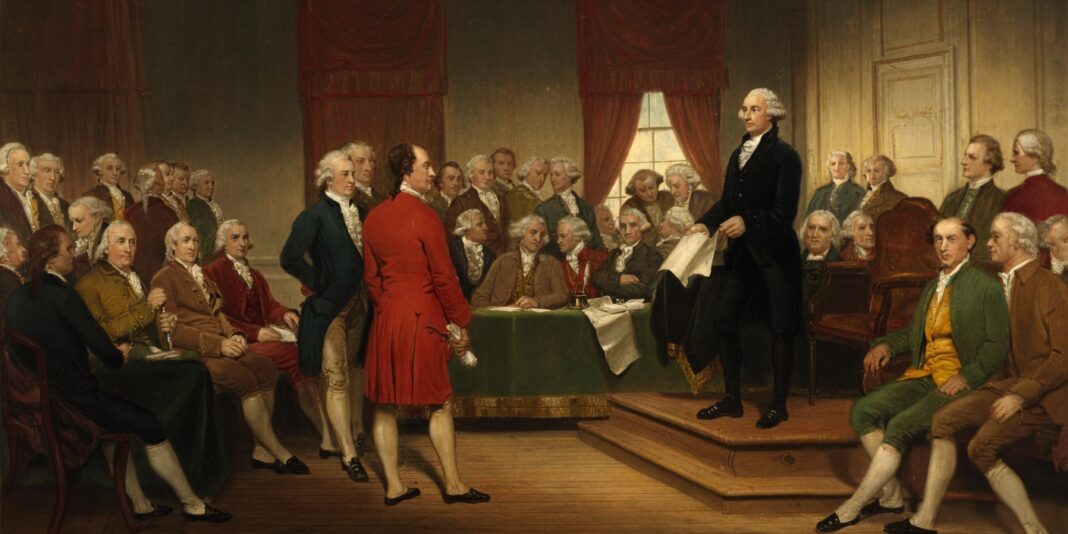
History provides a useful perspective. The United States Constitution—often celebrated as one of the world’s most enduring democratic constitutions—was not written by “the people” in a literal sense. It was drafted by a small group of delegates at the 1787 Constitutional Convention.
James Madison, widely regarded as the “Father of the Constitution,” played the leading intellectual role, while Gouverneur Morris drafted much of the final text, including the famous Preamble. The document itself was the product of intense negotiation among political elites, lawyers and statesmen before being submitted to the states for ratification.
The same pattern appears across much of the democratic world. Germany’s Basic Law was drafted by constitutional experts and political leaders after the Second World War. South Africa’s post-apartheid Constitution emerged from extensive political negotiations supported by constitutional lawyers and technical committees. Kenya’s 2010 Constitution followed years of expert drafting, parliamentary negotiation and public consultation before being approved in a referendum. In each case, citizens provided legitimacy through consultation or ratification, but they did not collectively draft the constitutional text.
This reflects an important constitutional principle: popular sovereignty and constitutional authorship are not the same thing.
In representative democracies, the people confer legitimacy, but constitutional design is typically undertaken by individuals with the technical expertise to reconcile competing legal principles, institutional arrangements and political interests. Public participation strengthens legitimacy by ensuring that citizens’ aspirations are heard, but expertise is essential to produce a coherent and workable constitutional framework.
Moreover, the idea that “the people” speak with a single constitutional voice is itself problematic. Citizens hold diverse and often conflicting preferences on executive power, devolution, judicial appointments, electoral systems, property rights, taxation and social policy. Constitutions are therefore the product of compromise rather than unanimous public consensus. Someone must reconcile those competing demands into a legally coherent document.
Political theorists from James Madison to contemporary constitutional scholars have recognised this reality. Madison argued in The Federalist Papers that constitutional government should temper transient public passions through carefully designed institutions. Modern constitutionalism similarly recognises that democracy is not simply majority rule but a balance between popular legitimacy, institutional competence and the protection of minority rights.
This is not an argument against public participation. On the contrary, consultation, public hearings and civic engagement are indispensable to constitutional legitimacy. However, participation should not be confused with authorship. Citizens should influence constitutional principles, values and priorities, while the technical drafting should remain the responsibility of constitutional experts operating transparently and under democratic oversight.
Ultimately, every constitution reflects the preferences of those with the political power to negotiate and adopt it. Whether through constituent assemblies, constitutional conventions or parliamentary processes, constitutional texts are invariably shaped by political elites, legal experts and institutional actors. The people legitimise those outcomes through consultation, elections or referendums, but they do not collectively draft constitutions clause by clause.
The real constitutional question, therefore, is not whether a constitution is “people-driven”—a phrase that often obscures more than it explains—but whether it is legitimate, inclusive, technically sound, enforceable and capable of delivering accountable government under the rule of law. Those qualities, rather than rhetorical labels, are what ultimately determine whether a constitution succeeds.