
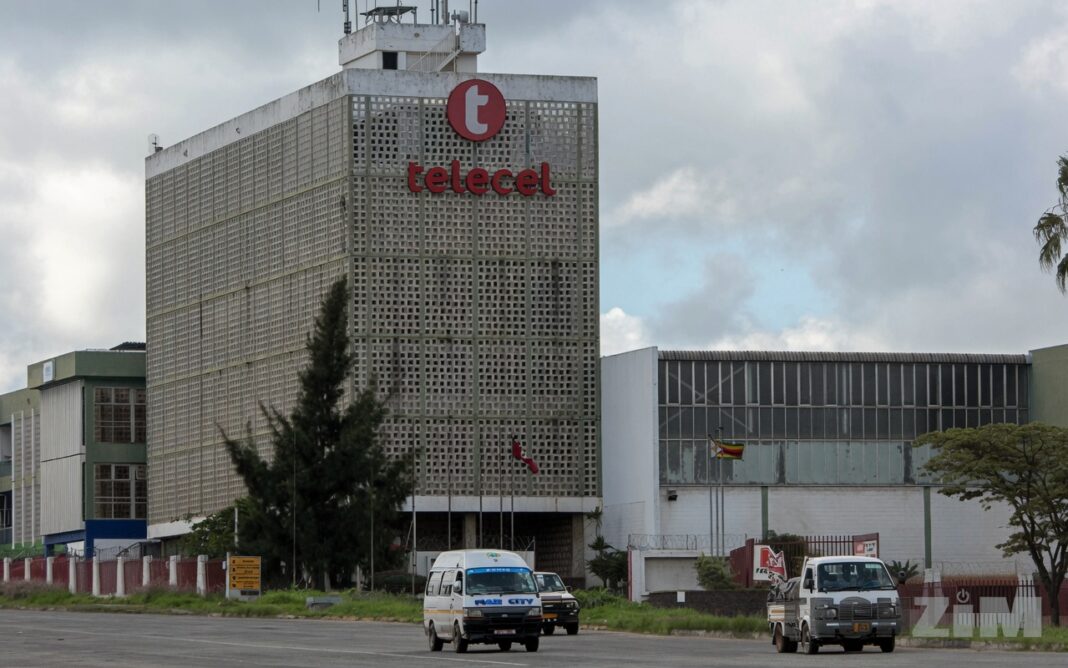
The reported acquisition of Telecel Zimbabwe by Augustus Capital has reopened an important debate about the future of Zimbabwe’s telecommunications sector. While the proposed US$175 million transaction may provide short-term financial relief, the central question is whether local capital alone can restore a mobile operator that has experienced years of decline in an increasingly capital-intensive industry.
By Brighton Musonza
The challenge facing Telecel is not simply one of ownership or financing. It is fundamentally about scale, technology, infrastructure investment and long-term competitiveness.
Telecel’s Challenges Were Not Created Overnight
Telecel’s current position is the result of years of underinvestment, declining market share, operational uncertainty, ownership disputes and periodic political interference. While competitors expanded network coverage, invested in new technologies and diversified revenue streams, Telecel struggled to keep pace.
In telecommunications, delayed investment accumulates into technical and commercial debt. Network quality deteriorates, customers migrate to competitors, revenues decline and the operator becomes trapped in a cycle of shrinking investment capacity. Reversing such a trend requires more than a financial restructuring; it requires a comprehensive transformation strategy.
Telecommunications Is Now an Infrastructure Business
The global telecommunications industry has evolved far beyond voice and mobile data services. Modern operators are digital infrastructure companies investing in fibre networks, cloud services, data centres, artificial intelligence, cybersecurity, fintech platforms and Internet of Things (IoT) ecosystems.
Revenue growth is increasingly driven by enterprise solutions, digital services and infrastructure assets rather than traditional voice services. Operators that fail to make this transition risk becoming irrelevant in an increasingly digital economy.
For Telecel, survival depends not only on improving network quality but also on positioning itself within Zimbabwe’s broader digital transformation agenda.
Scale Determines Survival
Across the world, telecommunications markets have consolidated because scale matters. Operators require substantial and continuous capital expenditure to remain competitive.
Examples from India, South Africa and other African markets demonstrate that successful operators are typically backed by large balance sheets, strong strategic investors and long-term infrastructure investment plans. Companies such as MTN, Vodacom, Airtel and Orange continue investing heavily in network upgrades, spectrum acquisition, fibre deployment and digital services.
The reality is that telecommunications has become a game of scale. Smaller operators without access to significant capital increasingly struggle to compete.
Can Local Capital Meet These Demands?
The Augustus Capital proposal demonstrates confidence in Telecel’s potential and reflects the willingness of local financial institutions to support strategic assets. However, the real test is whether local capital can sustain the ongoing investment required over the next decade.
Telecommunications is not a sector where a single capital injection solves structural problems. Networks require continuous upgrades, technology evolves rapidly, and customer expectations constantly increase.
Without access to deep and patient capital, even well-intentioned turnaround plans can struggle to achieve lasting success.
The Value of Strategic Investors
Globally, the most successful telecommunications turnarounds have often involved strategic investors rather than purely financial investors.
Strategic investors bring capital, technical expertise, operational experience, procurement advantages and access to emerging technologies. They understand how to manage complex networks, improve operational efficiency and build long-term competitive advantages.
The success of groups such as MTN, Airtel and Orange across Africa illustrates the importance of combining investment capital with telecommunications expertise. Their value lies not only in funding but also in their ability to execute large-scale transformation programmes.
Is Corporate Rescue Enough?
Corporate rescue can provide breathing space, preserve jobs and protect enterprise value. However, it is only the starting point of a turnaround.
The real challenge begins after restructuring. Customers must be won back, network performance must improve, new revenue streams must be developed, and investor confidence must be restored.
Without a credible growth strategy, corporate rescue risks becoming a temporary solution to a long-term problem.
Beyond Telecel: Zimbabwe’s Digital Future
The future of Telecel has implications that extend beyond a single company. Telecommunications infrastructure is now a critical component of economic growth, digital government, financial inclusion and business competitiveness.
Zimbabwe’s ambition to become a digitally enabled economy will require stronger mobile networks, greater broadband penetration, more fibre infrastructure, local data centres and increased investment in emerging technologies.
A weakened telecommunications sector limits the country’s ability to compete in the digital economy.
Recommendations
The first priority should be to ensure that any restructuring is accompanied by a long-term investment commitment rather than a one-time financial rescue. Telecel requires a clearly defined multi-year capital expenditure programme focused on network modernisation, fibre expansion and digital services.
Secondly, policymakers should remain open to the participation of strategic international investors. Telecommunications is a global industry, and partnerships with experienced operators can accelerate technology transfer, improve governance and enhance access to capital.
Thirdly, Telecel should reposition itself as a digital infrastructure company rather than a traditional mobile operator. Growth opportunities increasingly lie in enterprise connectivity, cloud services, data centres, fintech and digital platforms.
Finally, regulatory certainty and strong corporate governance must become central pillars of the turnaround strategy. Investors require confidence that commercial decisions will be guided by market principles rather than political considerations.
Conclusion
The reported Augustus Capital transaction may provide Telecel with a valuable opportunity to stabilise operations and rebuild its network. However, the company’s long-term success will depend less on the acquisition itself and more on its ability to secure sustained investment, modernise infrastructure and compete in a rapidly evolving digital landscape.
Telecommunications has become one of the world’s most capital-intensive industries, where scale, technology and execution determine success. Local capital may be sufficient to initiate a turnaround, but sustaining competitiveness will likely require strategic partnerships, deep financial resources and a clear vision of Telecel’s role in Zimbabwe’s digital future.
The question is therefore not whether Telecel can be rescued. The real question is whether it can be transformed into a modern digital infrastructure business capable of competing in the next generation of telecommunications.