

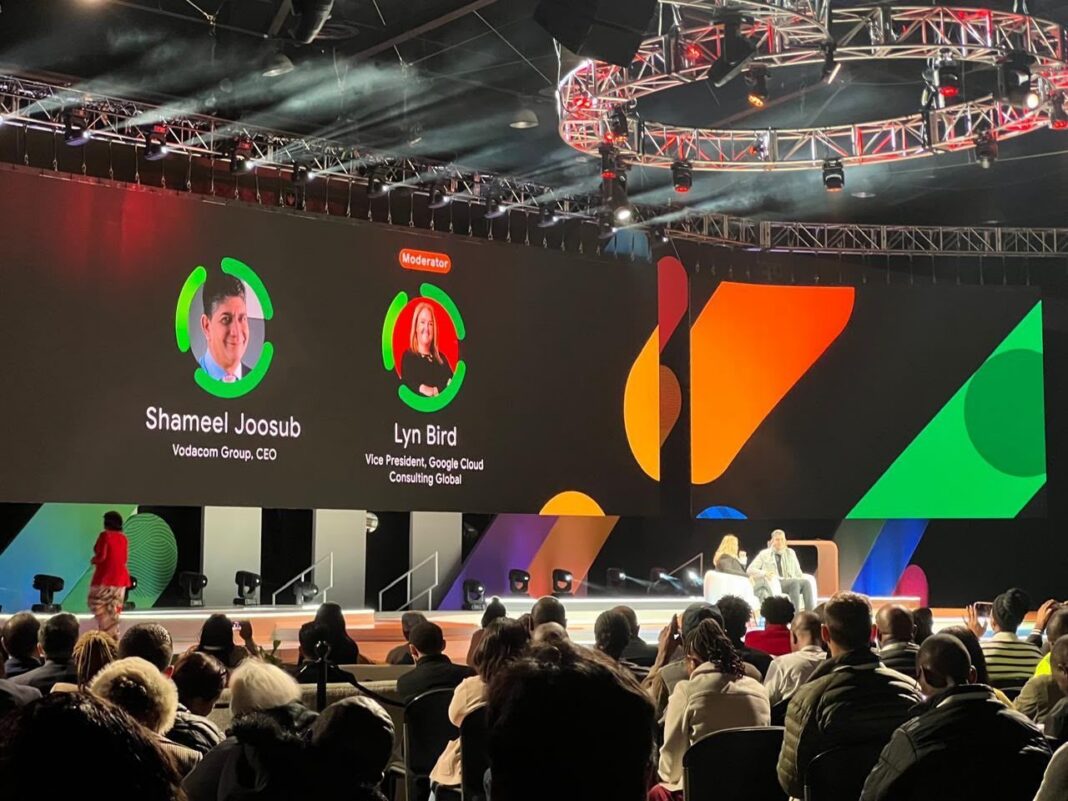
JOHANNESBURG – Google has intensified its investment in Africa’s artificial intelligence and cloud computing ecosystem, unveiling a series of strategic initiatives aimed at accelerating digital transformation across the continent as global technology companies race to establish Africa as the next frontier for AI-driven economic growth.
The announcements followed the inaugural Google Cloud Summit held in Johannesburg, South Africa, marking the first time the global technology giant has staged the event on African soil. The summit brought together government leaders, business executives, technology entrepreneurs and software developers to discuss the role of cloud computing and artificial intelligence in reshaping Africa’s digital economy.
The event also reinforces Johannesburg’s growing status as Africa’s leading cloud infrastructure hub. The city is set to host the AWS Summit on 19 August, highlighting intensifying competition between the world’s largest cloud service providers as they seek to capture a share of Africa’s rapidly expanding digital economy.
South African President Cyril Ramaphosa officially opened the summit, describing artificial intelligence as a strategic economic opportunity capable of transforming industries, enhancing productivity and strengthening Africa’s competitiveness in the global digital economy.
“Today’s Google Cloud Summit affirms Africa’s position as a core growth region for the global cloud ecosystem. As we step boldly into the age of artificial intelligence, our aspiration is to anchor South Africa as a catalyst for the continent’s digital ascendancy. By building robust infrastructure to harness this technology, we are doing more than modernising our economy; we are taking a quantum leap into the future,” Ramaphosa said.
Among the high-profile participants was Zimbabwean telecommunications entrepreneur Strive Masiyiwa, whose participation reflected the growing role African business leaders are expected to play in scaling digital infrastructure and technology investment across the continent.
The summit showcased Google’s integrated artificial intelligence platform, which combines cloud infrastructure, advanced AI models including Gemini, data analytics, cybersecurity solutions, software development tools and autonomous AI agents designed to enable businesses to modernise operations and accelerate innovation.
Shortly after the summit, Zimbabwean-born James Manyika, Google Senior Vice-President for Technology and Society, discussed the company’s long-term vision for Africa during an interview with South African political analyst and podcaster **Sizwe Mpofu-Walsh> on the SMWX platform.
The wide-ranging discussion examined artificial intelligence, the future of work, digital infrastructure and the conditions necessary for Africa to build globally competitive technology ecosystems.
Following the recent inaugural and historic Google Cloud Summit held in Johannesburg, South Africa, local podcaster Sizwe Mpofu-Walsh recently interviewed Zimbabwean-born
Google Senior Vice-President James Manyika on his SMWX platform.
Johannesburg hosted the Google Cloud… pic.twitter.com/RLeyaSsQp2— TheNewsHawks (@NewsHawksLive) July 6, 2026
Manyika argued that Africa possesses significant potential to become an important participant in the global AI economy, provided investments continue in digital infrastructure, research, education and local innovation.
“The AI opportunity for Africa is significant, and Google is committed to doing our part, working with Africans to help Africa realise it. Building on our past commitments, we’re making new investments in critical areas: infrastructure, African-led innovation, and education and skill building. From a new Digital Exchange Port in the Eastern Cape to Africa’s first Applied AI Lab, we’re harnessing technical progress and building partnerships to amplify and scale Africa’s incredible vibrancy, hustle and innovation for the world,” Manyika said.
Google used the summit to announce five new initiatives under its “Building for Africa” programme, expanding on its previously announced US$1 billion commitment to Africa’s digital development. The initiatives build upon the company’s recent US$37 million investment in artificial intelligence research and digital skills development, as well as the establishment of the AI Community Centre in Accra, Ghana.
The new investments focus on expanding digital infrastructure, strengthening locally led AI research, improving technical education and developing the cloud capabilities required to support the next generation of African technology companies.
Industry analysts say the strategy reflects growing recognition among global technology firms that Africa’s young population, rapid urbanisation and accelerating internet adoption present one of the world’s largest untapped digital markets.
According to Google Cloud, African businesses are moving beyond pilot AI projects and are increasingly deploying artificial intelligence in commercial operations across telecommunications, financial services, healthcare, retail and logistics.
Maureen Costello, Vice President for UK, Ireland and Sub-Saharan Africa at Google Cloud, said the company’s Johannesburg Cloud Region has become a cornerstone of this transformation.
“African enterprises have moved decisively past the initial phases of AI experimentation. Powered by our Johannesburg Cloud Region, which is estimated to contribute US$90.6 billion (ZAR1.7 trillion) in additional gross economic output and support 314,900 jobs by 2030, leading organisations including Vodacom, Discovery, Pepkor and Naspers are establishing the essential framework to build and deploy autonomous agents that solve uniquely African challenges in real-world environments,” Costello said.
The economic implications extend beyond the technology sector. Artificial intelligence is increasingly viewed as a general-purpose technology capable of raising productivity across agriculture, mining, manufacturing, healthcare, education, financial services and public administration. For African economies seeking to accelerate industrialisation while overcoming infrastructure constraints, cloud computing offers access to advanced computing power without requiring the substantial capital investment associated with traditional data centres.
For Zimbabwe, Manyika’s prominence within Google’s global leadership also underscores the growing influence of African talent in shaping the future of the international technology industry. His emphasis on African-led innovation reflects a broader shift away from viewing the continent solely as a consumer of imported technologies towards positioning it as a producer of globally relevant digital solutions.
As competition intensifies between global cloud providers including Google, Amazon Web Services and Microsoft Azure, Africa is emerging as an increasingly strategic market for digital infrastructure investment. The rapid expansion of hyperscale cloud services, fibre connectivity and artificial intelligence capabilities is expected to play a central role in determining the continent’s long-term competitiveness within the global digital economy.
The inaugural Google Cloud Summit therefore marked more than a regional technology conference. It signalled Africa’s growing importance in the global AI race and reinforced the continent’s transition from an emerging digital market to a strategic destination for long-term investment in cloud computing, artificial intelligence and next-generation digital infrastructure.