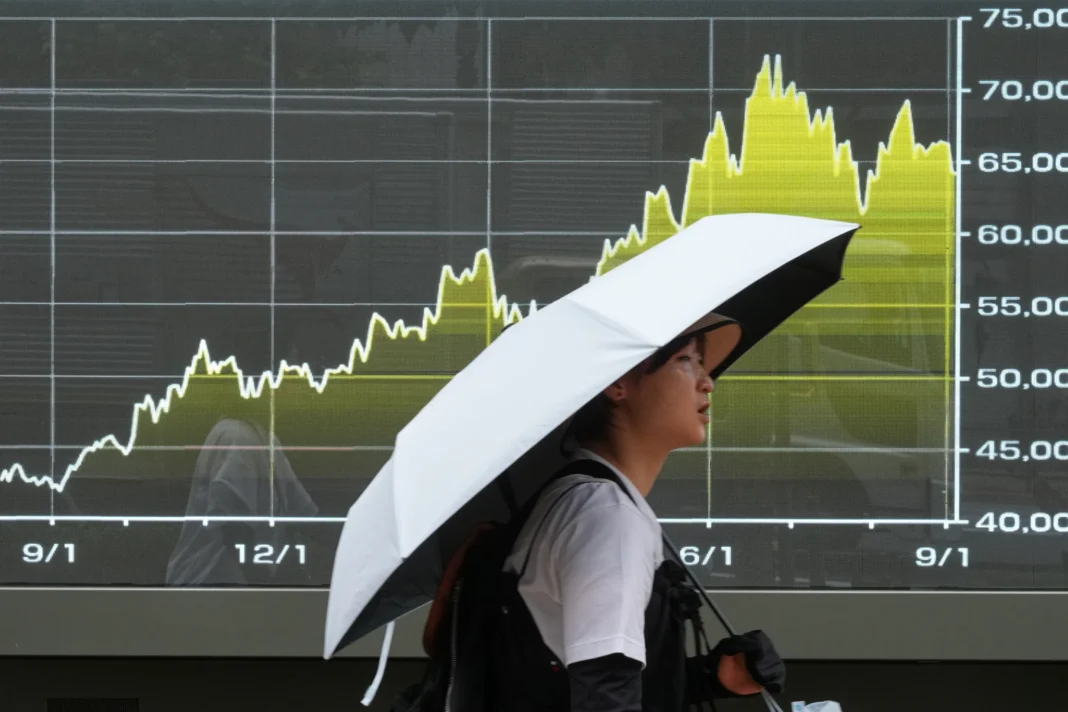
LONDON — Global equity markets were mixed on Tuesday as renewed buying of semiconductor stocks in Asia helped lift regional benchmarks, while rising oil prices, firmer bond yields and renewed expectations of tighter monetary policy limited gains elsewhere.
South Korean shares, accordig to the Associated Press led the advance in early trading, with the Kospi rising 1.82% by late morning as investors extended a technology rally driven by renewed optimism over artificial-intelligence earnings. Samsung Electronics gained 1.11%, while SK Hynix climbed 2.97%, reinforcing the strength of the semiconductor trade.
The gains followed a much stronger technology-led session on Monday, when the Kospi surged more than 4%, while investors also pushed up semiconductor stocks across the region. The latest move suggests that demand for AI-related hardware remains an important support for Asian equities despite growing concerns over energy prices and interest rates.
Japan’s market was more subdued on Tuesday after the previous session’s strong advance. The Nikkei had gained 2.1% on Monday, helped by technology and chip-related shares, but broader global markets were increasingly being influenced by a strengthening yen and expectations that the Bank of Japan could tighten monetary policy.
In Europe, equities opened under pressure as investors assessed the impact of higher energy prices on inflation and monetary policy. The Stoxx Europe 600 slipped, while the FTSE 100 was broadly flat as gains among oil majors provided some support. France’s CAC 40 and Germany’s DAX also traded lower, with weakness concentrated in economically sensitive and technology shares.
The main new risk for global investors is the sharp rise in crude prices. Brent crude moved towards $100 a barrel as escalating conflict in the Middle East raised concerns over supplies from the Gulf. Higher energy prices threaten to keep inflation elevated, potentially complicating expectations for interest-rate cuts or increasing the prospect of further tightening by major central banks.
In the United States, equity futures were mixed ahead of Wall Street’s reopening following the Labor Day holiday. Dow futures were down about 0.8%, S&P 500 futures slipped 0.2%, while Nasdaq futures were broadly steady, reflecting the competing forces of higher energy costs and continued enthusiasm for artificial-intelligence and semiconductor stocks.
Investors are also looking ahead to this week’s US inflation data, with the producer-price report due Thursday and consumer-price figures on Friday expected to provide fresh clues about the Federal Reserve’s next policy decision. Rising oil prices and elevated Treasury yields have increased the sensitivity of equity valuations to any evidence that inflation is proving more persistent than expected.
The semiconductor sector remains one of the clearest pockets of strength. Nvidia, Micron, AMD, Marvell, Sandisk and Taiwan Semiconductor were among the chip-related names showing renewed momentum in US premarket trading, suggesting that the AI investment cycle continues to underpin demand for technology stocks even as investors become more cautious about valuations and interest rates.
The broader market, however, is becoming increasingly divided between the growth narrative supporting technology stocks and the inflationary pressures coming from energy and financial markets. A stronger yen is also raising concerns about the unwinding of yen-funded carry trades, a development that could amplify volatility if investors begin reducing leveraged positions in global assets.
For investors, the week’s market direction is therefore likely to depend on whether the renewed technology rally can withstand higher energy prices and tighter financial conditions. Semiconductor stocks continue to benefit from the AI investment cycle, but the broader equity market faces a more difficult backdrop as oil approaches $100 a barrel and central banks confront the possibility of renewed inflation.
The result is a market caught between two competing forces: an AI-driven technology boom supporting equities and a renewed inflationary shock threatening to raise the cost of capital.