LONDON — Payments connected to a Zimbabwean government-backed political demonstration in Scotland have become the focus of an Al Jazeera investigation examining alleged financial links between British far-right activists and loyalist paramilitaries in Northern Ireland.
The documentary, Contract Killers and the Far Right, raises questions about whether money paid in connection with a rally supporting the removal of sanctions against Zimbabwe could have entered financial networks associated with the Ulster Volunteer Force (UVF).
The investigation centres on Jack Ross, identified in the documentary as the chief executive of Turning Point UK and a former Conservative Party candidate, and Allan Nesbitt, whom the programme links to loyalist paramilitary activity.
According to an account published by Belfast Live, undercover footage filmed in 2021 shows Ross receiving money from a Zimbabwean ambassador-at-large for organising a demonstration in Glasgow during the COP26 climate conference.
Zimbabwean President Emmerson Mnangagwa was attending the international gathering at the time.
The documentary does not establish that Zimbabwean officials knew of any alleged paramilitary connections or intended their payments to finance weapons purchases.
Political demonstration becomes focus of financial questions
The Glasgow demonstration was organised to campaign against international sanctions imposed on Zimbabwe.
The documentary reports that Ross told an undercover journalist that Nesbitt had arranged for approximately 100 people to attend the event.
Some participants were allegedly paid £50 each, while others were told that attending was their duty to the cause.
The footage reportedly captures disagreements over the timing of payment to the organisers.
Ross is also alleged to have told the undercover reporter that firearms were present at the venue in case the Zimbabwean official failed to provide the promised money.
The reported footage subsequently shows cash being passed through the window of the ambassador’s vehicle to Ross, who then handed money to Nesbitt.
The report refers to a payment taken by Nesbitt, although the precise amount is unclear from the supplied account.
These allegations raise questions about the organisation and financing of the demonstration, but the available material does not establish the legal status of the payments or whether any Zimbabwean public funds were misappropriated.
Allegations of weapons trafficking
The investigation takes a more serious turn in its examination of Nesbitt’s alleged activities.
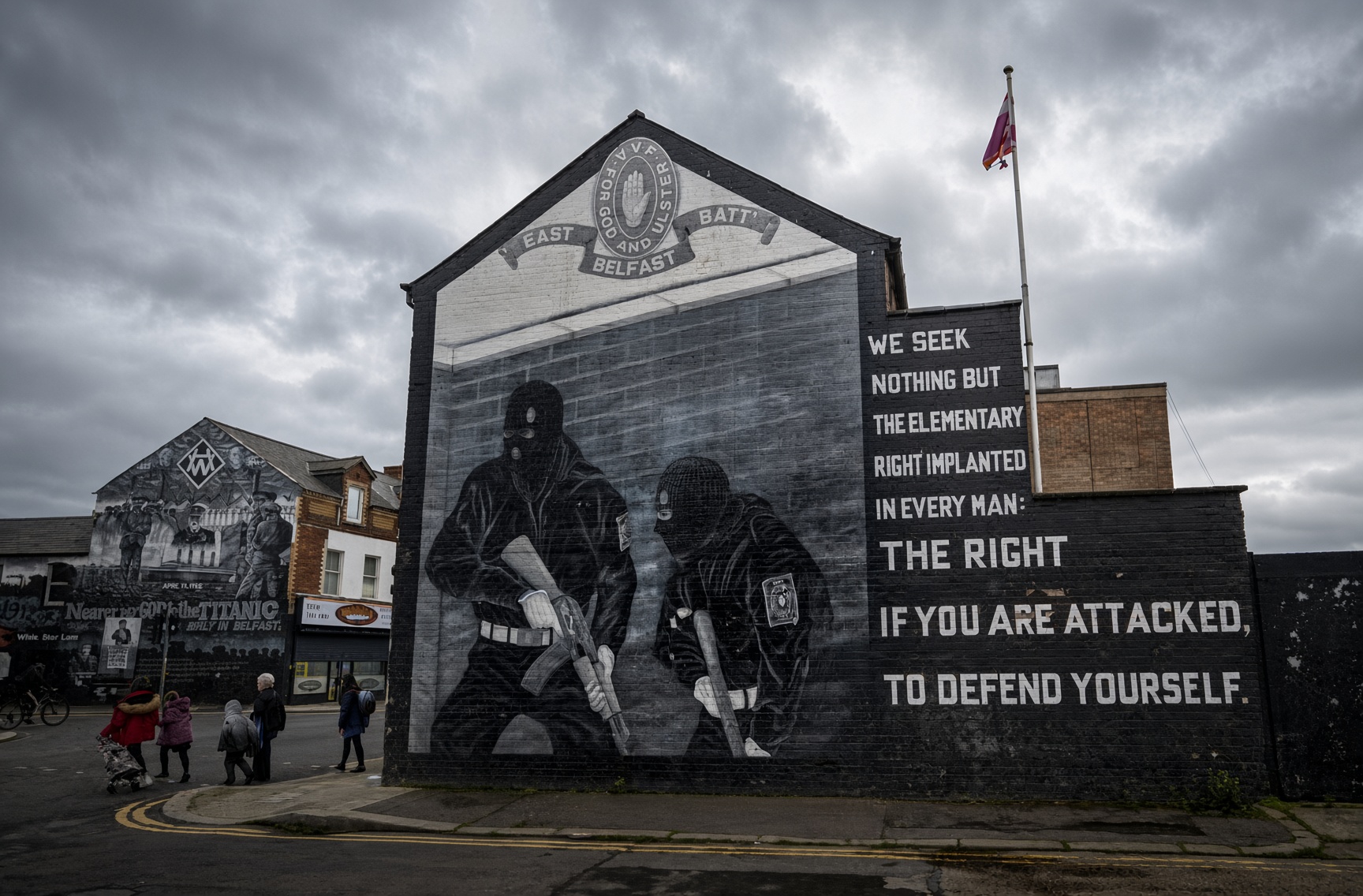
According to the documentary, Ross told the undercover journalist that Nesbitt transported firearms from Glasgow to Northern Ireland for use by the UVF.
The UVF is a proscribed loyalist paramilitary organisation in the United Kingdom.
The documentary also alleges that Ross claimed Nesbitt and his associates could arrange violent attacks and contract killings in exchange for payment.
To investigate those claims, an undercover journalist presented a fictitious commercial dispute and arranged to meet Nesbitt at a London hotel.
During the meeting, Nesbitt allegedly indicated that he could arrange violence for money and claimed to have previously killed people.
In a subsequent video conversation, he reportedly displayed firearms and ammunition.
The documentary further alleges that Nesbitt told the journalist money received from a proposed contract killing would be used to purchase weapons in Scotland for the UVF.
Those statements, if accurately reported, would raise serious questions for law enforcement. They do not, by themselves, establish that weapons were purchased using money received from Zimbabwean officials.
The financial trail remains unresolved
The central distinction in the investigation is between a documented payment associated with political activity and an allegation that the recipient was connected to illegal weapons trafficking.
Money can pass through several individuals and transactions before reaching its ultimate destination. Establishing that a particular payment financed an unlawful activity requires evidence tracing the funds through those transactions.
The supplied account does not provide banking records, procurement documents or other financial evidence demonstrating that Zimbabwean government money was used to purchase firearms.
Nor does it establish that the Zimbabwean official involved had knowledge of the alleged activities described by Ross and Nesbitt.
The documentary therefore raises a significant question about possible financial exposure, rather than proving a direct state-funded arms transaction.
That distinction is particularly important given the seriousness of the allegations and their potential diplomatic implications.
Questions over overseas political spending
Beyond the alleged paramilitary connections, the investigation draws attention to how governments finance political advocacy and public relations activities outside their borders.
Governments routinely engage consultants, communications advisers and event organisers to promote diplomatic positions, attract investment and influence international opinion.
Such expenditure is not inherently unlawful.
However, the use of intermediaries can create governance risks where the identity of subcontractors, the purpose of payments and the ultimate beneficiaries are not adequately scrutinised.
For Zimbabwe, the Glasgow rally formed part of a broader diplomatic campaign seeking the removal of sanctions and the restoration of international economic relationships.
Sanctions policy has remained a contentious issue in Zimbabwe’s relations with Western governments, with Harare arguing that restrictions damage economic recovery and access to international finance.
The Al Jazeera allegations introduce a separate concern: whether appropriate due diligence was conducted on individuals involved in organising overseas political events.
The questions are relevant to public financial management, particularly where state resources may be used to pay third-party organisers.
Transparent procurement, documented payment arrangements and proper verification of service providers are important safeguards against reputational and financial risks.
Ross disputes documentary’s findings
Ross denied the documentary’s findings, telling Al Jazeera that his remarks to the undercover journalist were not intended to be taken seriously.
According to the supplied Belfast Live report, other individuals featured in the investigation did not respond to requests for comment.
The account does not identify any criminal charges arising from the documentary or establish that the Zimbabwean government, its representatives or the individuals named have been found guilty of offences connected with the alleged transactions.
The Zimbabwe Mail has not independently verified the undercover recordings or the allegations concerning weapons movements and contract killings.
Diplomatic implications for Zimbabwe
The investigation could generate questions about the selection of overseas political intermediaries and the controls governing payments for international advocacy campaigns.
For a country seeking to rebuild relationships with Western governments, allegations linking diplomatic expenditure to individuals associated with extremist or paramilitary networks carry potential reputational consequences.
Those consequences, however, should not be confused with proof of wrongdoing by the Zimbabwean state.
The immediate issue is whether the relevant payments can be properly accounted for and whether the organisers were subjected to appropriate checks before being engaged.
The documentary’s most consequential allegation remains unproven on the information available: that money originating from a Zimbabwean government-linked event ultimately financed weapons intended for the UVF.
What the investigation has brought into focus is the potential danger of poorly scrutinised political intermediaries operating across national borders.
For Zimbabwean authorities, a documented explanation of the Glasgow event’s funding, contractual arrangements and payment recipients would help establish the facts and address the questions raised by the programme.