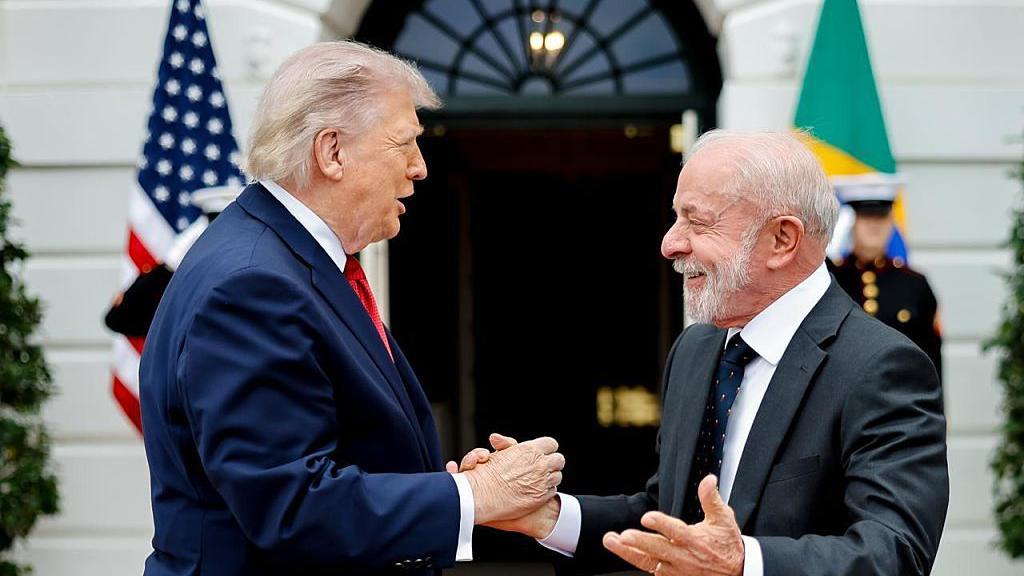
BUENOS AIRES, Argentina – Brazilian President Luiz Inácio Lula da Silva has secured a narrow re-election victory over conservative challenger Flávio Bolsonaro, delivering a significant setback to the political right in Latin America and complicating US President Donald Trump’s efforts to consolidate Washington’s influence across the Western Hemisphere.
According to a report by the Associated Press (AP), Lula won Sunday’s presidential runoff with 51.8% of the vote against Bolsonaro’s 48.2%, ending a succession of seven conservative presidential victories across Latin America over the preceding 18 months.
The result preserves left-wing leadership in the region’s largest economy and most populous country at a time when several neighbouring governments have moved towards conservative political platforms emphasising security, migration controls and closer relations with Washington.
For the Trump administration, Brazil had represented an opportunity to bring another major regional power into closer alignment with American foreign policy, particularly on organised crime, strategic minerals and China’s expanding economic presence in Latin America.
Instead, Lula’s victory reinforces Brazil’s independent diplomatic position and ensures that one of the world’s most influential emerging economies remains willing to challenge Washington on questions of sovereignty and international relations.
Brazil Becomes a Counterweight to Washington
The Associated Press reports that Lula’s re-election has disrupted a broader conservative resurgence that has brought right-leaning leaders to power in several Latin American countries.
Among those cited are Chile’s José Antonio Kast, Colombia’s Abelardo de la Espriella and Peru’s Keiko Fujimori, whose political platforms have reflected growing public frustration with organised crime, economic insecurity and institutional weakness.
The regional shift has provided Trump with governments more receptive to American security initiatives and bilateral cooperation.
Brazil, however, presents a different diplomatic challenge.
Its economic size, natural resources, industrial base and influence within international institutions give Brasília considerably greater room to pursue an independent foreign policy than many smaller Latin American economies.
Lula has consistently advocated a multipolar international system in which developing economies maintain relationships with competing global powers rather than align exclusively with Washington or Beijing.
His administration has strengthened commercial relations with China while promoting cooperation through BRICS, the grouping of emerging economies seeking a greater role in international economic governance.
The election outcome therefore carries implications beyond Brazil’s domestic political landscape, potentially influencing the balance of diplomatic power across the Americas.
Trump Faces a More Complicated Relationship With Brasília
Despite their ideological differences, Washington and Brasília retain significant economic incentives to cooperate.
The United States is particularly interested in securing access to Brazil’s critical minerals, including rare earth elements used in advanced manufacturing, defence technology and clean-energy industries.
American policymakers regard diversification of mineral supply chains as an important strategic priority because of China’s dominant position in several stages of rare earth processing.
Brazil, meanwhile, has an interest in attracting foreign investment, expanding industrial development and securing more favourable conditions for its exporters.
Will Freeman, a Latin America specialist at the Council on Foreign Relations, told the Associated Press that Lula’s pragmatic approach could provide a basis for continued engagement.
“Lula is pragmatic enough to work out some kind of modus operandi with the Trump administration,” Freeman said.
He also suggested that the Bolsonaro family’s influence among senior American policymakers could diminish following another electoral defeat.
“I’m not sure anyone in the Trump administration, beyond a few individuals, will want to keep making the Bolsonaros the central issue in the U.S.-Brazil relationship,” Freeman told AP.
The assessment suggests that economic and strategic interests could eventually take precedence over the political rivalry that has characterised relations between Trump and Lula.
American Intervention Becomes an Election Issue
The Associated Press reports that Trump’s support for the Bolsonaro political movement became a contentious issue during Brazil’s election campaign.
Washington’s decision to impose additional tariffs on selected Brazilian exports, linked to the prosecution of former President Jair Bolsonaro over an alleged attempt to overturn Lula’s earlier election victory, generated political controversy in Brazil.
Lula used the dispute to reinforce his message of national sovereignty, presenting resistance to foreign pressure as a defence of Brazil’s democratic institutions.
Kenneth Roberts, a professor of government at Cornell University, told AP that Washington had actively sought to encourage conservative political forces across Latin America.
“The U.S. is certainly putting its finger on the scale to try to help the more hard-line right-wing elements in the region,” Roberts said.
He argued that American pressure had strengthened the political connection between defending Brazilian sovereignty and protecting the country’s democratic institutions.
The election result suggests that overt foreign political support does not necessarily translate into electoral success, particularly in countries where national independence remains a powerful political consideration.
Security Cooperation Remains a Major Divide
Beyond trade and diplomacy, one of the most significant disagreements between Lula and Trump concerns the use of American military power against organised criminal networks.
Washington has sought to expand regional security cooperation through the Shield of the Americas, a US-led initiative targeting drug cartels and transnational criminal organisations.
Flávio Bolsonaro had indicated that Brazil would participate enthusiastically in the initiative if he won the presidency.
Lula, however, has resisted joining the coalition, arguing that Brazil must retain control over its own domestic security operations.
The dispute intensified after Washington designated two of Brazil’s largest criminal organisations, the First Capital Command and the Red Command, as terrorist groups.
According to AP, Lula expressed concern that the designations could provide a justification for American intervention in Brazilian territory.
“We don’t accept being treated like children,” Lula said, according to the news agency.
Referring to the criminal organisations, he added: “We will fight them here at home.”
The position reflects a wider disagreement over the limits of American security involvement in Latin America.
While some governments have accepted expanded military cooperation with Washington, Brazil has maintained that combating organised crime must remain primarily a responsibility of its own institutions.
China, Trade and Critical Minerals Shape the Next Phase
The economic implications of Lula’s victory could prove as consequential as its political significance.
Brazil occupies a strategic position in global agricultural trade, mining, energy production and manufacturing, making it an important commercial partner for both the United States and China.
Washington’s interest in Brazilian rare earth resources creates an opportunity for negotiations over investment, industrial processing and technology partnerships.
However, Lula is unlikely to abandon Brazil’s established commercial relationship with China, which remains central to its export economy.
The resulting diplomatic challenge will involve balancing relations with two competing global powers while preserving Brazil’s ability to determine its own trade and industrial priorities.
For international investors, the immediate focus will be on whether Lula and Trump can establish a workable relationship that reduces tariff uncertainty and supports cross-border investment.
Brazil’s election also raises broader questions about the durability of Latin America’s conservative political resurgence.
Although right-wing parties have secured significant electoral victories across the region, Lula’s success demonstrates that the political direction of Latin America remains contested rather than uniform.
The Brazilian president now faces the challenge of translating his electoral mandate into economic growth, stronger public services and improved living standards while navigating an increasingly confrontational geopolitical environment.
For Trump, the outcome means that Washington must continue dealing with a Brazilian administration determined to preserve its diplomatic independence.
Lula’s victory has not eliminated the possibility of closer US-Brazilian economic cooperation. It has, however, ensured that any future partnership will have to accommodate Brasília’s insistence on political sovereignty and its continuing engagement with competing global powers.
The Zimbabwe Mail – World News Desk