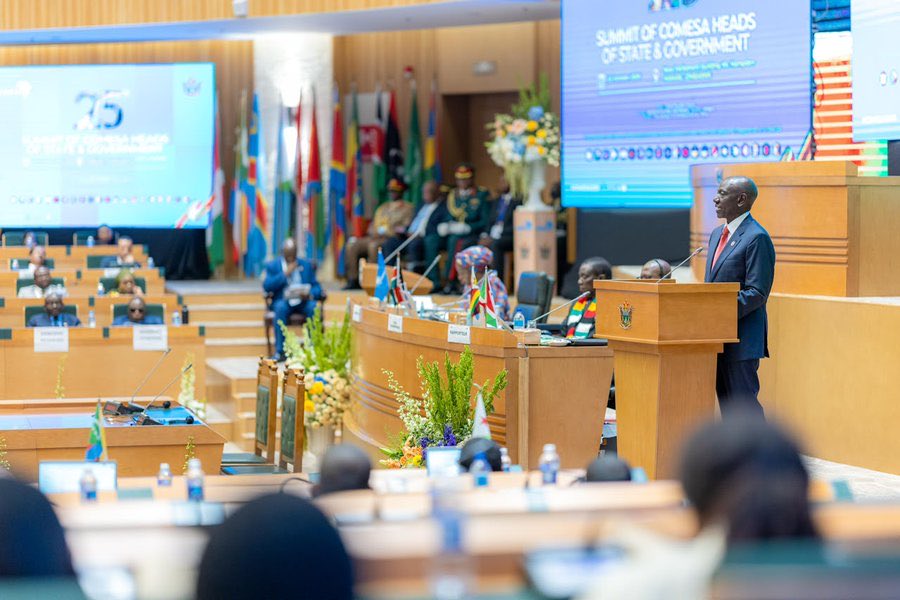
Southern Africa has an economic geography problem that has persisted for more than six decades. Zimbabwe, Zambia and Malawi possess complementary resources, established commercial relationships, agricultural potential, industrial capabilities and a considerable reservoir of human capital. Yet their economies remain less integrated than their geography would suggest. They trade with one another, but they have not sufficiently organised themselves into a single competitive production space capable of challenging the industrial advantages enjoyed by much larger economies.
By Brighton Musonza | Business and Economic Analyst
The consequences are visible in almost every sector. A Zimbabwean manufacturer seeking to expand production frequently confronts a domestic market too small to justify investment in modern machinery. A Zambian copper producer may export raw or partly processed minerals while importing sophisticated equipment from overseas. A Malawian agricultural processor faces similar difficulties achieving the volumes necessary to compete with established international suppliers. Meanwhile, South African businesses, supported by a larger domestic market, deeper financial institutions and extensive distribution networks, are better positioned to serve all three countries.
This is not simply a story about South Africa’s economic dominance. It is a story about the failure of neighbouring countries to organise their markets in ways that allow their own industries to grow.
As I previously discussed with Zimbabwean industrialist Busisa Moyo, a business leader, industrialist, and entrepreneur, and most importantly, the Chairman of the Zimbabwe Investment and Development Agency (ZIDA), the central challenge is not necessarily the absence of productive capacity. It is the fragmentation of demand, investment and infrastructure across national borders.
The solution requires a different understanding of regional integration. Africa does not become economically integrated merely because governments sign trade agreements or presidents attend regional summits. Integration becomes meaningful when a manufacturer can produce in Harare, source components from Lusaka, finance the transaction through a regional bank and sell the finished product in Lilongwe, Nairobi or Kampala without confronting a succession of unnecessary administrative and financial obstacles.
The opportunity now lies in transforming Zimbabwe, Zambia and Malawi from neighbouring national markets into interconnected centres of production serving a much wider African economy.
The federation’s economic legacy — and its political contradictions
Between 1953 and 1963, Southern Rhodesia, Northern Rhodesia and Nyasaland formed the Federation of Rhodesia and Nyasaland, commonly known as the Central African Federation.
The arrangement brought together territories with different economic strengths. Southern Rhodesia possessed a comparatively developed manufacturing sector, commercial agriculture, transport infrastructure and administrative institutions. Northern Rhodesia’s copper industry generated substantial export earnings, while Nyasaland supplied agricultural production and labour to the wider regional economy.
In economic terms, the federation attempted to organise these territories around a larger market, shared infrastructure and coordinated development.
Railways, electricity systems, financial institutions and commercial networks operated across territorial boundaries. The Kariba hydroelectric project, developed during the federation era, remains one of the most enduring examples of cross-border infrastructure connecting what became Zimbabwe and Zambia.
The larger economic space also created opportunities for industrial specialisation and investment that would have been more difficult to sustain within three isolated markets.
But it would be historically misleading to romanticise the federation as an equitable model of African economic cooperation.
Its political institutions were dominated by white settler interests, while African populations were denied meaningful political representation. Economic development was unevenly distributed, and the allocation of investment and resources reflected profound inequalities of political power.
Northern Rhodesian and Nyasaland African nationalists opposed the arrangement partly because they regarded it as an instrument of Southern Rhodesian settler influence.
The federation’s dissolution in 1963 was therefore not simply an economic setback. It was also part of the wider struggle for political self-determination.
The lesson for contemporary policymakers is not that the federation should have survived. It is that independent African states have yet to reproduce some of the economic benefits of regional scale within a framework of democratic sovereignty and mutually beneficial development.
Political independence was essential. Economic fragmentation was not inevitable.
Why market size determines industrial competitiveness
Economies of scale are among the most important principles in industrial economics.
A manufacturing business typically incurs substantial fixed costs before producing its first unit. These include factory buildings, machinery, engineering systems, research, quality certification and management infrastructure.
When output increases, those fixed costs can be spread across a larger number of products, reducing average production costs until the enterprise approaches its efficient operating scale.
Consider a simplified example.
Suppose a Zimbabwean food processor invests US$10 million in a modern production facility and incurs US$2 million annually in fixed operating costs.
If it produces five million units annually, the fixed operating cost alone amounts to US$0.40 per unit. At 20 million units, that cost falls to US$0.10.
The difference is commercially decisive in industries where retailers and consumers are highly sensitive to price.
A manufacturer serving only Zimbabwe’s domestic market may struggle to achieve the necessary sales volume. But the same factory, serving Zimbabwe, Zambia, Malawi and selected COMESA markets, could operate at a much more competitive scale.
The illustration is simplified; actual costs also depend on transport, energy, labour productivity, capacity utilisation and the cost of capital. Nevertheless, it demonstrates why market integration is an industrial policy instrument rather than merely a diplomatic aspiration.
South African manufacturers have historically benefited from a larger domestic consumer base and more developed supplier networks. Their advantage is reinforced by cumulative investment, stronger logistics systems and access to relatively sophisticated financial services.
Zimbabwe, Zambia and Malawi cannot overcome those structural advantages through import restrictions alone.
They must create conditions in which their own firms can achieve competitive production volumes, attract investment and specialise in products where they possess genuine economic advantages.
COMESA offers a market larger than any national economy
The Common Market for Eastern and Southern Africa provides an institutional foundation for this transformation.
With 21 member states stretching across Eastern, Central, Southern and parts of North Africa, COMESA connects economies with substantial populations, mineral resources, agricultural production and expanding consumer markets.
Its headquarters will now be based in Lusaka, Zambia, as resolved at a Summit in Harare; this gives Zambia an important institutional role in regional economic coordination.
Zimbabwe’s membership places it within a trading arrangement that extends far beyond its immediate neighbours.
The strategic significance is considerable.
A Zimbabwean manufacturer need not think exclusively in terms of the country’s domestic purchasing power. It can develop products, pricing strategies and distribution systems around access to a broader regional market.
But membership alone does not guarantee unrestricted trade. Rules of origin, national tariff schedules, non-tariff barriers, transport costs and overlapping regional agreements continue to shape the actual conditions under which goods move.
The practical challenge is to convert COMESA’s institutional framework into measurable commercial opportunities.
For example, a Zimbabwean agricultural equipment manufacturer could develop distribution partnerships in Zambia, Malawi, Kenya and Uganda. A local pharmaceutical company could pursue regional regulatory approvals and expand production volumes. A packaging producer could supply food processors operating across several member states.
Such opportunities are commercially plausible, but they require more than tariff preferences.
They require dependable transport, affordable trade finance, recognised product standards and enforceable commercial contracts.
The market must become accessible in practice, not merely large on paper.
From trade agreements to functioning regional markets
There is an important difference between a free trade area, a customs union and a fully functioning common market.
A free trade area reduces or removes tariffs on qualifying goods traded among participating countries. A customs union adds a common external tariff, while a common market goes further by facilitating the movement of capital, services, labour and investment.
COMESA established its free trade area in 2000, but its customs union has not become fully operational. Its members also participate in other regional arrangements, creating overlapping obligations and opportunities.
The objective should therefore be to make existing agreements commercially useful before announcing another ambitious integration project.
A company exporting electrical equipment from Zimbabwe to Zambia should be able to establish its tariff treatment before the goods leave the factory. A Malawian food processor should not need to obtain substantially different laboratory certifications for every neighbouring market. A regional trucking company should not encounter unpredictable transit procedures each time its vehicles cross a border.
These are not minor administrative inconveniences. They are costs that ultimately appear in the price of manufactured goods.
The World Bank’s 2026 analysis of African integration makes precisely this broader point: fragmented customs procedures, transport regulations, standards and payment systems can prevent regional agreements from producing meaningful commercial integration.
For Zimbabwe, the question is how to turn preferential market access into actual exports.
Building a regional industrial system around complementary strengths
The three former federation economies need not reproduce the industrial structures of the 1950s. Their comparative advantages have evolved, and a modern regional economy should be organised around competitive specialisation rather than political centralisation.
Zimbabwe has established capabilities in food processing, metal fabrication, packaging, chemicals, engineering services, commercial agriculture and financial services. Zambia possesses substantial copper resources, mining-related industrial demand and growing opportunities in energy and agricultural processing. Malawi has considerable agricultural potential, particularly in crops that can support food processing, textiles and other downstream industries.
These strengths could form the basis of cross-border value chains.
Consider the copper industry. Zambia is a major copper producer, while Zimbabwe has experience in engineering, metalworking and industrial manufacturing. Rather than treating copper solely as an export commodity, businesses could examine opportunities to produce electrical cables, transformers, industrial motors, switchgear and other equipment for regional infrastructure projects.
Such investment would require detailed feasibility studies. The presence of copper deposits does not automatically make downstream manufacturing competitive. Energy costs, technology, production volumes, capital requirements and access to customers all matter.
But the strategic opportunity is clear: a region that produces critical industrial minerals should examine how much additional value it can capture before those materials leave Africa.
Agriculture offers another possibility.
Malawi could supply selected agricultural inputs to processors in Zimbabwe and Zambia, while regional manufacturers produce packaging, machinery, fertiliser and irrigation equipment. Finished products could then be distributed across COMESA markets.
The goal is not to allocate industries artificially among countries. It is to allow firms to locate different activities where they can be performed most efficiently while retaining access to a larger market.
This is how competitive production networks develop.
Zimbabwe’s manufacturing opportunity extends beyond its borders
Zimbabwe’s industrial recovery cannot be sustained by domestic demand alone.
A factory built to supply only Harare and Bulawayo may struggle to compete with imports manufactured for markets many times larger. Its machinery may operate below capacity, while fixed costs are spread across relatively few products.
Regional exports can change that calculation.
The country’s food manufacturers offer an obvious starting point. Businesses such as National Foods, Dairibord and Cairns operate in product categories where regional demand, distribution efficiency and brand recognition can support expansion.
But market entry must be based on commercial realities.
A Zimbabwean biscuit manufacturer cannot assume that consumers in Kenya or Malawi will purchase its products merely because the countries belong to the same trading bloc. It must compete on quality, price, packaging, distribution and consistency of supply.
Similarly, a Zimbabwean pharmaceutical producer seeking regional sales would need appropriate manufacturing standards, regulatory approvals and reliable access to inputs.
Government can assist by negotiating mutual recognition arrangements, improving border efficiency and supporting export promotion. It should not attempt to substitute political declarations for customer demand.
The central objective is to move Zimbabwean industry from import substitution towards export competitiveness.
Import substitution may provide an initial market for local producers. But without competition and access to larger markets, protected industries can become expensive, inefficient and dependent on continued government intervention.
An export-oriented manufacturing strategy imposes a different discipline: firms must produce goods that customers outside Zimbabwe are willing to buy at competitive prices.
That is the foundation of sustainable industrialisation.
Energy integration may be more important than tariff reductions
No serious industrial strategy can ignore electricity.
Manufacturers require reliable energy not only to operate machinery but also to maintain quality, manage production schedules and fulfil delivery commitments.
Electricity shortages impose costs through interrupted production, diesel generation, equipment damage and lost sales.
Zimbabwe and Zambia already share the Kariba hydroelectric system, but their exposure to drought illustrates the danger of relying too heavily on a limited set of generation sources.
A more resilient regional energy system would combine hydroelectricity with solar, thermal generation where economically justified, storage and stronger cross-border transmission infrastructure.
Regional electricity trade could allow countries to purchase power from neighbouring systems when it is cheaper or more reliable than domestic alternatives.
This is particularly relevant to industrial investment.
A factory’s competitiveness depends on the cost and reliability of electricity over many years. Investors therefore examine energy supply before committing capital to large manufacturing projects.
Zimbabwe, Zambia and Malawi should treat regional electricity integration as an industrial development priority, not merely a response to temporary power shortages.
Joint planning of transmission infrastructure, generation capacity and industrial demand could produce benefits that isolated national investments cannot achieve.
The Southern African Power Pool already provides an institutional platform for electricity cooperation. The challenge is to strengthen the infrastructure, market rules and financial arrangements needed to translate that cooperation into reliable industrial power.
Trade corridors should connect factories, not merely ports
Regional integration is often discussed in terms of roads, railways and border posts. Yet the commercial purpose of infrastructure is frequently overlooked.
A transport corridor is valuable because it connects production centres to suppliers, customers and ports.
For Zimbabwe, Zambia and Malawi, the relevant geography extends in several directions.
The North–South Corridor links Southern African economies through major road and rail routes. The Beira Corridor connects Zimbabwe and neighbouring markets to Mozambique’s coast. The Nacala Corridor provides another important route serving Malawi and extending towards Zambia.
The World Bank identifies the North–South and Nacala corridors among Africa’s priority regional connectivity systems.
These routes should be understood as potential industrial corridors.
A modern freight system connecting Harare, Lusaka, Lilongwe and the Mozambican ports could support manufacturers that source inputs in one country, process them in another and distribute finished products across the region.
However, physical infrastructure alone is insufficient.
Border delays, inconsistent vehicle regulations, fragmented customs documentation and unpredictable transit charges can undermine the benefits of improved roads.
A truck that travels efficiently for several hundred kilometres but spends an excessive period awaiting clearance at a border is still operating within an inefficient logistics system.
Governments should therefore measure corridor performance through indicators such as border clearance times, freight costs per tonne-kilometre, rail reliability and the predictability of delivery schedules.
The objective should be a commercially competitive journey from factory to customer.
Afreximbank and the missing industrial finance market
One of the most significant obstacles facing African manufacturers is the cost and availability of long-term capital.
Industrial projects frequently require financing over periods extending well beyond the normal maturity of commercial bank loans.
Machinery, factory expansion, energy systems and export infrastructure may take years to generate sufficient cash flows to repay the original investment.
Many African banking systems remain better equipped to finance short-term trading activities than long-term industrial transformation.
This creates a structural disadvantage.
A manufacturer importing finished goods may obtain short-term financing more easily than an entrepreneur attempting to build a factory capable of producing those goods locally.
The African Export-Import Bank offers an important mechanism for addressing this imbalance.
Afreximbank maintains a Harare office and has strengthened its Southern African regional leadership presence in Zimbabwe. The bank appointed Peter Adeshola Olowononi as its Harare-based Director for Regional Operations, Southern Africa, in September 2026.
Zimbabwe should regard this presence as more than an institutional distinction.
It provides an opportunity for banks, manufacturers and government agencies to develop commercially viable regional investment projects capable of attracting trade and development finance.
A Zimbabwean manufacturer supplying mining equipment to Zambia, for example, may require financing for machinery, raw materials, production and the period between delivery and customer payment.
A regional financing structure could combine investment loans, export credit, guarantees and receivables financing.
The important principle is that funding should follow credible business opportunities.
Development finance cannot make an uncompetitive project profitable simply by offering cheaper loans. But it can help commercially viable enterprises overcome financing constraints that prevent them from reaching efficient scale.
Zimbabwe’s financial institutions should therefore develop stronger capabilities in export finance, project appraisal, credit insurance and regional transaction banking.
This would position the country to export financial services alongside manufactured goods.
The ZiG and the economics of regional currency convertibility
Zimbabwe’s ambition to establish the ZiG as a credible national currency should eventually be connected to its regional trade strategy.
A currency acquires international usefulness when other economic agents are willing to hold it, accept it in payment and exchange it at predictable prices.
That confidence cannot be created through legislation alone.
It depends on monetary stability, adequate liquidity, credible institutions, access to foreign exchange and confidence that the currency can be converted without arbitrary restrictions.
Regional trade offers a potential route towards greater acceptance of the ZiG, but the process must be gradual.
Consider a Zimbabwean manufacturer exporting US$1 million worth of goods to Zambia.
The Zambian importer might prefer to pay in kwacha, while the Zimbabwean exporter requires dollars to purchase machinery or imported raw materials. If both businesses must use expensive correspondent banking arrangements, the transaction incurs additional costs.
An efficient regional payment system can reduce some of those costs without requiring the importer and exporter to use the same domestic currency.
Zimbabwe already has a potentially important institutional advantage.
The COMESA Clearing House is headquartered in Harare and operates the Regional Payment and Settlement System, or REPSS. The system facilitates cross-border payments through participating central banks, with settlement currently conducted in internationally convertible currencies, principally US dollars and euros. Zimbabwe, Zambia and Malawi are among its participating countries.
This infrastructure provides a practical starting point for deeper financial integration.
The COMESA Clearing House is also developing a Digital Retail Payment Platform intended to support more accessible cross-border payments, including local-currency settlement capabilities.
However, participation in a regional payment arrangement should not be confused with full currency convertibility.
The ZiG cannot become regionally convertible merely because Zimbabwe belongs to COMESA. Foreign banks and businesses must have confidence that they can obtain, use and exchange the currency without undue financial risk.
The appropriate sequence would begin with sustained domestic monetary stability, transparent foreign exchange markets and credible reserve management. Zimbabwe could then explore bilateral arrangements for selected trade transactions, supported by participating commercial banks and appropriate settlement guarantees.
Over time, stronger regional demand for Zimbabwean goods could create an economic reason for foreign businesses to hold limited ZiG balances.
This is the critical relationship between the real economy and the monetary system.
A currency becomes more useful when the economy behind it produces goods and services that others want to purchase.
Zimbabwe should therefore approach regional ZiG convertibility as a long-term consequence of successful monetary reform and export expansion, not as an administrative shortcut to monetary credibility.
Banking, retail and financial services offer another export frontier
Zimbabwe’s regional ambitions should not be confined to manufacturing.
Banking, insurance, retail distribution, logistics, information technology and professional services are all potentially exportable activities.
A Zimbabwean bank with established expertise in corporate lending, payments and agricultural finance could develop regional operations serving manufacturers and traders.
But regional banking expansion requires sufficient capital, strong governance, effective risk management and compliance with host-country regulations.
The same applies to retail.
Zimbabwean businesses with experience in supermarket distribution, food wholesaling and consumer goods could expand into neighbouring markets through partnerships, franchising or direct investment.
A regional retail network can itself become an instrument of industrial integration.
For example, a supermarket chain operating in Zimbabwe, Zambia and Malawi could source selected food products from manufacturers across all three countries, allowing suppliers to achieve larger production volumes.
The commercial benefits would be greater if payment systems, product standards and logistics arrangements were sufficiently integrated.
Regional service exports can also reduce the dependence of economic growth on commodity prices.
Software development, accounting, engineering, healthcare services, education and business-process outsourcing offer opportunities for skilled professionals to serve customers beyond their national borders.
Zimbabwe’s human capital is a potentially important advantage, but skills alone do not generate export earnings.
They must be combined with investment, reliable digital infrastructure, internationally recognised qualifications and access to paying customers.
South Africa should be a partner, not an economic adversary
The argument for stronger economic integration among Zimbabwe, Zambia and Malawi should not be mistaken for an argument against South Africa.
South Africa remains an important source of investment, industrial inputs, financial services, technology and consumer goods for its neighbours.
Its manufacturers and financial institutions have developed capabilities that other countries can learn from and participate in.
The problem arises when regional economic relationships become excessively concentrated around one production centre.
A diversified regional economy would provide more opportunities for specialisation, competition and investment.
Zimbabwean manufacturers could supply South African companies with competitively produced components. Zambian mining companies could purchase machinery manufactured in Zimbabwe. Malawian agricultural producers could supply food processors serving several regional markets.
South African firms could themselves invest in these cross-border production networks.
The objective should be economic interdependence on more balanced terms, rather than the replacement of one dominant economy with another.
There is also a distinction between industrial ambition and protectionism.
A regional strategy built around permanently excluding South African products would risk raising costs for consumers and manufacturers.
A more productive approach would be to improve competitiveness so that regional firms can win market share through quality, efficiency and price.
Competition should become the discipline through which industrial integration delivers lasting economic benefits.
What governments should do differently
The region does not need another broad declaration promising industrial transformation. It needs a limited number of measurable commitments capable of changing business decisions.
First, Zimbabwe, Zambia and Malawi should establish a joint industrial competitiveness programme. Rather than attempting to develop every industry simultaneously, the governments should identify a small number of commercially promising value chains, including agro-processing, mining equipment, electrical components, packaging and pharmaceuticals. The selection process should involve manufacturers, financiers and independent technical specialists, with projects assessed against export demand and expected productivity.
Second, regional trade facilitation should become a measurable economic policy objective. Governments should establish common performance indicators for border clearance, customs processing and freight costs. Digital documentation, risk-based inspections and mutual recognition of product standards would help businesses operate across borders more predictably.
Third, industrial finance should be organised around bankable regional projects. Commercial banks, Afreximbank and other development finance institutions should work with manufacturers to structure investment and export-financing facilities. Public guarantees, where used, should be transparent, limited and subject to proper risk assessment.
Fourth, the three countries should coordinate energy and transport investment. Industrial zones, electricity transmission projects, rail improvements and logistics facilities should be assessed according to their contribution to cross-border production and trade, rather than solely their location within national boundaries.
Fifth, Zimbabwe should develop a credible strategy for exporting financial and professional services. Banking regulation, payment interoperability, professional recognition and digital infrastructure should support firms seeking to serve customers throughout COMESA.
Sixth, regional monetary integration should proceed through market confidence rather than political deadlines. The Reserve Bank of Zimbabwe should prioritise domestic currency credibility while exploring commercially justified settlement arrangements with regional counterparts. Wider ZiG acceptance should follow demonstrable demand and reliable convertibility.
Finally, governments must make regional integration accountable to businesses. Annual assessments should publish changes in intra-regional exports, manufacturing investment, border delays, electricity reliability and the number of firms participating in cross-border supply chains.
Without measurable outcomes, regional integration risks becoming an exercise in institutional diplomacy rather than economic transformation.
Conclusion: Political independence must now be matched by economic scale
The dissolution of the Federation of Rhodesia and Nyasaland was an important chapter in the struggle for African political self-determination. Its racially unequal political foundations made it unsuitable as a model for the independent states that followed.
Yet the economic question that existed before the federation’s creation remains unresolved: how can neighbouring territories with complementary resources organise production on a scale sufficient to compete internationally?
Zimbabwe, Zambia and Malawi have spent more than six decades pursuing development within national economies that are often too small, too fragmented and too financially constrained to sustain the full range of modern industrial activities.
COMESA provides a framework through which some of these constraints can be addressed. Afreximbank offers potential access to regional trade and industrial finance. Existing transport corridors and payment systems provide infrastructure on which deeper integration can be built.
None of these institutions can substitute for sound economic management, competitive businesses or credible investment policies.
But together they create an opportunity to pursue a development model in which Zimbabwean industry serves markets far beyond Zimbabwe, Zambian mineral resources support regional manufacturing, and Malawian agriculture becomes part of more sophisticated production and distribution networks.
For Zimbabwe, this vision also has monetary implications. A country that exports more competitive goods and services strengthens its capacity to earn foreign exchange, support its banking system and build confidence in its domestic currency.
The long-term credibility of the ZiG will ultimately depend less on declarations of monetary sovereignty than on the productive capacity, institutional credibility and external competitiveness of the economy that supports it.
The next stage of African industrialisation should therefore be judged not by the number of regional agreements signed, but by the factories established, the products exported, the jobs created and the costs removed from doing business across borders.
South Africa’s economic strength should be a benchmark and a commercial opportunity, not a permanent ceiling on the ambitions of its neighbours.
Our greatest economic disadvantage is not a shortage of resources. It is the fragmentation of markets, capital and production systems that prevents us from transforming those resources into industrial scale.
The next generation of Zimbabwean economic policy must begin to overcome that fragmentation.
About the Author

He holds an MBA from the University of Bradford, alongside a BSc in Business Management, and has professional experience in financial accounting and business management. His work examines the intersection of industrialisation, regional trade, investment, monetary policy and economic governance, with a particular focus on how African economies can convert their natural resources, human capital and entrepreneurial capacity into competitive industries and sustainable growth.
Through his publishing work and economic commentary, Musonza advocates evidence-based debate, stronger regional economic integration and policies that expand markets, deepen capital formation and improve Africa’s competitiveness in the global economy.
Disclaimer
The views and opinions expressed in this article are those of the author, Brighton Musonza, and do not necessarily represent the official position of The Zimbabwe Mail or The Zimbabwe Financial Mail. The article is intended for general information, economic analysis and public discussion; it does not constitute financial, investment or legal advice. While every effort has been made to ensure accuracy, readers should independently verify relevant information before making decisions based on the analysis presented. Economic forecasts, policy proposals and interpretations are the author’s own assessments and are subject to changing circumstances.