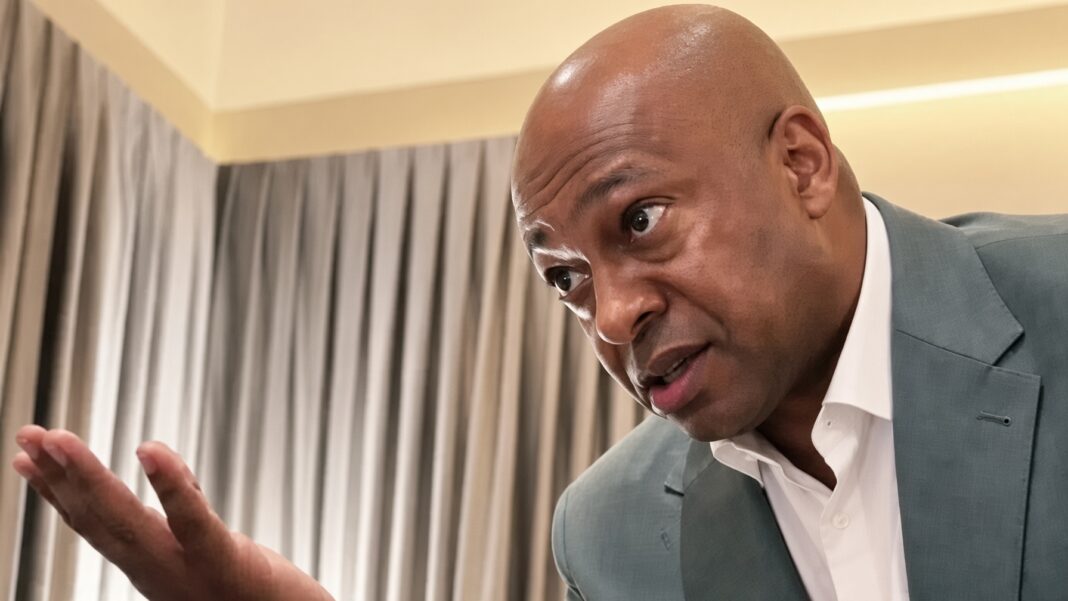
JOHANNESBURG — Zimbabwean businessman based in South Africa, Lawrence Mudzinganyama has lost his executive position at South Africa’s infrastructure company Moriel Infrastructure Group after a video showing him making threats against women at a Sandton restaurant circulated widely on social media.
Moriel Infrastructure Group said it had terminated its association with Mudzinganyama with immediate effect, distancing the company from the conduct depicted in the video.
The company said Mudzinganyama would no longer represent, speak for or act on its behalf in any capacity.
“The behaviour depicted in the video is inconsistent with the values of the organisation,” Moriel said, adding that it unequivocally condemned violence, threats, abuse and intimidation against women and vulnerable people.
Mudzinganyama had served as the group’s executive chairman.
Business fallout
The incident has quickly developed into a corporate-governance issue, with questions now extending beyond Mudzinganyama’s personal conduct to the companies and public-sector contracts associated with his business interests.
The video appears to show Mudzinganyama involved in a confrontation with women at Vlamo restaurant in Sandton. During the altercation, he is heard making violent threats, including references to killing and shooting the women.
The Zimbabwean businessman also claimed during the confrontation that the restaurant’s owner worked for him and that he owned the establishment.
Vlamo subsequently rejected those claims and said Mudzinganyama had no connection with the restaurant.
The restaurant said it had reported the incident to the South African Police Service (SAPS) on September 19 and had received a case number.
It said it was cooperating with investigators and would provide relevant information, including available footage, to assist the authorities.
Vlamo also said it would increase visible security at the premises to protect customers and staff.
Mudzinganyama apologises
Mudzinganyama subsequently issued a public apology in his personal capacity.
He described the language used during the confrontation as unacceptable and unjustifiable, regardless of the circumstances surrounding the dispute.
“I apologise unreservedly to the women involved,” he said.
Mudzinganyama said he accepted responsibility for his conduct and would cooperate with any investigation.
He also said he intended to seek professional assistance through an appropriate conflict-management programme.
The apology followed the rapid spread of the video and the subsequent corporate response.
SANRAL reviews Moriel contracts
The controversy has also prompted scrutiny of Moriel Infrastructure Group’s relationship with the South African National Roads Agency Limited (SANRAL).
SANRAL confirmed that it has two contracts with Moriel involving projects on the N1 and N2 national roads.
The roads agency said Transport Minister Barbara Creecy had requested an investigation into the contracts.
SANRAL acting chief executive Lehlohonolo Memeza said the agency would examine whether Moriel had been lawfully appointed and whether the company was meeting its contractual obligations.
The investigation is separate from the criminal or police process arising from the Sandton incident.
The review nevertheless places additional attention on corporate governance, procurement compliance and the standards expected of companies undertaking public infrastructure work.
Corporate governance implications
Business analysts speaking to The Zimbabwe Financial Mail said the episode illustrates how the personal conduct of senior executives can rapidly become a commercial risk for companies operating in highly regulated industries.
One corporate-governance specialist said infrastructure businesses dealing with public institutions have particular reputational exposure.
“When an executive occupies a prominent position in a company involved in public infrastructure, personal conduct can quickly become a corporate-governance issue because stakeholders will question whether the organisation’s leadership reflects the standards expected of its contractors,” the analyst said.
Another business analyst said Moriel’s decision to distance itself from Mudzinganyama demonstrated the importance of maintaining a clear separation between individual conduct and corporate identity.
“The immediate termination of the association is a strong reputational-risk response. The wider question will be whether the company can demonstrate that its governance, procurement and contractual systems remain robust and independent of the individual concerned,” the analyst said.
Vlamo rejects claims of association
Vlamo has also moved to clarify its relationship with Mudzinganyama following claims made during the confrontation.
The restaurant said the businessman was not affiliated with, employed by or associated with the establishment.
The clarification was significant because the video included claims concerning ownership and control of the restaurant.
Vlamo said it took action following the incident and had engaged the authorities.
The restaurant’s response also highlighted the potential safety implications for hospitality businesses when high-profile confrontations occur in public venues.
Investigation now widens
The fallout now involves several separate processes.
The South African police are investigating the reported incident at the restaurant, while SANRAL is reviewing Moriel’s appointments and contractual performance. Moriel, meanwhile, has ended its association with Mudzinganyama.
The different processes should not be conflated. Corporate disciplinary action does not determine criminal liability, while SANRAL’s contract review does not establish wrongdoing.
Those matters will depend on the findings of the relevant authorities.
For Zimbabwean businesspeople operating in South Africa, the episode also highlights the increasing importance of executive conduct, reputational management and corporate governance in maintaining commercial relationships.
The immediate commercial consequence is clear: Mudzinganyama has lost his leadership role at Moriel Infrastructure Group, while the company faces additional scrutiny over its public-sector infrastructure contracts.
The broader outcome will depend on the findings of the investigations now under way.