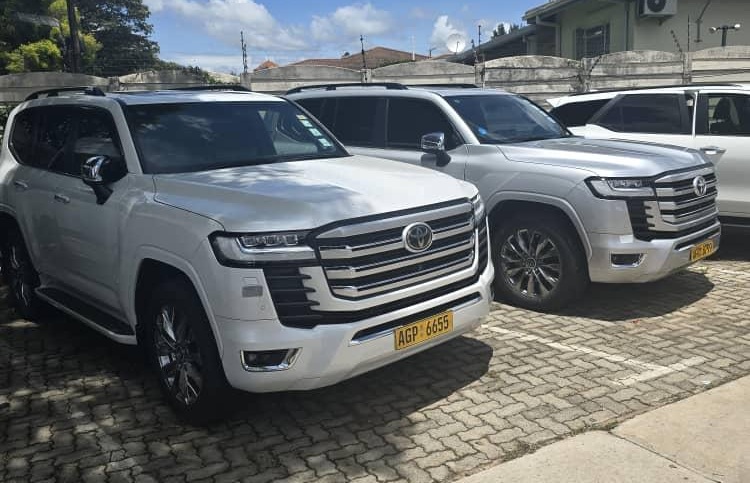
HARARE – A Malawian High Court judge is facing growing criticism over a ruling involving a luxury Toyota Land Cruiser allegedly stolen from Zimbabwe, after authorities confirmed that a woman linked to the vehicle’s disappearance had been placed on an Interpol Red Notice.
The dispute, involving a vehicle valued at approximately US$150,000 (K257 million), has raised questions about cross-border property rights, the treatment of allegedly stolen assets and the legal protection afforded to purchasers who claim to have acted in good faith.
At the centre of the controversy is Zimbabwean businessman Nesbert Mukora, who maintains that the Land Cruiser was stolen from his Harare-based car rental business in April 2025 before resurfacing in Malawi.
Malawian businessman Yollam Kawanga, who acquired the vehicle, insists he purchased it legitimately and without knowledge of any alleged criminal activity.
According to Malawi’s Nyasa Times, High Court Judge Justice Simeon Mdeza dismissed Mukora’s application on June 18, 2026, seeking to halt enforcement proceedings relating to the vehicle. The Land Cruiser had already been released to Kawanga.
The judgment has since attracted criticism from retired judicial figures who question whether the court adequately considered the competing ownership claims and the distinction between administrative clearance and lawful title.
The controversy intensified after Zimbabwean authorities confirmed that Margret Joleen Janse Van Vuuren, accused of involvement in the vehicle’s disappearance, was the subject of an Interpol Red Notice.
Zimbabwe’s prosecuting authorities requested the international alert in August, while police confirmed in October that the notice had been issued. Van Vuuren had not been arrested in Zimbabwe at the time of that confirmation.
An Interpol Red Notice requests international police cooperation to locate and provisionally arrest a wanted individual pending possible extradition. It does not constitute an international arrest warrant or establish criminal guilt.
The case has also exposed potential weaknesses in regional vehicle registration and clearance procedures.
Kawanga reportedly relied on documentation issued by the Malawi Revenue Authority and a police clearance certificate to support his claim. However, earlier investigations cited by Malawian media raised allegations that fraudulent South African registration documents had been used during the vehicle’s movement across borders.
Legal commentators have questioned whether administrative clearance should carry decisive weight in an ownership dispute where the original acquisition of the asset remains contested.
A retired High Court judge quoted by Nyasa Times criticised what he regarded as the nationalistic framing of the judgment, arguing that legal rights should be determined by evidence rather than the citizenship of the parties involved.
The broader legal question concerns whether a purchaser acting in good faith can acquire valid ownership where the seller’s title is disputed, subject to the relevant laws and exceptions.
The dispute also raises concerns about the handling of potential evidence in cross-border criminal investigations, particularly when civil proceedings and criminal allegations involve the same property.
For Zimbabwean businesses operating across Southern Africa, the case highlights the risks associated with recovering commercial assets moved between jurisdictions, where differences in legal procedures and enforcement practices can complicate ownership disputes.
Although the Interpol development has increased scrutiny of the case, it does not automatically invalidate the Malawian court’s ruling or establish Mukora’s ownership claim.
The Land Cruiser reportedly remains in Malawi, with the dispute illustrating the difficulties regional authorities face in reconciling property rights, criminal investigations and the interests of purchasers who maintain they acted lawfully.
The outcome could have wider implications for confidence in cross-border asset recovery and legal cooperation within the Southern African Development Community.