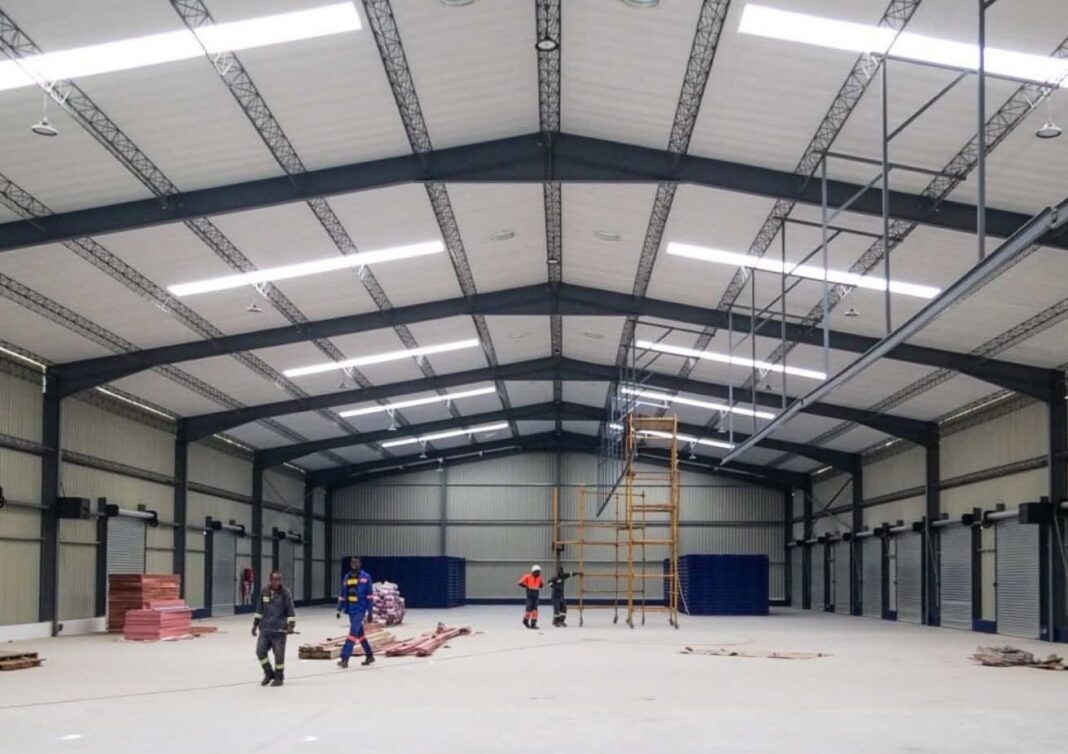
HARARE — Innscor Africa Limited plans to invest about US$139 million in capital expenditure in the year to June 2027, extending an aggressive three-year investment cycle that has already channelled more than US$195 million into Zimbabwe’s food manufacturing and consumer businesses.
The Victoria Falls Stock Exchange-listed group spent US$121.2 million on capital projects in the year ended June 2026, compared with US$73.9 million in the previous financial year. If the new programme is delivered in full, capital expenditure over three years will reach approximately US$334 million.
Analysts who spoke to The Zimbabwe Financial Mail said the investment programme was significant because it represented a shift from defensive capital preservation towards capacity expansion, but warned that financing, execution and demand would determine whether the new assets generate adequate returns.
“The critical question is no longer whether Innscor can invest, but whether the additional capacity can generate returns above its cost of capital while the group manages a substantially larger debt burden,” analysts said.
Food manufacturing leads investment
The next phase of spending will be concentrated on Bakery, National Foods, Colcom Foods, Irvine’s and the beverage operations under Rutanhi Beverages.
The strategy follows a strong performance in the year ended June 2026, when group revenue increased 14% to US$1.24 billion, while profit for the year more than doubled to US$102.1 million. Profit attributable to Innscor shareholders increased 82% to US$74.8 million, while the total dividend rose 53% to 4.50 US cents per share.
The group’s operating cash generation also strengthened, rising 24% to US$155.1 million.
That performance provides an important backdrop to the expansion programme: Innscor is investing from a position of significantly improved profitability rather than simply attempting to rebuild damaged capacity.
Bakery demonstrates the investment case
The Mill-Bake division absorbed US$84.9 million, representing about 70% of Innscor’s 2026 capital expenditure.
Its pre-tax profit subsequently increased to US$68.6 million, from US$39.8 million.
Bakery volumes rose 27% following the commissioning of a new Harare production line, while another automated Harare line and a solar installation were commissioned towards the end of the financial year. A further Bulawayo line is planned.
Flour volumes also increased 13% as additional Harare milling capacity came on stream.
Analysts said the bakery performance provides an indication of what Innscor is attempting to achieve across the wider portfolio: invest heavily in productive capacity, increase volumes and capture economies of scale in a market where domestic manufacturing remains strategically important.
Protein recovery strengthens the case
The Protein division also delivered a substantial improvement, with pre-tax profit rising to US$32.4 million, from US$2.9 million.
The improvement came despite only US$13.4 million of new capital expenditure during the year.
Colcom volumes increased 28%, while Irvine’s frozen poultry volumes rose 17%. Irvine’s is also expanding across feed milling, hatcheries, processing and poultry rearing.
The results suggest that earlier investment is beginning to translate into higher utilisation and profitability.
However, analysts cautioned that the next investment cycle could be more demanding because capital is increasingly being directed towards businesses where the earnings trajectory is less certain.
Cash flow versus capital spending
The principal financial issue is funding.
Innscor generated US$121.8 million after interest and tax during the year, almost exactly matching the US$121.2 million spent on capital projects.
The proposed US$139 million investment programme therefore cannot be funded entirely from internally generated cash if shareholder distributions remain at approximately last year’s level.
Borrowings increased to US$129.9 million, from US$86.9 million, at an average interest rate of about 11%.
More than half of the borrowings fall due within 12 months, although these facilities are largely local bank lines that are renewed as they mature.
Analysts said the mismatch between long-lived industrial assets and relatively short-dated borrowing remains an important balance-sheet risk.
“Zimbabwe’s banking system can provide working capital and shorter-term facilities, but large industrial investment is better matched with longer-tenor development and project finance,” the analysts said.
That issue is becoming increasingly relevant as Zimbabwe attempts to deepen its domestic financial system and attract longer-term capital for industrialisation.
Inventory build adds pressure
Innscor also increased inventories significantly, with stock rising to US$189.4 million, from US$119.4 million.
Raw materials and packaging accounted for a substantial portion of the increase as the group built additional cover against supply-chain disruptions, geopolitical risks and uncertainty surrounding agricultural production.
Trade and other payables increased by US$57.5 million, meaning suppliers financed much of the inventory build.
Analysts said this provides a useful window into the operating environment facing Zimbabwean manufacturers, where companies must increasingly balance just-in-time production against the risks of imported-input delays, regional logistics disruptions and volatile agricultural supply.
Beverages remain a weaker link
Not every division provides the same investment case.
Probottlers’ volumes declined 11%, while Fizzi soft-drink volumes fell 15%.
Innscor paid US$5.1 million in sugar tax during the year and has paid US$15.2 million since the levy was introduced in January 2024.
The group has also raised concerns about imported beverages competing against locally manufactured products.
For investors, the beverage division illustrates how taxation, import competition and consumer purchasing power can materially affect returns on manufacturing capacity.
Tanganda and minority interests
The group’s investment exposure also extends beyond its core manufacturing operations.
Rutanhi, which is 60% owned by Innscor, underwrote an US$8 million rights offer and now owns 29% of Tanganda.
Innscor consolidates Tanganda because its appointees control the board and management, although its effective economic interest is approximately 17%.
Management has warned that poor yields and quality in the avocado and macadamia harvests could affect the September quarter.
That creates another layer of execution risk for shareholders because capital committed to recovering Tanganda generates economic returns that are not wholly attributable to Innscor investors.
Tax disputes remain unresolved
Innscor also faces outstanding tax disputes.
ZIMRA has raised additional assessments of US$13.1 million against Innscor subsidiaries and US$5.2 million against associates relating to 2019–2021.
The group is contesting the assessments in court but has already paid US$11.9 million under Zimbabwe’s pay-now-argue-later tax regime.
The amount represents a material cash commitment relative to attributable profit for the latest financial year.
Room to slow the programme
Importantly, Innscor does not have to execute the entire US$139 million programme immediately.
Of its approximately US$138.9 million in capital commitments, only US$45.9 million is contracted, leaving considerable flexibility to adjust the pace of investment should economic conditions, demand or cash generation deteriorate.
That flexibility could prove valuable as Zimbabwe’s monetary and currency reforms continue to evolve.
The broader economic environment has become more predictable since the stabilisation of the ZiG in September 2024, but manufacturers remain exposed to exchange-rate movements, interest costs, agricultural supply, taxation and the availability of foreign currency for imported equipment and raw materials.
The bigger economic signal
Innscor’s investment programme is therefore bigger than a single company’s expansion plan.
It illustrates how Zimbabwean manufacturers are responding to a more stable operating environment by replacing capacity, increasing automation and building domestic production capability.
The challenge now is converting capital expenditure into sustainable productivity gains.
For Zimbabwe’s economy, that distinction matters. Investment only becomes structural economic growth when factories operate efficiently, local supply chains deepen, exports become more competitive and businesses generate sufficient cash to finance the next generation of investment.
For Innscor shareholders, the US$139 million programme represents an important test of that proposition.
The group has demonstrated that Zimbabwe’s improving operating environment can support significant earnings growth. The next test is whether US$139 million of new capital can produce equally compelling returns without placing excessive pressure on the balance sheet.