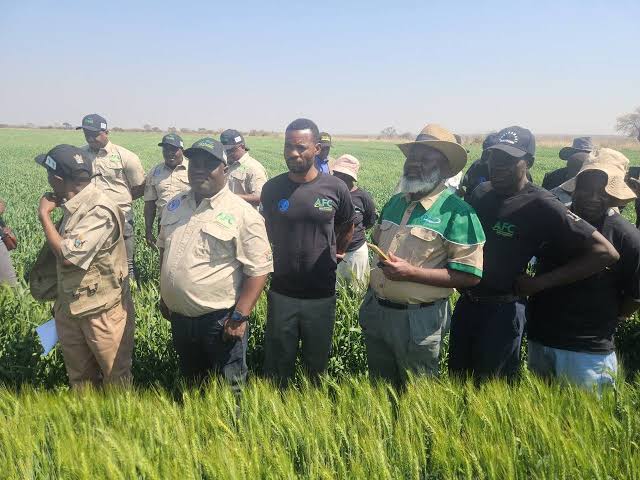
HARARE — Zimbabwe’s efforts to strengthen agricultural production and food security are receiving support from closer links between training institutions and private-sector companies, with Gwebi Agricultural College emerging as an example of how education can feed skills, technology and expertise into the commercial farming sector.
In a report published by FurtherAfrica, it says partnerships between Gwebi, universities and agricultural businesses were helping graduates gain practical workplace experience while developing technologies aimed at addressing production challenges.
The college graduated 86 students in 2026, recording a 99% pass rate. One graduate, Abide Chitiyo, received the Overall Best Student Award with a Distinction and subsequently joined Seed Co as an agricultural extension officer. His work focuses on climate-resilient farming techniques and agronomic practices intended to improve productivity among smallholder farmers.
The partnerships operate within Zimbabwe’s Education 5.0 framework, which combines teaching with research, innovation, community engagement and industrialisation. The University of Zimbabwe’s Associateship Scheme now covers eight agricultural colleges, broadening the academic links available to agricultural training institutions.
The commercial significance extends beyond graduate employment. FurtherAfrica reported that Gwebi students have developed digital irrigation controls, climate-smart mushroom production systems, a small-scale Juncao grass shredder and simplified water and animal-feed systems. Such innovations could offer opportunities for agricultural equipment suppliers, technology companies and processors if they can be developed into affordable products and adopted at scale.
For Zimbabwean businesses, the model could help address a persistent gap between agricultural research and commercial application. Farmers need practical technologies that improve water efficiency, reduce production costs and support climate adaptation, while agribusinesses require trained personnel capable of translating technical knowledge into better yields and more reliable supply.
The wider investment environment also presents opportunities. The €14 million Agroecological Transitions for Horticulture in Arid Zones programme, launched by the European Union and the International Fund for Agricultural Development in 2026, is designed to support resilient horticulture, productivity and market access in Zimbabwe, Zambia and Botswana through 2030.
Zimbabwe’s reported progress towards its 660,000-tonne wheat production target also points to demand for agronomists, extension officers and agricultural services. Government crop-monitoring figures cited by FurtherAfrica placed output at approximately 569,000 tonnes at the time of its report.
The Zimbabwe Mail understands that the economic value of these partnerships will depend on whether training and student innovation translate into measurable improvements in farm productivity, commercial investment and domestic supply chains. Wider adoption of locally developed irrigation and processing technologies could create business opportunities while reducing reliance on imported equipment.
However, the transition from college projects to commercially viable products is not automatic. It requires financing, testing, manufacturing capacity, maintenance networks and access to farmers. The longer-term test for Gwebi’s industry partnerships will be whether they produce technologies that can be deployed beyond the college and graduates who can deliver measurable gains across Zimbabwe’s agricultural value chain.