

HARARE – Zimbabwe’s efforts to build a credible domestic monetary framework received a significant boost this week after the inaugural auction of the Zimbabwean Central Bank’s ZiG-denominated Term Deposit Facility Bills attracted strong market participation, underscoring growing confidence in the authorities’ liquidity management and currency stabilisation strategy.
Auction results released on Friday showed that investors submitted bids worth ZiG391.6 million for the debut 90-day instrument against an offer size of ZiG500 million. The Zimbabwean Central Bank allotted ZiG331.6 million at a weighted average yield of 10.9849 percent per annum, while maintaining a selective allocation strategy designed to reinforce monetary discipline.
The auction marks an important milestone in the development of Zimbabwe’s domestic money and capital markets following the introduction of the Zimbabwe Gold (ZiG) currency.
Financial sector analysts said the successful uptake demonstrates that banks and institutional investors are increasingly willing to hold ZiG-denominated assets, a development that could contribute to the deepening of local financial markets and strengthen the transmission of monetary policy.
The term deposit facility is designed as a liquidity sterilisation instrument, enabling the central bank to absorb excess liquidity from the banking system by offering interest-bearing securities with defined maturities.
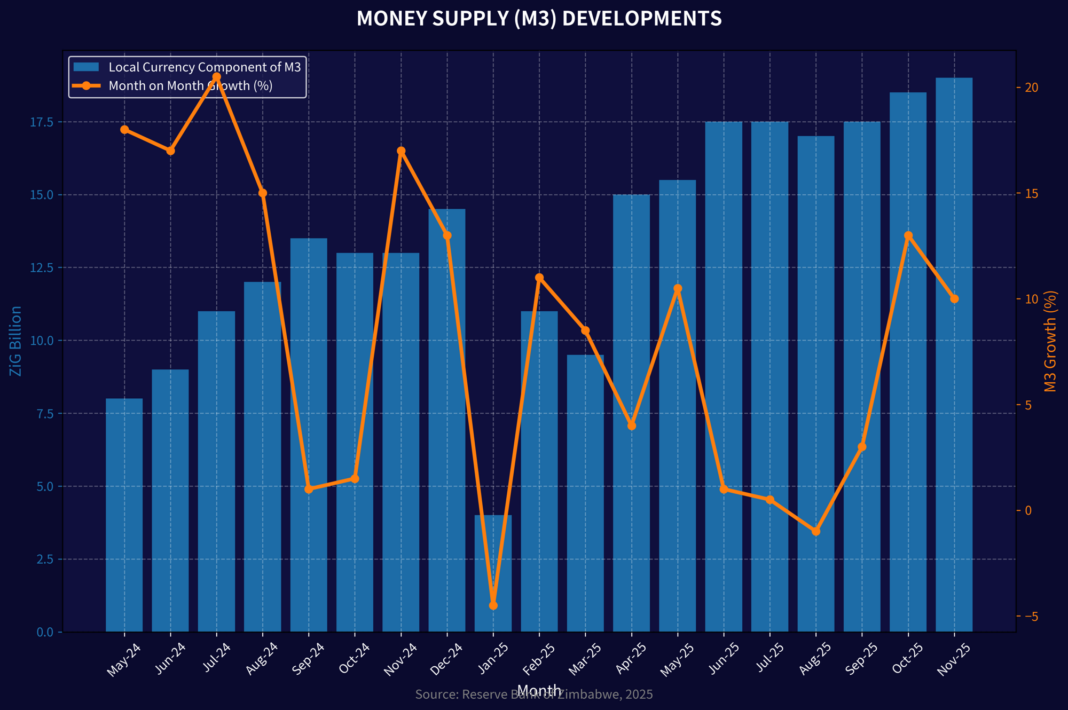
By encouraging financial institutions and investors to lock away surplus ZiG balances for 90 days, the facility reduces the amount of money circulating within the economy. Economists regard liquidity management as a critical component of maintaining price stability, particularly in economies seeking to anchor inflation expectations and strengthen confidence in a domestic currency.
The auction therefore represents more than a routine monetary operation. It forms part of a broader strategy aimed at maintaining reserve money discipline, supporting exchange-rate stability and creating a market-based mechanism for managing liquidity conditions.
Excess liquidity has historically been associated with inflationary pressures and exchange-rate volatility, as large volumes of local currency seek access to foreign currency markets. By withdrawing surplus liquidity from circulation, policymakers hope to ease pressure on the foreign exchange market and reinforce the value of the ZiG.
Investment strategist Rudo Ndlovu described the auction outcome as a significant step in the maturation of Zimbabwe’s domestic financial architecture.
“What we are witnessing is the gradual formation of a ZiG yield curve,” she said.
“The weighted average yield of approximately 11 percent on a risk-free 90-day instrument provides a critical benchmark for the market. Banks, corporates, fund managers and investors now have an important reference point for pricing ZiG-denominated assets and liabilities. This is fundamental to the long-term development of a functional domestic capital market.”
She noted that the central bank’s decision to allot only ZiG331.6 million despite receiving higher bids reflected a commitment to monetary prudence.
“The authorities are clearly prioritising liquidity management objectives rather than simply maximising subscription volumes. That discipline is essential for building policy credibility and sustaining confidence in the currency,” she said.
Economist Dr Shaun Chikovore said the instrument aligns closely with the objectives outlined in Zimbabwe’s 2026 Monetary Policy Statement and represents an important building block in the institutional framework supporting the ZiG.
“This facility simultaneously addresses several policy objectives,” he said.
“It helps sterilise excess liquidity, supports inflation control, contributes to exchange-rate stability and establishes a foundation for the development of a domestic yield curve. These are key ingredients for building a credible local currency ecosystem.”
Dr Chikovore added that the auction’s significance extends beyond short-term liquidity management.
“A functioning market for government and central bank securities is a prerequisite for broader capital market development. The existence of reliable benchmark rates improves pricing efficiency across the financial system and supports the growth of savings, investment and lending activity,” he said.
Market participants also expect demand for future auctions to strengthen as investors become more familiar with the instrument and its regulatory treatment.
The designation of the securities as prescribed and liquid assets is expected to enhance their attractiveness to banks, pension funds, insurance companies and other institutional investors seeking compliant investment opportunities while preserving capital.
The successful launch comes at a time when authorities are seeking to strengthen macroeconomic stability and create conditions conducive to long-term investment and economic growth.
Economists argue that sustained monetary discipline will be critical if Zimbabwe is to avoid the inflationary episodes that have historically undermined confidence in domestic currencies. A predictable and transparent liquidity management framework is also viewed as essential for lowering risk premiums, improving financial intermediation and encouraging greater use of local-currency-denominated financial instruments.
Beyond its immediate monetary implications, the auction is also being viewed as a positive signal for the broader economy. A stable currency and well-functioning financial markets are regarded as key foundations for industrial expansion, investment mobilisation and sustainable economic development.
As Zimbabwe continues to strengthen its monetary framework, the next Term Deposit Facility Bill auction will be closely watched by investors and policymakers alike as an indicator of market confidence in the country’s evolving ZiG-based financial system and the central bank’s commitment to maintaining monetary stability.